Vibrant Jerusalem
In 2005, I came back to Jerusalem, having lived there in the ’90s, and found that many of my landmarks in neighborhoods beyond the one that had been my own were gone. They had been built up and around and over. A friend drove me through all the areas with brand-spanking-new buildings, so I could get my bearings, but I couldn’t. I asked her, “Where’s thus-and-such?” It was a large facility, and I knew I’d be able to identify it by the large empty wasteland of a field across the street, the one with a stark metal stick and a small sign indicating the bus stop. She said, “It’s right there!”
The wasteland of a field had been replaced by classy, four-story Jerusalem stone apartment buildings. They looked lovely. Appealing. But the expansion of the city beyond the outskirts I had known startled me.
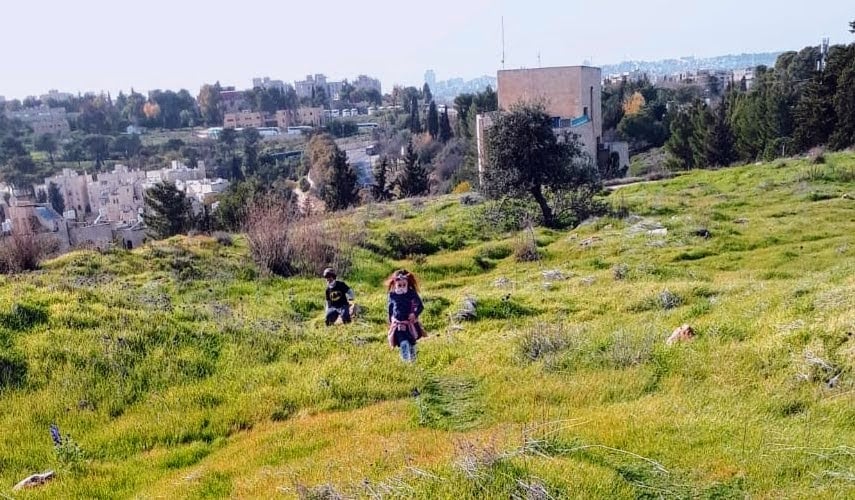
I never encountered the barren, withered Jerusalem that shadowed the destruction of the Second Temple outside of the texts that provide Jewish history; the foundation of the modern Jewish state preceded my birth by more than 20 years. For me, Jerusalem has always been a bouncy, noisy, jumbled, hectic place of business… and daily life… and religious sounds and moves, punctuated by pockets of serenity. Lookouts with a view of the Old City or the Judean Hills, with a sky that seems touchable, clouds waiting to be plucked out of the blue (I’m told it’s a trick of the land’s placement to the east of the sea, but it seems intentional, a nearly tangible reminder of the Divine who is there for us all). The city’s mix of ancient with the newest of new is intensity embodied, whether by dint of spirituality or personality, with frustration and passion running hand in hand, from the muezzin to car horns to babies caterwauling to the non-stop drilling that renews the modern city. We know the history, to be sure, but the idea that Jerusalem was once desolate is laughable – nearly as laughable as the foxes that once confirmed its desolation (Makkot 24).
The Jerusalem I know is vibrant. It is a city of yearning, yes, but not because of the promise of a reborn city. The city has already been reborn, the site of dreams sparked and embraced and fulfilled. The Jerusalem stone plays host to those who brought their wishes to the heart of a land, a people, a city surrounded by hills. They come to live their lives, to settle down for the duration, and they come because of the eternal holiness that helps them figure out what they want out of life, a way to balance priorities and shed light on what matters most.
Sabras have been known to ask those of us immigrants who arrived here by choice, not fleeing persecution, what brought us here, to this hot, dusty, conflict-bound, security-risk, expensive state that is modern Israel. Whyever would we want to scrabble to eke out our existence here, when we could live higher on the hog in our countries of origin? Most people I know acknowledge the economic challenges (especially if you start talking real estate), but for so many, the sense of coming home, the instinctive belonging in the place that we, the Jewish people, were promised to inherit, the roots of thousands of years of heritage, along with the ingathering of diverse exiles – the family that we were always a part of, but often distant from, in the Diaspora – triumph in the face of those difficulties.
The prophet Zechariah foretells the return of God to Zion, His dwelling place, to Jerusalem, the “city of truth,” and the return of the very elderly to the city’s squares (8:3–4). Those who are so old that they need staff in hand to support themselves are presented as the representatives of peace. They are Rabbi Akiva’s reassurance that the city will truly be rebuilt. They cannot go out to do battle, so if they are able to hang out in the square, things around them must be pretty good. And according to Zechariah, those squares (dare I call them “playgrounds”?) are to be filled with boys and girls. These are the families of Jerusalem – the multiple generations that belong to everyone – those who have gone before and those who are to follow after. It’s the birthday parties we hold in the parks, the parades that march through Jerusalem streets for special occasions, the chatter and yelling and laughter and music of family life shed from one apartment to the next, and the help with bundles and directions and advice to one and all, even to the people one doesn’t like very much.
Jerusalem thus offers the past and the future to the Jewish people. As a living city, in this day and age, Jerusalem depends on the strength of each future generation to keep her going, just as that same vibrancy, with its roots in antiquity, its reach in modernity, and its growth by the will of God, is the backbone that keeps me, my family, and the Jewish people going, surrounded by the echoes of prophecy.
—
A version of this essay appeared after a portrait of the biblical Jerusalem as barren, in Dr. Chana Tannenbaum’s Conceived in Hope, published by Maggid/Koren, and a version was cast as a prayer for Jerusalem Day in Az Nashir: Between Silence and Song, published by The Layers Press, at The SHVILLI Center.