


Viral diplomacy: Gaza’s weaponized hunger
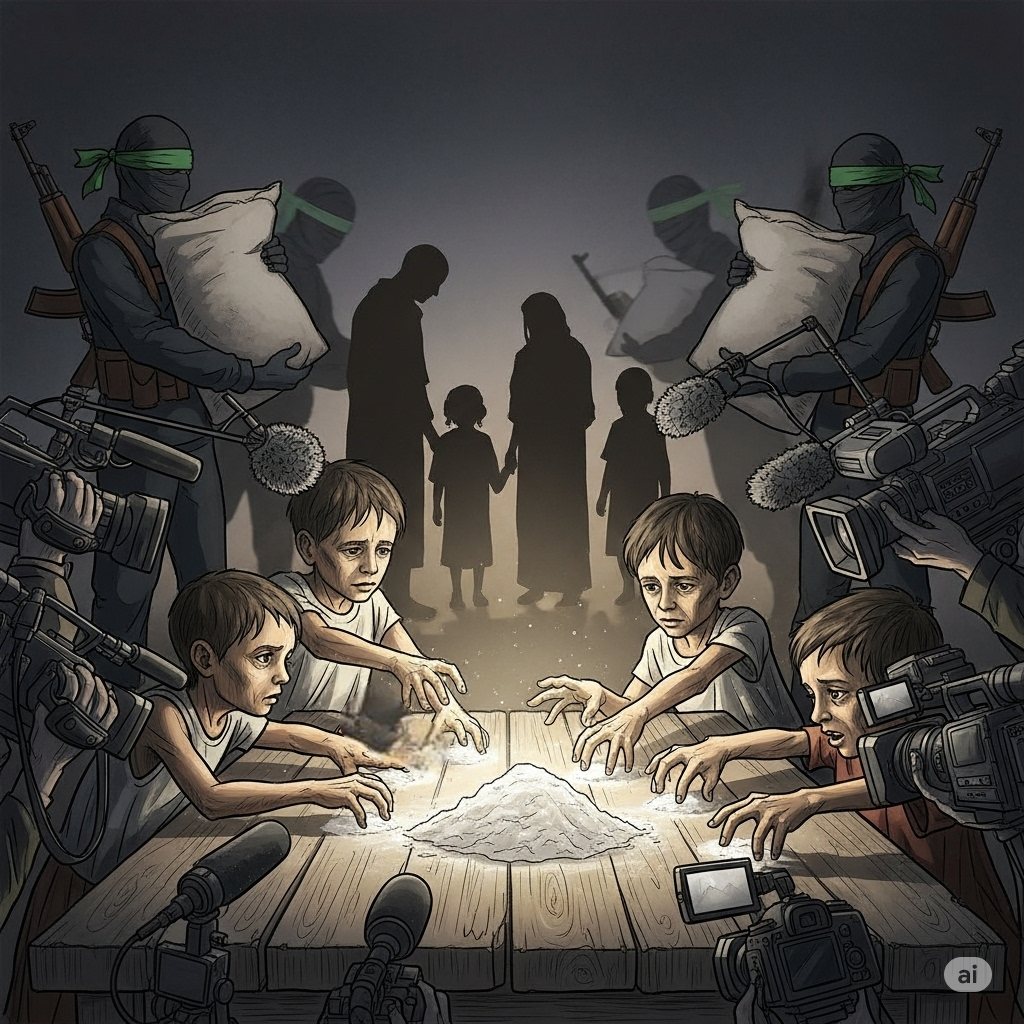
Gaza’s hunger crisis is a deliberate strategy by Hamas, not a result of neglect. Through viral diplomacy, the rapid spread of emotional, misleading images like a cropped photo of a sick child, Hamas shapes global opinion and deflects blame. UNRWA sustains this system, enabling control and dependency. Real humanitarian aid requires dismantling UNRWA, bypassing Hamas, and ending the cycle of manipulation that weaponizes starvation for political gain.
*
In recent weeks, global headlines have created the impression that Gaza is facing famine and starvation, blaming Israel and insufficient aid for the crisis. Sensational images and emotionally charged narratives have spread rapidly across social media and major news outlets, often without rigorous verification.
One prominent example occurred on 23 July 2025, when a photo of an emaciated Palestinian boy, Muhammad Zakariya Ayyoub al-Matouq, circulated worldwide. The image was cropped to remove the boy’s healthy older brother, creating a misleading symbol of famine. British researcher David Collier later revealed the child suffered from congenital conditions, not starvation. Yet the image shaped public opinion and influenced diplomatic decisions internationally.
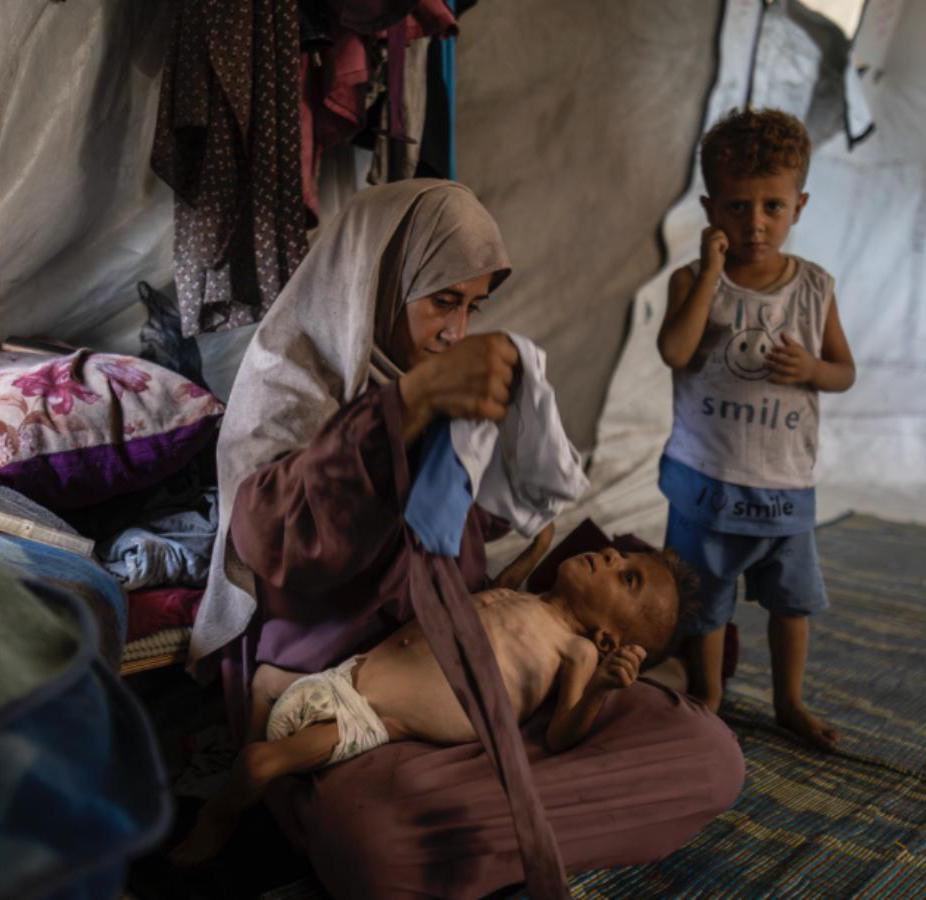
This strategic use of imagery, what can be called viral diplomacy, turns human suffering into political leverage, amplifying Hamas’ objectives while obscuring the structural causes of hunger. Unlike traditional propaganda, viral diplomacy relies on speed, emotional shock, and the digital echo chamber, where an unverified photo can move public sentiment and government policy within hours.
Historical roots of hunger
Gaza’s structural dependence on aid predates Hamas’ takeover in 2007. After Israel’s disengagement in 2005, there was widespread hope that Gaza could rebuild its economy and infrastructure. That hope, however, was built on fragile foundations. For decades, deliberate regional policies had kept Palestinian refugees and their descendants in temporary and politically useful conditions across Gaza, Judea and Samaria, Jordan, Lebanon, and Syria. Instead of integration or sustainable development, these populations were preserved as symbols of unresolved conflict, vulnerable communities whose deprivation could be perpetually leveraged in the political arena. Hamas inherited this reality and then rooted it further, guaranteeing that food, education, and welfare remained instruments of control.
Hunger as leverage
During the war beginning in 2023, the weaponization of hunger sharpened. In accordance with international law, Israel restricted and monitored certain aid deliveries to prevent diversion to Hamas, while ensuring sufficient supplies remained available. Hamas, in contrast, looted, hoarded, and resold humanitarian aid, engineering shortages to pressure both civilians and international actors.
This dual strategy weaponized deprivation. At home, flour became the key to control: by monopolizing its distribution, Hamas disciplined the population and reinforced its monopoly on survival. Abroad, images of food lines and emaciated children, often stripped of context, enhanced diplomatic pressure on Israel while concealing Hamas’ manipulation. Viral diplomacy and material deprivation worked in tandem: flour became a tool of power, and images of flourlessness a tool of influence.
UNRWA and institutional complicity
The United Nations Relief and Works Agency (UNRWA) has long been central to aid in Gaza, but it entrenched dependency rather than alleviating it. Evidence of staff affiliation with Hamas, facilities repurposed for weapons storage, and classrooms delivering propaganda reveals an agency interwoven with the very system it was meant to neutralize. Some employees even participated in the 7 October attacks.
Far from providing a safeguard against hunger, UNRWA’s operations perpetuate the structures that allow deprivation to be exploited. By channeling aid through compromised institutions, international actors unintentionally sustain Hamas’ cycle of control.
Understanding the pattern
Gaza’s food crisis is not accidental. It is the culmination of decades of strategy: obstructed development, institutionalized dependency, and deliberate manipulation during wartime. Hunger itself becomes a weapon, while viral diplomacy ensures the world responds in ways that advance Hamas’ objectives.
Dependency, deprivation, and media manipulation form a mutually reinforcing system, one that consolidates Hamas’ authority while shaping global narratives against Israel.
Addressing the crisis strategically
Recognizing that Gaza’s hunger is deliberately engineered does not diminish its urgency. Malnutrition is real, but treating it effectively requires dismantling the structures that perpetuate it. Chief among them is UNRWA, an agency that has had no incentive to solve the problem and every reason to sustain it. By embedding itself in Gaza’s political and social life, employing individuals affiliated with Hamas, and enabling an endless cycle of dependency, UNRWA has become part of the machinery of control. Reform is impossible; dismantling is essential. Only by removing this institutional pillar can aid bypass political exploitation and reach civilians directly.
Redirecting international diplomacy is equally vital. The United States and Israel, both of which continue to facilitate aid delivery despite restrictions and security concerns, have faced disproportionate outrage over Gaza’s hunger crisis. This misguided pressure strengthens Hamas while absolving it of responsibility, effectively rewarding its tactics. If the international community is serious about alleviating suffering, it must hold Hamas and its leadership accountable for engineering deprivation. Any other approach, intentional or not, amounts to supporting Hamas’ use of human suffering as leverage.
The complicity of the United Nations and major human rights organizations makes the situation even graver. By uncritically amplifying claims of famine while ignoring Hamas’ deliberate role, they have revived a modern-day blood libel: the accusation that Jews, in this case Israel, are deliberately starving innocents. In doing so, they are not defending human rights but supporting terrorists who destroy the livelihoods of their own people without remorse, all while seeking to kill as many Israelis as possible.
These organizations have become instruments in Hamas’ strategy, strengthening its barricade of control and prolonging Palestinian suffering. Worse still, they set a precedent: others have already learned that viral diplomacy works, and that engineering hunger can be an effective weapon in modern conflict.
Final thought
Gaza’s hunger is real, but it is not the byproduct of accident or blockade. It is a system, deliberately structured and exploited. Hamas engineered deprivation as a weapon, UNRWA sustained it as an institution, and the UN and human rights organizations amplified it into a global narrative, a new blood libel with devastating consequences. So long as the cycle remains intact, flour will never simply be flour, it will be leverage, and starvation will remain a stage prop in the theater of war.
Breaking this cycle requires moral clarity. Aid must reach civilians without passing through Hamas’ grip. UNRWA, an agency invested in perpetuating rather than solving the refugee problem, must be dismantled. And the weight of international diplomacy must finally fall where it belongs: on Hamas, the architect of Gaza’s hunger, not on those attempting to mitigate it. Anything less is not humanitarianism but complicity, feeding the very system that thrives on human suffering and teaching others to weaponize it in turn.