CEO, Sabra Ventures Ranch
Virtue Signaling, Jewish Identity, and the Blind Spot in Plain Sight
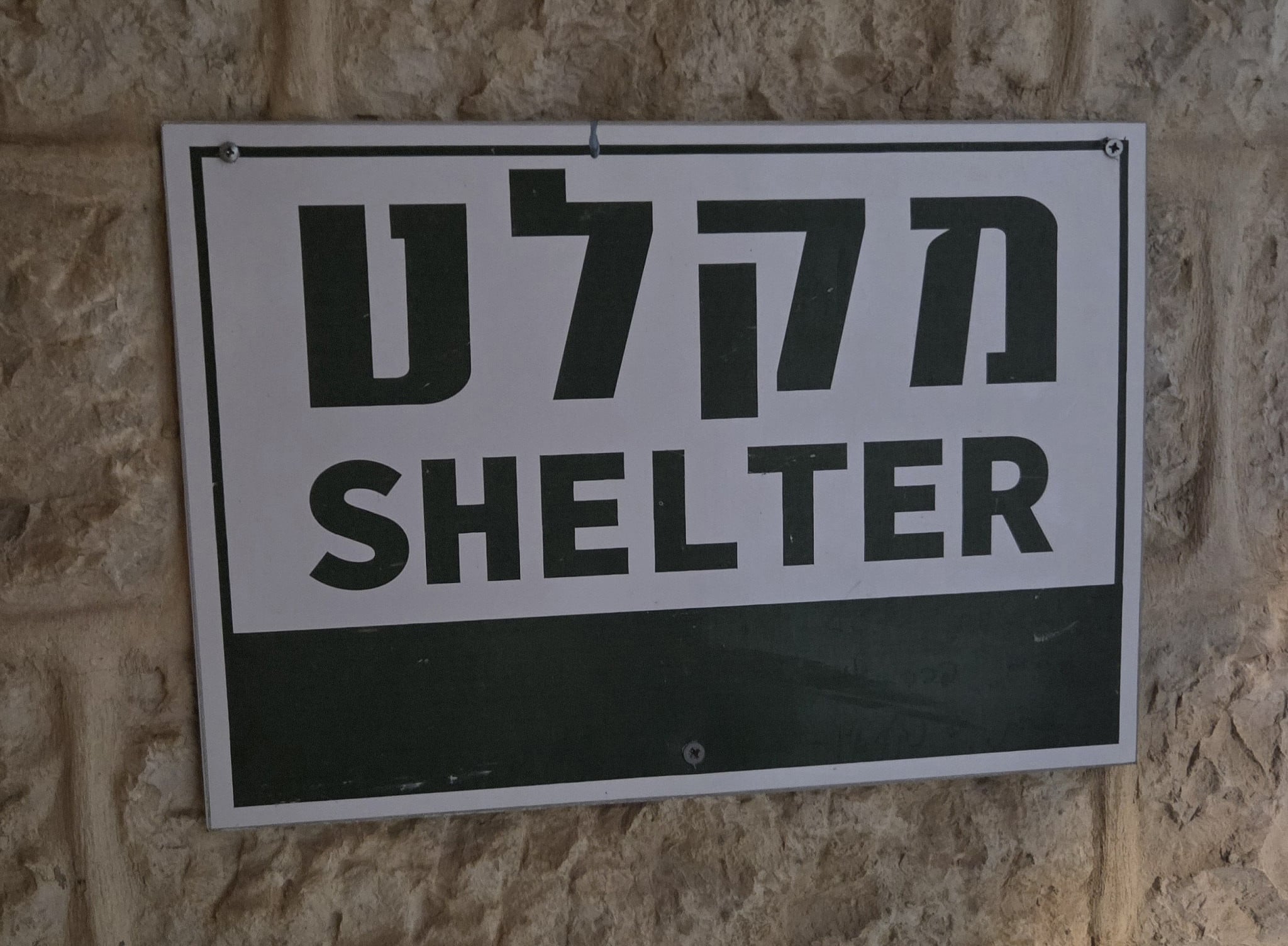
These bomb shelters protected us daily from missiles fired at our homes and schools from seven countries over a five week period.
The Exception to Everything We Thought We Learned About DEI

As a child of Holocaust survivors, I know, in my bones, what it costs a people to be erased.
Over the years I have served as Chair of the Jewish Community Relations Council and as diversity training vendor for private firms and public agencies — roles that put me in rooms where bias was named and accountability was expected. I have seen what it looks like when a community is targeted and the people around them look the other way.
So I want to be thoughtful here. I have never been comfortable with competitive victimhood — the idea that suffering is a currency to be traded, that your pain grants you standing only if it ranks high enough on someone else’s scale. I reject that framing. I refuse to participate in the “victim olympics” however prevalent those narratives have become.
But I am watching and experiencing something happen right now that I cannot stay quiet about.
Over the past year, I have watched colleagues — people I respect, people who have marched and organized and put their careers on the line for justice — quietly scrape their Jewish identity off their public profiles. Not because they’ve stopped being Jewish. Because they are weighing the cost.
What makes this especially painful is where the pressure is coming from. This is not the old antisemitism of the far right. This is coming from within progressive spaces — from people who themselves know what it means to be marginalized, who have built careers around empathy and inclusion. They have learned every lesson about diversity, equity, and belonging. Except, it seems, this one. Jewish identity has become the exception to everything we learned.
And the erasure cuts both ways. Some are scrubbing their identity to avoid the social penalty. Others are actively virtue signaling — performing their distance from Jewish solidarity as a badge of progressive credibility. Both are happening in plain sight. Neither is being named.
I know that cost is real because I have paid some of it myself.
While I was in Israel during the war — visibly there, publicly there — I lost consulting contracts back home. No one told me why. No one ever does. I can only speculate about the root cause. But I have spent enough years in this work to recognize a pattern, and I do not believe it was a coincidence. Being seen standing with Israel, it seems, sufficed as a disqualifying act.
That calculation, that quiet erasure, is something I recognize. I have seen it before in other communities, in other eras. It is what happens when the social climate decides that one group’s identity — or solidarity — is a social, political, professional liability.
And yet: no one is calling it what it is.
We live in a moment when the word intifada — which has, in living memory, meant the deliberate killing of Jewish civilians on buses, in restaurants, at bar mitzvahs — is being chanted on university quads and called a noble cause. When “globalizing the intifada” is framed as solidarity. When Jewish students must prove, before they are allowed to belong to progressive spaces, that they have sufficiently distanced themselves from their own people.
I have spent part of my career teaching people to name double standards. So let me name this one:
If any other ethnic or religious identity were being treated as a political disqualification, we would call it bigotry without hesitation. We would convene trainings. We would write op-eds. We would demand institutional responses.
When it is Jewish identity — we are told it’s complicated.
It is complicated. I know that. The regional conflict involves real suffering on multiple sides, contested history, legitimate disagreements about policy. In this attention economy, the absence of context, historical knowledge, or an understanding of the sinister nature and depth of this existential threat – one we have encountered over and over for the past 3,500 years, makes it TL;DR – Too long, didn’t read. In other words, complicated.
But the erasure of Jewish identity is not a policy position. The social canceling of Jews who decline to perform public self-flagellation is not activism. And the casual normalization of language that, to survivors’ children, sounds like a warm-up — that is not complexity. That is something else.
I did not expect, at this stage of my career, to be writing this piece. I expected to be writing about coalition victories, about the slow, hard work of building a more just community. About innovation that improves lives and the world. I still believe in that work. I still show up for it.
But I also believe that silence, in moments like this one, is its own kind of answer.
So here I am. Still standing in the gap. This time, for my own people — and, I’d argue, for the integrity of the justice movement itself. Because a movement that makes exceptions for one form of prejudice has not actually solved prejudice. It has simply redistributed it.
We have been here before. We know how this goes.
I am asking you — whoever you are, wherever you sit on this — to notice what’s happening. Not to agree with me about everything. Just to notice.
That is usually where accountability begins.
Just a note: Cluster bombs, ICBM’s, and ballistic drones we have learned to deal with and defend ourselves against. Hatred, ignorance, and bigotry are opponents we have yet to conquer and defeat.
Related Topics
Related Posts