
Ally in exile, once Canadian, bearing witness.
Visible Hatred and Invisible Control
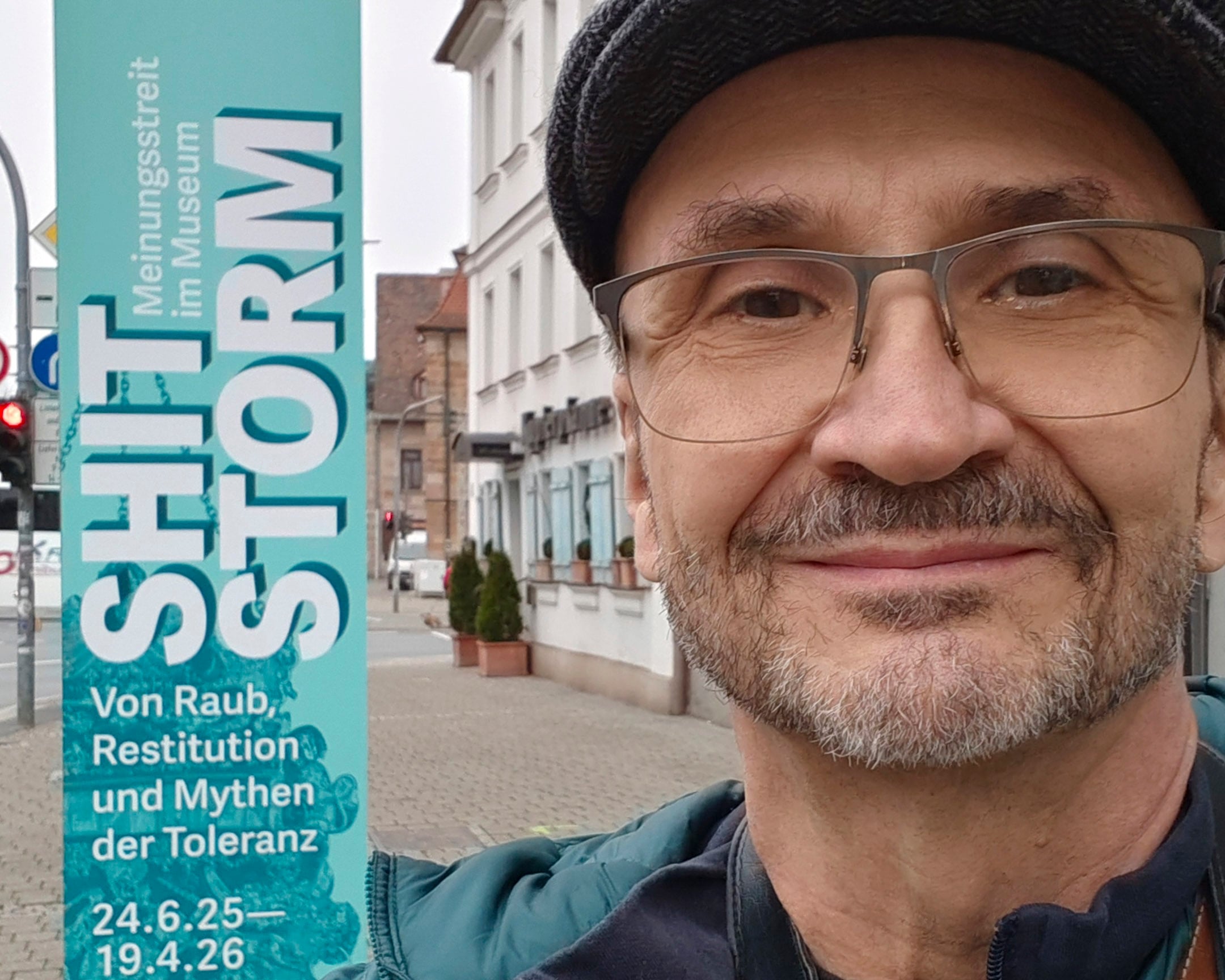
The author standing outside the Fürth Jewish Museum in front of the current exhibit title. Fürth is the neighbouring city to Nuremberg. They have grown into one entity and share a transit system.
The headlines change daily, but the lesson does not: when hatred mutates a society, a malignant cancer grows—and it is often terminal.
The lesson is an uncomfortable one: Jews feel least safe not only where violence occurs, but where intimidation is allowed to perform as virtue and linger unchallenged—by authorities and by the “innocent” passers-by who learn to look away. Security is not only about guards and cameras; it is also about what a society permits to be normalized. When hatred becomes visible everywhere, it no longer needs to be violent to do its work.
I can only speak from personal experience—specifically in Canada, Mexico, Israel, and Germany, and in the cities of Toronto, Mexico City, Tel Aviv, and Nuremberg. What struck me most was not where antisemitism existed, but where it insisted on making itself visible.
In Toronto, hostility announces itself relentlessly. It clings to bus shelters and light poles, spreads across garbage bins and storefronts, and repeats itself until it becomes part of the city’s visual grammar. You do not need to search for it; it finds you while parking your car, waiting for a streetcar, or crossing an intersection.
This is antisemitism as performance—public, repetitive, and coercive. Its power lies less in immediate violence than in saturation. It hides behind the language of virtue and “free speech,” even when that speech is clearly designed to intimidate rather than persuade. Public servants turn a blind eye, citing platitudes about expression while ignoring the underlying rot. The message is unmistakable: Jews are to be scrutinized, judged, and symbolically prosecuted in shared civic space. As altruistic as it may appear, #FreePalestine functions as a coded message—calling for the erasure of Israel and, more ominously, Jews themselves.
I’ve stopped collecting images of vandalism from Toronto. I’ve stopped following stories about marches that deliberately pass through predominantly Jewish residential neighborhoods—far from embassies, far from power, but close enough to intimidate.
What disturbs me most is not the extremists themselves, but how many people I know who simply refuse to see what is happening. “I don’t want to get involved,” they say, as if antisemitism were a private inconvenience rather than a civic failure.
A former colleague—an entrenched teachers’ union activist—once told me she didn’t believe anything could be done about antisemitism. I am certain she would never have said the same about anti-Black racism. When it comes to Jews, resignation is recast as realism.
Mexico City offers a striking contrast. The city is saturated with graffiti, yet almost none of it concerns the Middle East. Over months of walking its neighborhoods, antisemitic messaging was rare—and what little existed was largely imported by expatriates. The walls speak instead of local struggles: poverty, corruption, feminism, indigenous rights. The Israeli-Palestinian conflict fails to find an audience.
That is not to say antisemitism does not exist—it does—but it does not feel compelled to declare itself. When we later learned of an alleged IRGC plot to assassinate the Israeli ambassador in Mexico City, the heavy security around the Israeli embassy suddenly made sense. Armed police and blockades, once seen as excessive, appeared proportional. Importantly, the threat was international, not domestic. Jewish life in Mexico City remains largely absent from the city’s symbolic battles.
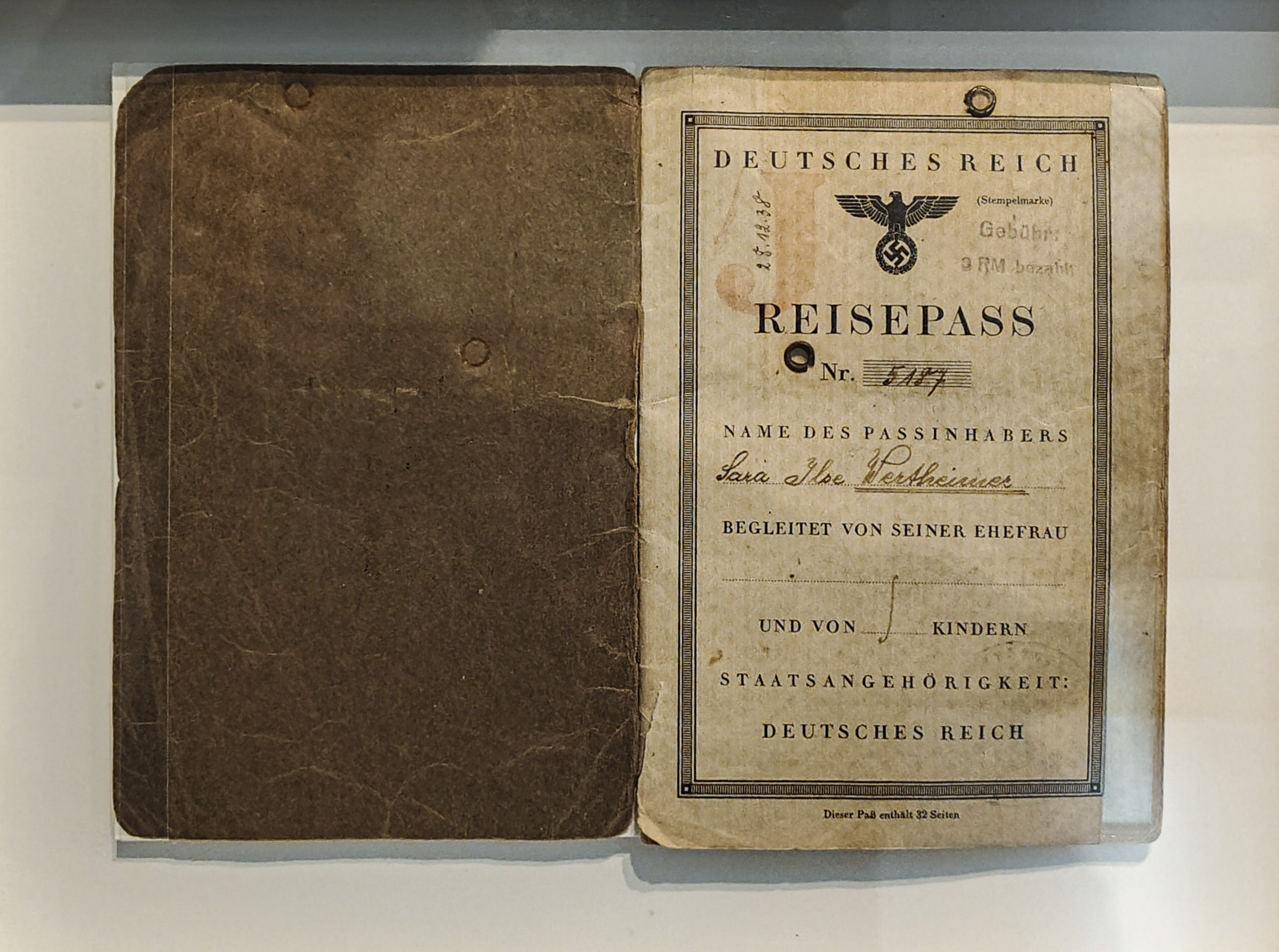
Nuremberg teaches a different lesson altogether. The near absence of visible intimidation is neither accidental nor comforting. It is deliberate. Political extremism does not linger in public space; it is removed swiftly. History has taught Germany—and Nuremberg in particular—that the street is not a neutral arena. Jewish institutions are protected as a matter of course, and intimidation is denied the oxygen of visibility. Antisemitism is treated not as an opinion to be debated, but as a risk to be contained.
We live within walking distance of the Reichsparteitagsgelände, the former stage for Nazi mass rallies. Further away stands Courtroom 600, where the architects of that spectacle were judged. Even if many residents cannot recite the details of this history, its ominous foreboding shadow shapes what is permitted in public space today. This city has learned what happens when hatred is allowed to perform unchallenged.
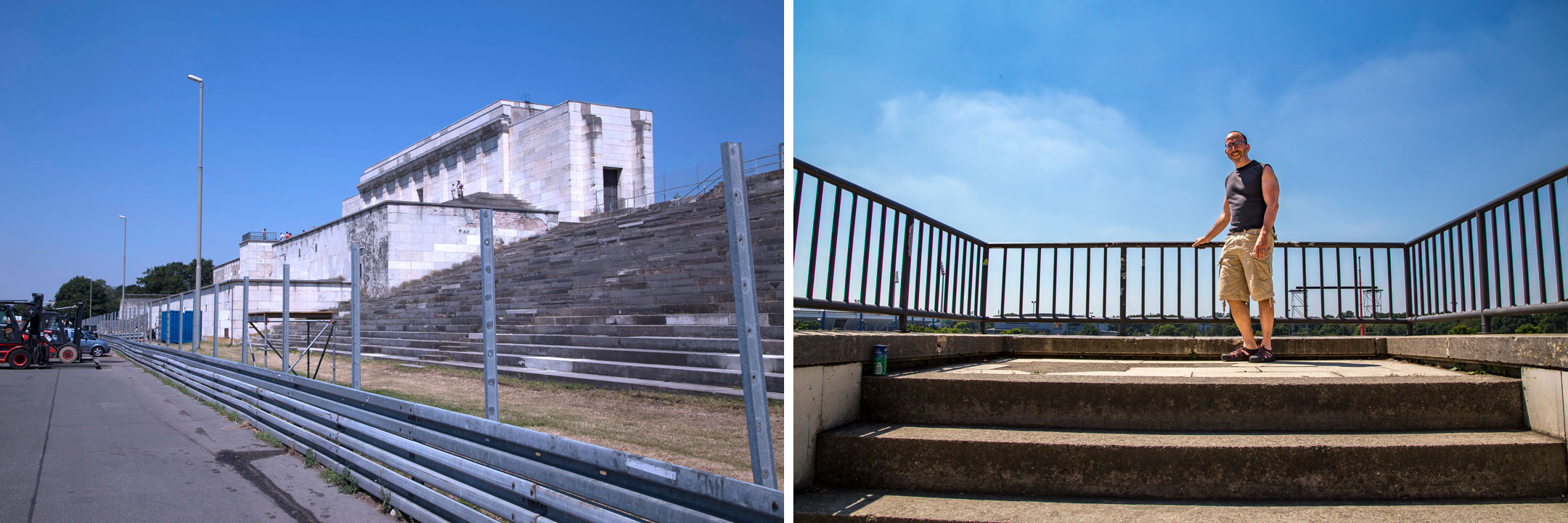
Tel Aviv stands apart from all of this. There is no antisemitic hostility to be felt in Israel—but there is constant awareness of external threat. We attempted to immigrate at perhaps the worst possible moment. We arrived under a canopy of intercepted missiles, protected by the Iron Dome, while the ink on our citizenship cards was barely dry. Safety in Israel is not psychological; it is existential.
After taking a deep dive into the moral ecosystems of these cities, it becomes clear why Toronto can feel more hostile than either Mexico City or Nuremberg, even when levels of physical violence are lower. In Toronto, intimidation is permitted to masquerade as political speech and to saturate daily life through malignant repetition. In Nuremberg, it is suppressed through law, memory, and societal conservative norms. In Mexico City, it largely fails to find traction.
Plan A, Tel Aviv, became unviable for us. Mexico City was always Plan B. However, due to logistics and the German propensity for order, rules and routines, Nuremberg is the new Plan A. The continuing murky societal shifts in Canada, as well as the Channukah Massacre at Bondi Beach Australia – Canada’s colonial sister – dispel any doubts. We’ve made the right decision. German citizenship is in the cards and will pair up nicely with our Israeli and Canadian citizenships. For a Jew, you can never have too many passports.
Visible hatred in Toronto corrodes daily life. Invisible control and caution in Nuremberg reassure—uneasily, perhaps, but effectively. And in CDMX, indifference—where a conflict does not dominate the public sphere—can feel like an unexpected relief. The difference is not merely statistical; it is psychological. When hate speech proliferates unchecked by authority or social conscience, it gives permission for targeted violence against a minority group—the Jews, who comprise just 0.2 percent of the world’s population. Any “yeah, but…” is merely an extension of the same antisemitic cancer.

Related Topics
Related Posts