
Author of "A Habit of Seeing: Journeys in Natural Science""
Volunteering in the Tomatoes Yielded Multiple Surprises
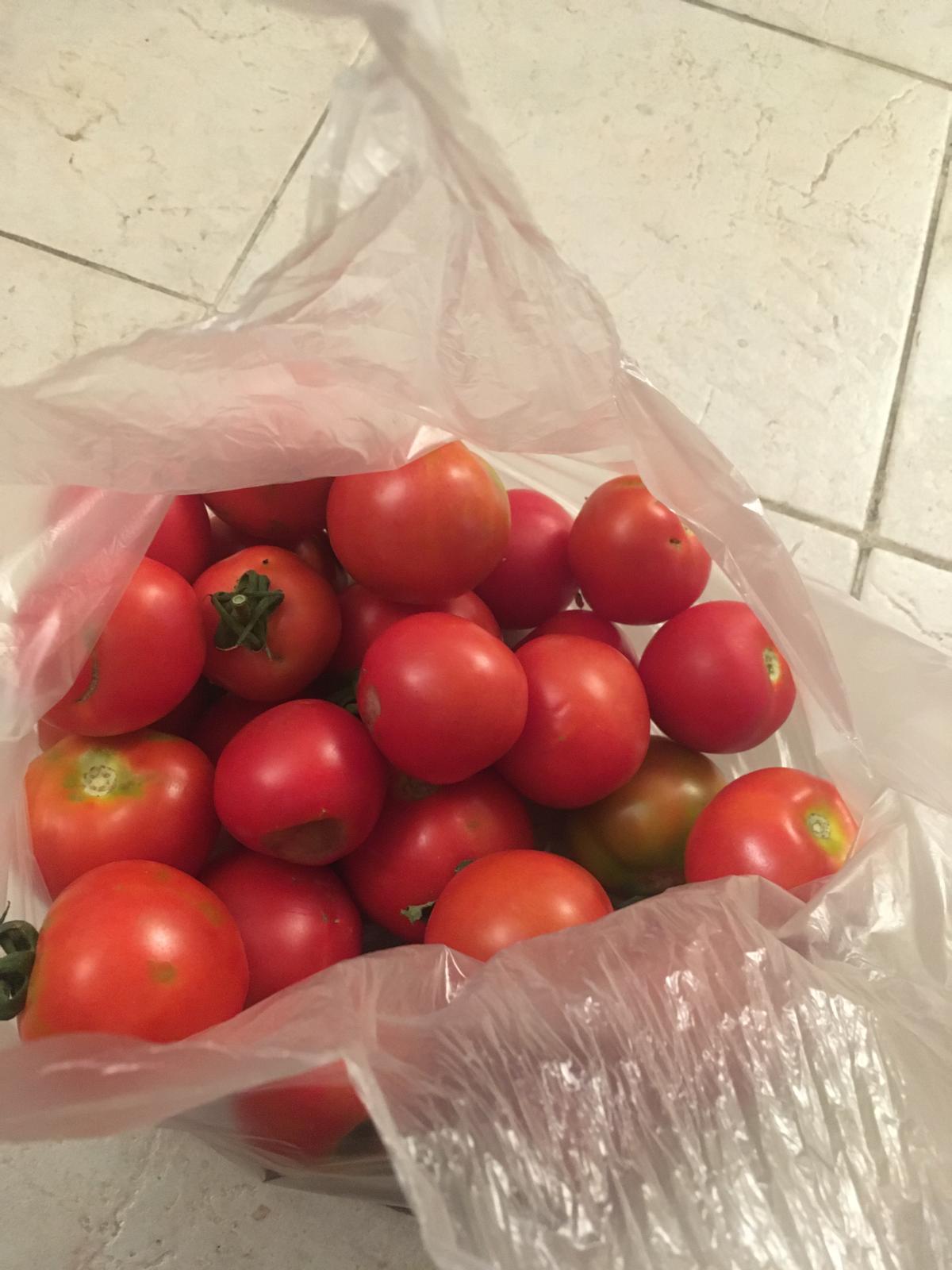
Tomatoes Grown for the Ikram Brand by Rachamim Gabbai - S. Jeselsohn
Since I have a large garden, people always ask if I am growing vegetables. The answer, alas,is “Not really.” Much of the garden is too shady for vegetable growing. However, there is a small patch that I keep hoping will yield some tomatoes.
So every year I buy a few tomato plants, plunk them down in that small area, stake the plants as they grow and generally harvest a few tomatoes that all ripen at the same time towards the end of the growing season. In all fairness, I must admit that if I find cherry tomato seedlings, they actually do give a much better return that the larger varieties and I will plant those instead.
Amy Rosenbluh has been volunteering at a moshav – an agricultural community – at Beit Ezra which is between Ashkelon and Ashdod.
Beit Ezra was founded in 1950 by Jewish refugees from Iraq. I was pleased to be asked to accompany her for a few hours of work. Rosenbluh specifically has been working at the hothouses owned by Rachamim Gabbai.
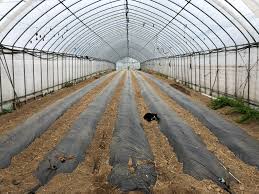
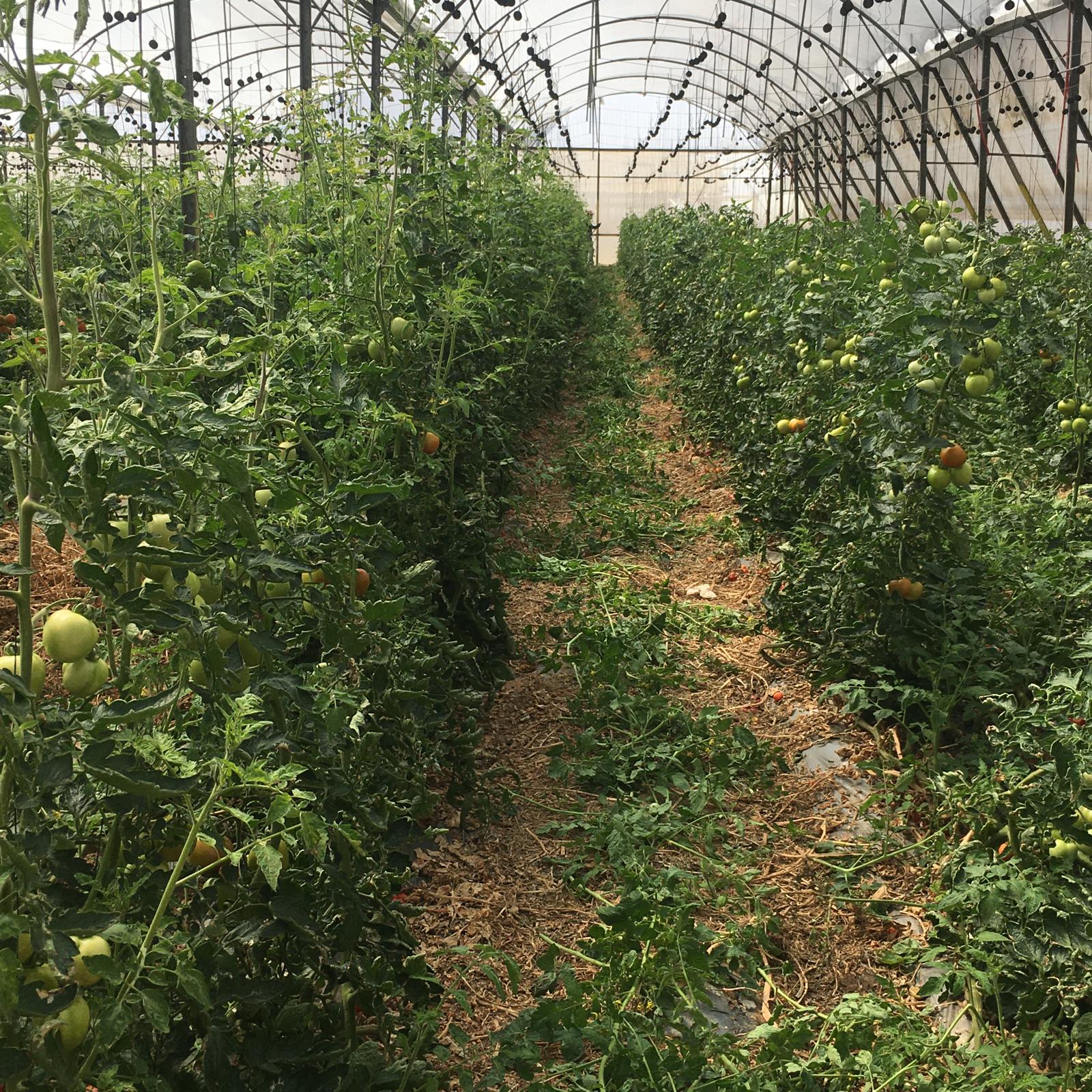
Although he has grown other vegetables, today’s efforts were directed to two enormous greenhouses filled with rows of tomato plants. When we stepped inside, I saw endlessly long rows of tomato plants and knew that whatever work we were assigned would not be completed in our time frame.
I asked Gabbai how many plants were in each greenhouse and he estimated 20,000 plants in each. In the four hours that Rosenbluh and I worked together, we finished only five complete rows, each row having plants on two sides.
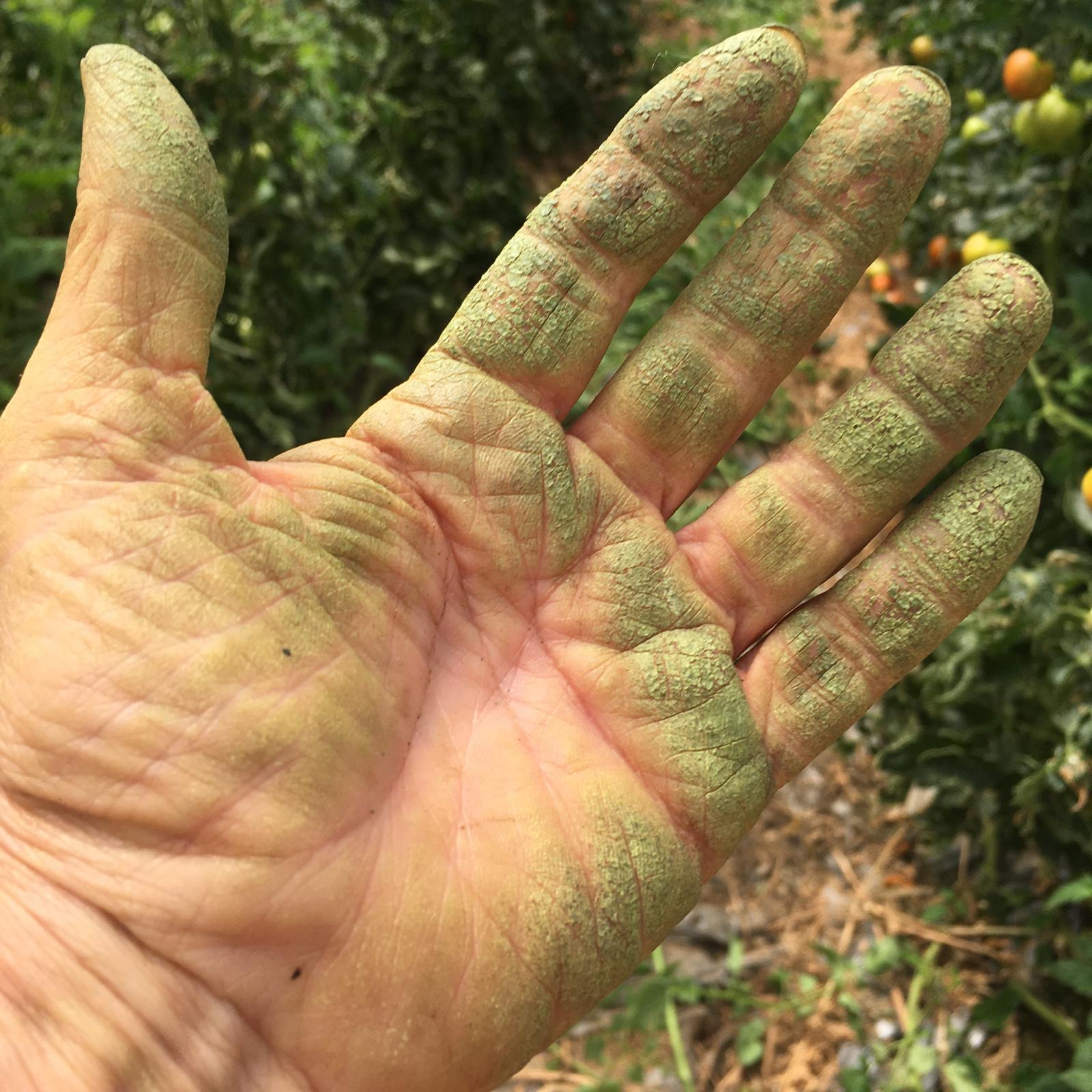
Rosenbluh had brought along an extra hat for me saying that in her early days of volunteering she would find her hair covered in a yellow-green powder. Her assumption was that this powder was pollen from the tomato plants. So I put on the hat but when I was offered disposable latex gloves, I demurred. In my garden, unless I am dealing with rough plant material, I usually work barehanded. However, I gradually noticed something greenish accumulating on my hands. When we took a break after three hours I tried to scrub the material off my hands and it took a lot of time and a lot of soap.
For the last hour or so I wore the gloves.
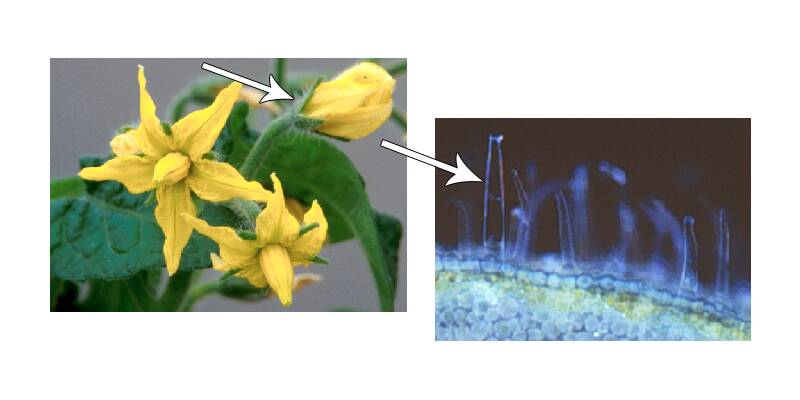
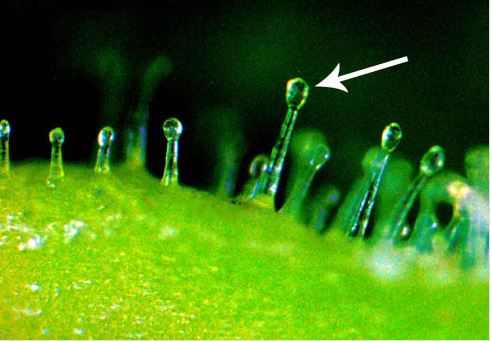
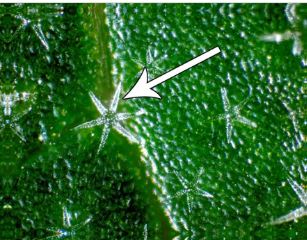
When I asked Gabbai about the powder, he said it wasn’t pollen; instead it was something that comes off the leaf. It turns out that it is actually a compound that is released from trichomes- in this case, tiny hairs – that grow on the surface of many leaves. The structures can be simple or more complicated, such as stellate. Sometimes the purpose is not clear but frequently there is a chemical that is exuded for the plant’s purposes such as repelling insects. Indeed, in hot climates the hairs can act as a sunshade to protect the leaf.
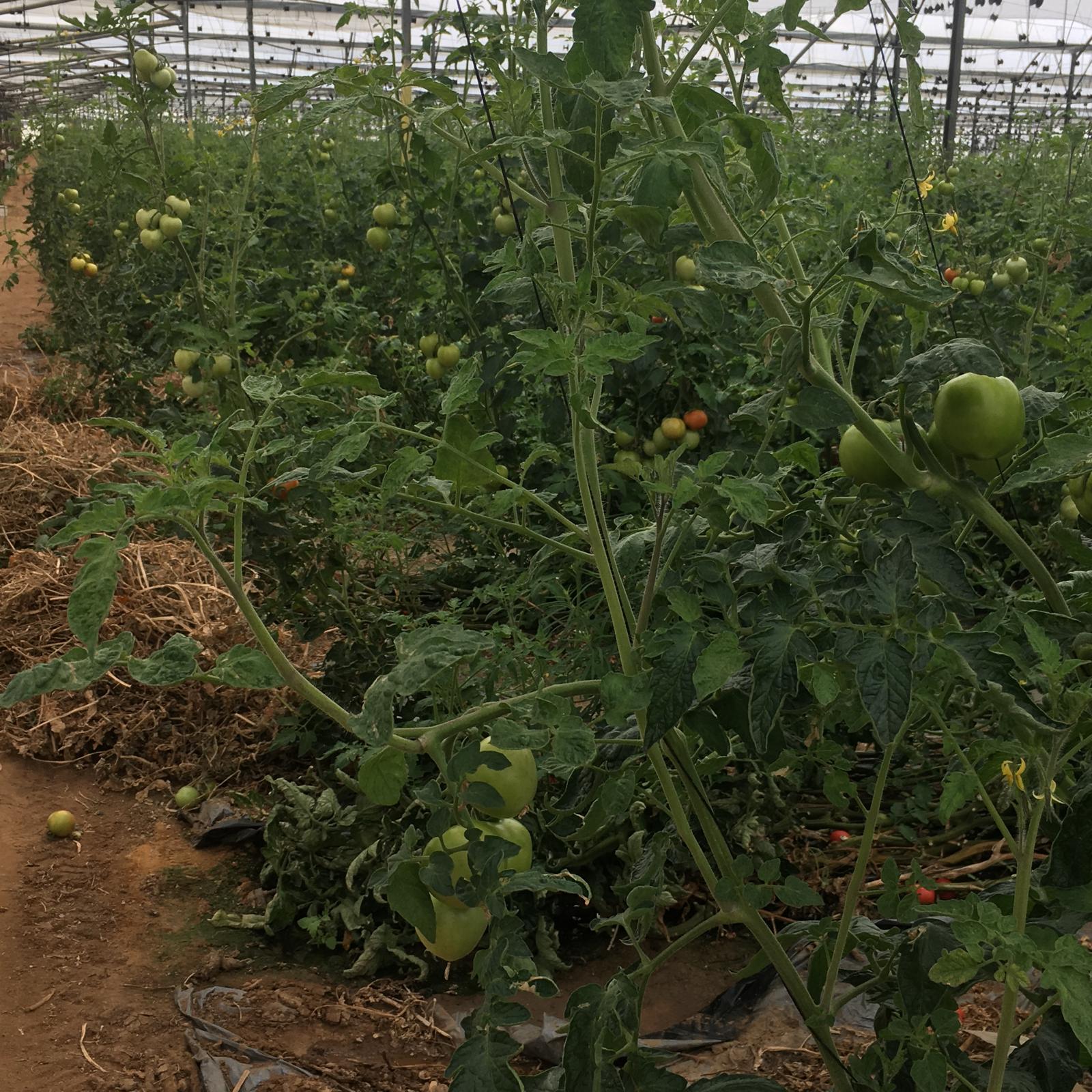
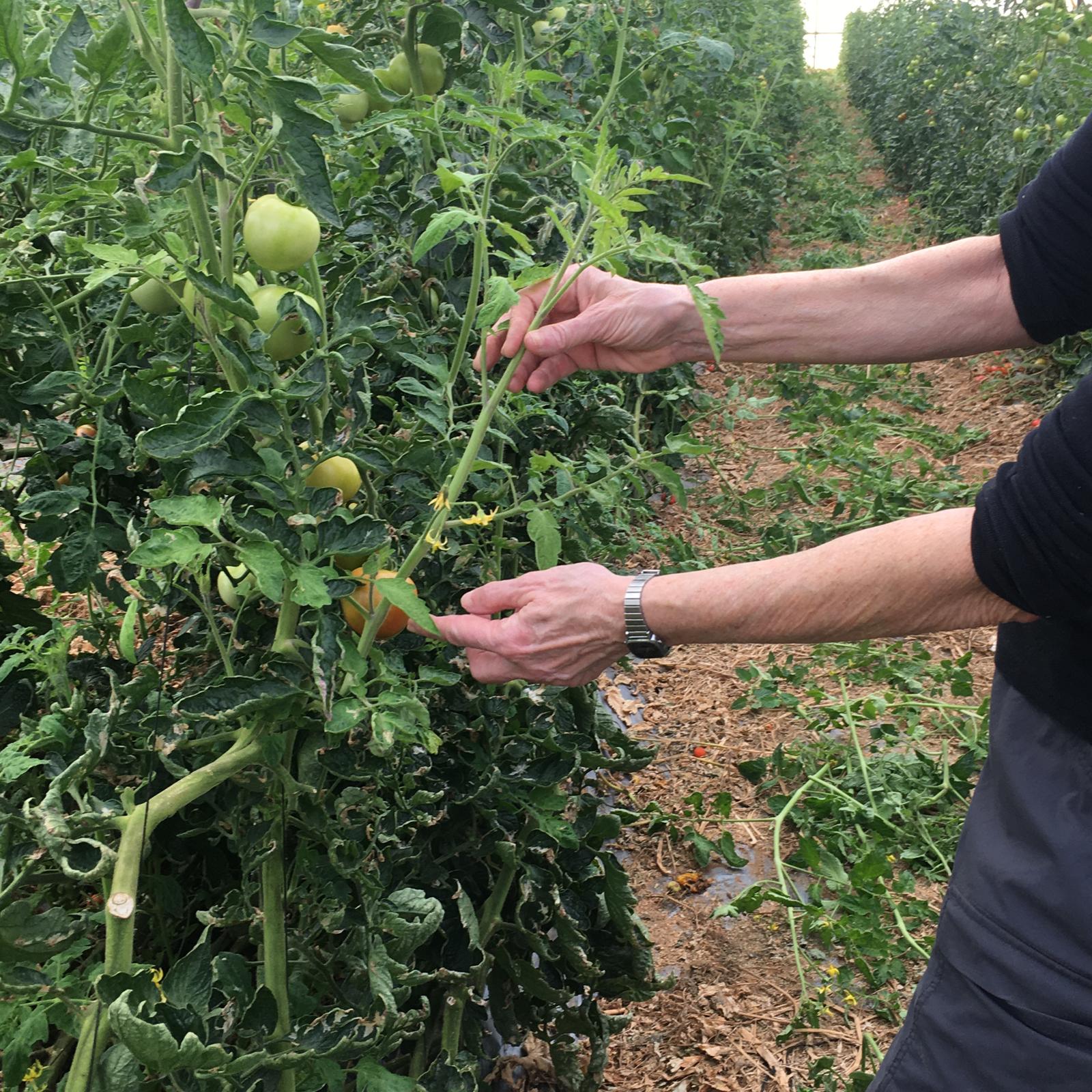
While that was certainly interesting, I finally learned something that has puzzled me for years. Gardeners are told that they should remove the suckers from the tomato plants to improve yield. Unfortunately, I have never understood how to differentiate suckers from the necessary branches that provide the photosynthetic energy for plant growth. Well, I learned the difference quickly. The photosynthetic branches (sun branches) grow at right angles to the plant stem, which means that they stick out at 90 degrees. The suckers grow upward (and the bud of the sucker appears in the crotch of the sun branches). In addition, the suckers are a much lighter green than the others. One can just walk down the row and spot the suckers based on color differential.
And one final bit of enlightenment: I had been told that the tomatoes were growing on a pulley system which seemed inexplicable. Tomatoes are essentially a vine and grow upwards. The problem arises when the vine grows too high for ordinary staking and harvesting. The pulley system allows the stem to be lowered downward when it becomes too tall while the top of the plant continues growing upward. This keeps the producing part of the plant accessible. For those, like me, who find the explanation hard to imagine, please watch this video.
Not What I Expected
As we were finishing our work shift, Gabbai said that he wanted to show us his museum. Since “museum” is a word that can describe some kind of collection, ranging from a hodgepodge of items to professional assemblages, I was not sure what to expect.
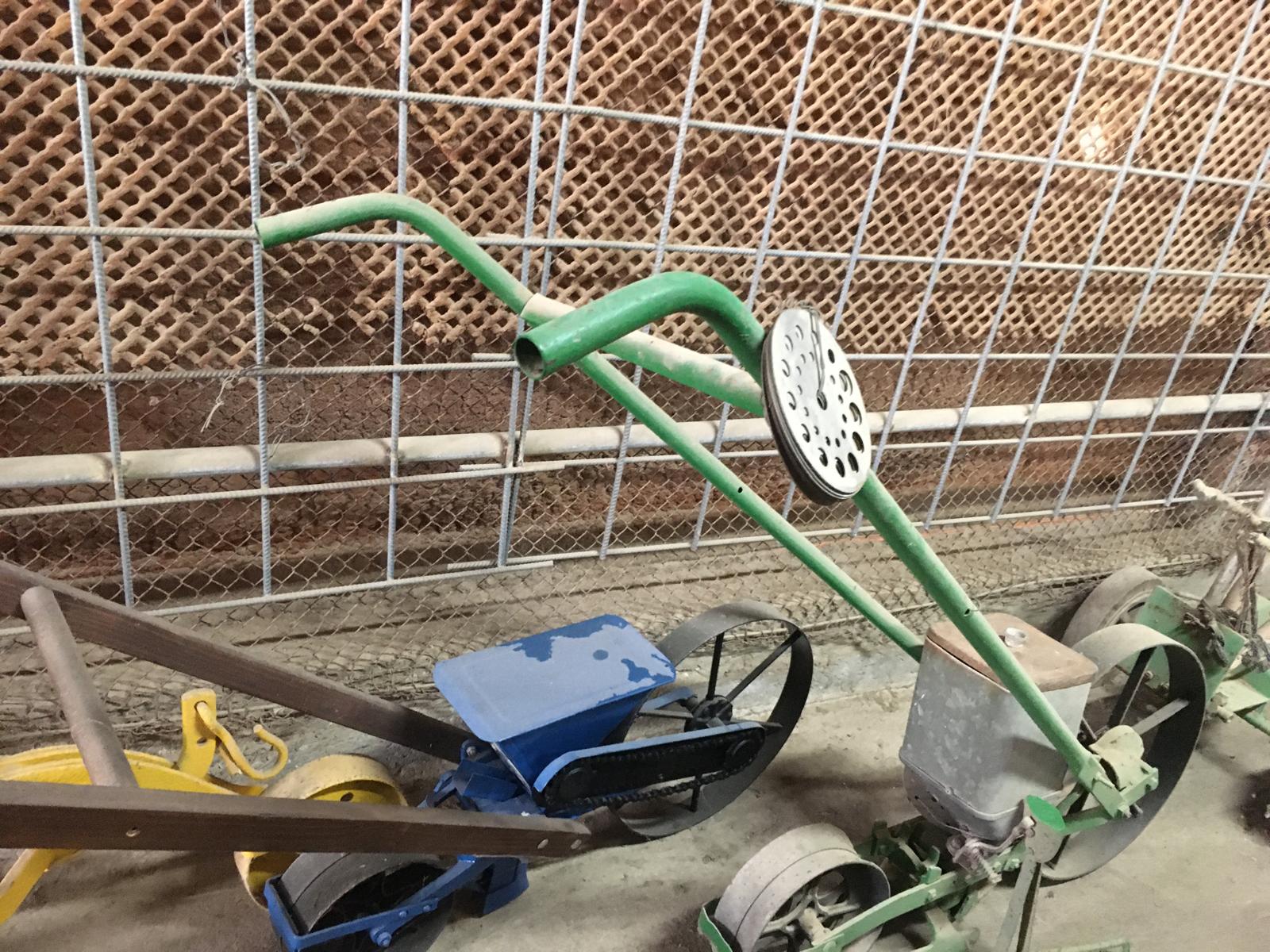
He carefully unlocked a large building that I had originally taken for a storage shed but which had actually been the family’s chicken coop for raising chickens in the early days. We entered a dusty space filled with a huge variety of old-fashioned tools used in the early days of the moshav. Three were plows that had been drawn by mules, every two families sharing one animal. There were implements to thresh and winnow grain the design of which had been used for millennia. I saw old rotary phones and an enclosure for raising chickens. My husband grew up in pre-State Israel and talks about using a primus to heat water and there I saw several examples. Everything was assembled by category and filled the room to capacity.
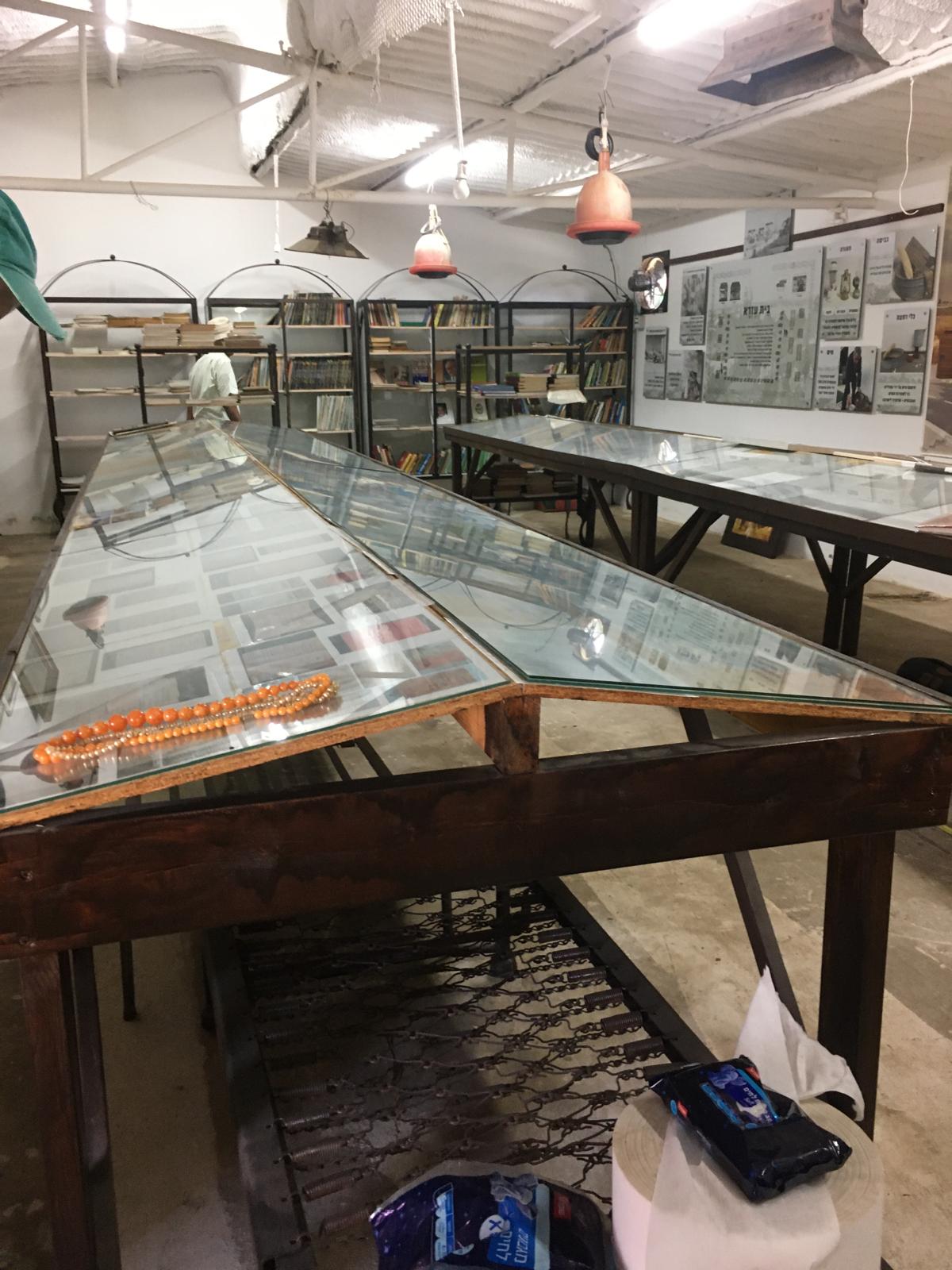
It was certainly interesting. But then Gabbai opened the door to a second room. This is when I became truly impressed. The room was clean and filled with glass topped cases and bookshelves. There was correspondence with governmental figures from the early days of the State, including with the first Prime Minister, David Ben Gurion. There were numerous photos clearly labeled of the members of the moshav, including its founding generation. There were numerous manuals teaching agricultural methods. None of the residents of Beit Ezra had been farmers in their previous lives and learned they did.
Altogether this museum is worth knowing and visiting. Gabbai has lovingly gathered and catalogued material from the early days of the State and of his moshav in particular. Israel today is a first world country and it is easy to forget the limitations and the hardships with which its early settler had to contend and overcome. It is a testimonial to perseverance and love!


Related Topics