
Waiting for the Radio to Say ‘Closed’: Snow Day Memories
Sunday’s storm, which brought daily life in the New York metropolitan area to a standstill, was the first truly major snowstorm we’ve experienced in quite some time. It immediately brought back memories of the blizzard of 1996, which dumped nearly 30 inches of snow across Connecticut over a three-day period. I distinctly remember that year because there was still a trace of snow on our lawn on June 1.
I also vividly recall a major storm in 1983 that struck on Shabbat—the weekend of my sister-in-law’s wedding. For a while, it was a toss-up as to whether the wedding would even take place that Sunday. Somehow, everyone managed to get to the hall, and the wedding turned out to be lovely.
But when I think about snowstorms, my mind always drifts back further—to childhood, and to the pure joy of knowing that school would be canceled because of a snow day.
There was a particular kind of magic to waking up on a winter morning and realizing it was a snow day.
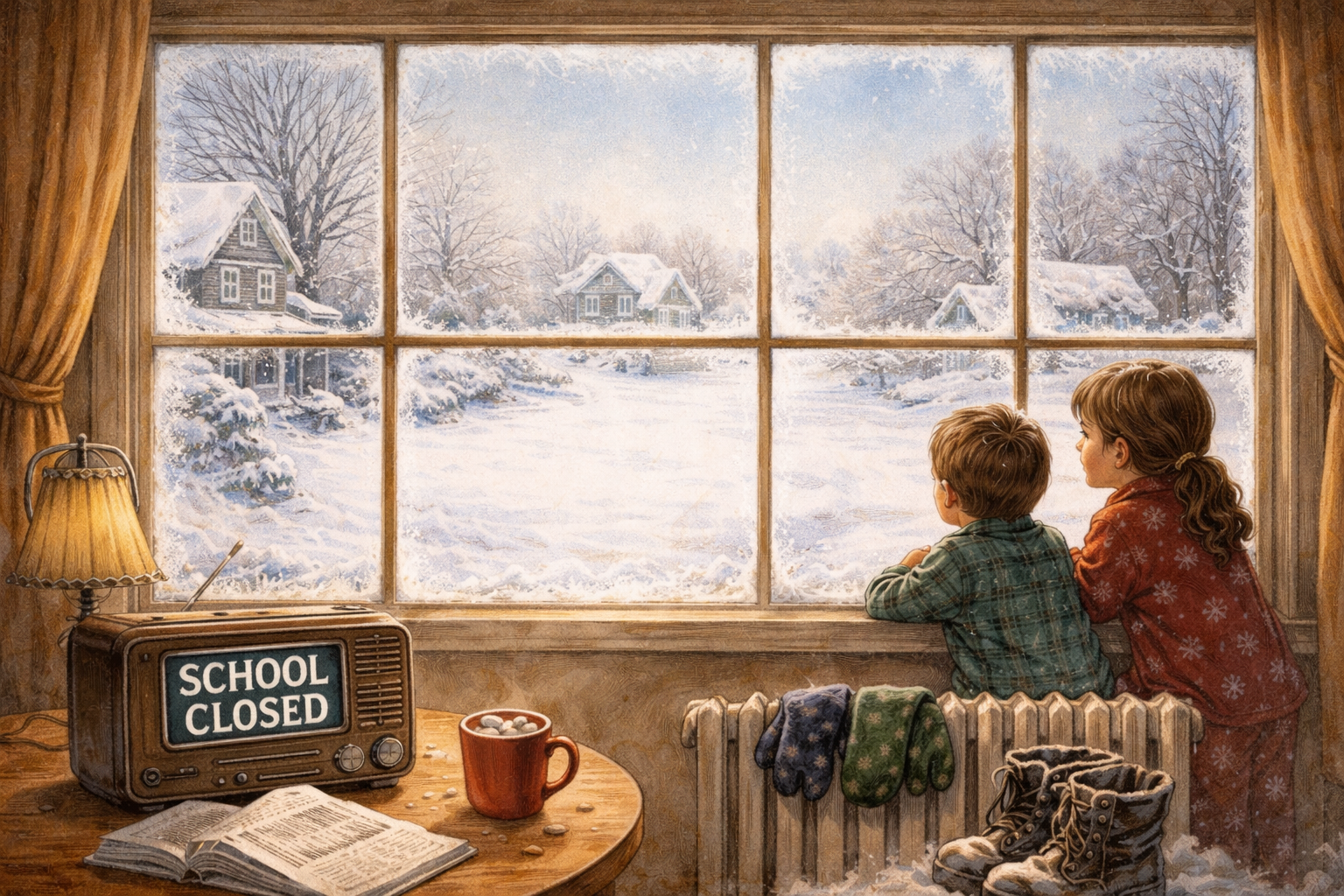
You didn’t check an app or scroll through email. You listened. The wind rattling the windows. The scrape of a shovel somewhere down the block. The radio playing softly in the kitchen while coffee brewed.
Then came the moment of suspense: the list of school districts read aloud on WCBS radio, in alphabetical order, each name a small drama. When your school was finally announced as “closed,” it felt like winning the lottery. No homework. No tests. No bus ride. Just an unexpected gift of time.
A few years later, school closings migrated from radio to television. You’d sit inches from the screen, eyes locked on the bottom crawl as district names marched past in alphabetical order. The tension was unbearable—if you blinked and missed your town, you had to wait another five agonizing minutes for the list to loop around again. When your school finally appeared, followed by the word closed, the house erupted in a victory cheer.
A snow day wasn’t merely school canceled; it was childhood interrupted in the best possible way. Pajamas stayed on longer. Breakfast stretched out. The world outside looked newly invented—streets muffled, cars buried, familiar landmarks transformed into something soft and unrecognizable.
There was sledding, for those lucky enough to live near a hill. I remember the ritual struggle of pulling on wool socks, leggings, jeans, and those stiff, swishing snow pants. Hours were spent building snow forts, inevitably followed by a snowball fight.
Eventually, we came back inside with red, stinging cheeks and numb toes. Damp wool gloves were laid over the heater, wet boots lined up nearby. And finally, there was hot cocoa—and the realization that we still had the entire afternoon to do absolutely nothing.
Parents seemed to accept the truce as well. The rules bent a little. Screen time expanded (though the “screen” was a television back then). The day unfolded without schedules, bells, or urgency. It was a pause—a shared acknowledgment that nature had won, and that was somehow okay.
Today, snow still falls, but the spell is harder to cast. A cancellation no longer means freedom; it means remote learning. The laptop has replaced the backpack. Pajamas are still worn, but now they’re paired with a login. The snowy window has become a backdrop rather than an invitation. The day continues, just indoors and online, as if the storm were merely an inconvenience rather than an event.
To be fair, there’s something efficient—and even admirable—about this. Any teacher will tell you the frustration of losing multiple instructional days to snowstorms. It disrupts continuity, which is why remote learning has become the default.
But something has been lost. While this keeps the curriculum on track, it strips away the soul of the experience. The snow day was a reminder that not everything can—or should—be optimized. Sometimes the right response to an unplowed road or a buried sidewalk was simply to stop, look outside, accept the disruption, and enjoy it.
A snow day was once a rare, shimmering loophole in the annals of childhood—a day stolen from the calendar, a gift from the heavens that turned an ordinary Tuesday into an unexpected Saturday.
It was more than just a break from school; it was a lesson in spontaneity. It taught us that sometimes the world pauses, and when it does, the best thing you can do is put on your boots and go outside to meet it.
For those who grew up with them, snow days live on as small legends: the morning you didn’t expect, the day that belonged to no one and everyone at once. And maybe that’s why they linger in memory—not for the snow itself, but for the rare permission it gave us to do nothing at all.