Walking Beside, Not Ahead: Mentorship, Leadership, & Continuity
When I retired from my role as a Jewish Federation CEO, I imagined that leadership would gradually recede from my daily life. Fewer decisions, fewer urgent calls, fewer moments when responsibility felt so immediate. What I did not anticipate was how much I would miss the thinking—the careful weighing of complexity, the moral tradeoffs, the quiet judgments that rarely make headlines but define leadership, nonetheless.
That is why, when Amitim reached out, I said yes.
Amitim is a community composed largely of retired Jewish Federation CEOs and senior communal professionals—people who have stepped away from formal roles but not from responsibility. Its premise is simple and deeply resonant: that experience does not expire. It can be offered—humbly and intentionally—to a new generation of leaders navigating challenges that are at once familiar and profoundly changed.
My own involvement was personal as well as professional. Amitim’s founder and executive director is a longtime colleague and friend—someone whose judgment I trust. When he asked whether I would mentor a first-time non-profit CEO in Israel, I understood immediately that this would not be about dispensing advice. It would be about accompaniment.
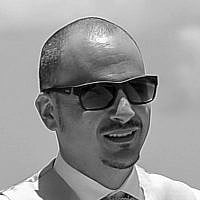
That is how I came to walk alongside Jonathan Denenberg, as he stepped into his first CEO role at Tzionei Laderech. Jonathan entered leadership at a moment of extraordinary complexity—made even more so by the events of October 7th, which altered Israeli society in ways that are still unfolding. Tzionei Laderech works at a delicate and essential intersection: reducing dropout rates among at-risk populations in higher education, particularly graduates of Haredi and Arab education systems, while simultaneously strengthening social cohesion through sustained weekly encounters. These include ongoing meetings between Haredi students and the general population, and between Arab and Jewish students.
Even before October 7th, this work required patience, trust-building, and an ability to hold competing narratives. After October 7th, the ground shifted beneath it. Relations between Jews and Arabs grew more strained. Fear, grief, and suspicion entered spaces that had previously been built carefully on dialogue. At the same time, the philanthropic landscape changed dramatically. Much of the charitable giving supporting work in Israel—both from within the country and from Jews and supporters of Israel throughout the Diaspora—was understandably redirected toward urgent needs emerging from the crisis. Long-term social initiatives, no matter how vital, became harder to sustain in an environment where personal and communal priorities narrowed toward immediate security and geopolitical uncertainty.
Jonathan was navigating all of this while learning how to be a CEO for the first time.
Our mentoring relationship unfolded over what would ultimately be 18 months, and it was shaped indelibly by the national moment. Nearly every conversation we had began the same way. Before strategy, before governance, before budgets or boards, Jonathan would pause and share reflections on what was happening in the country—and how it was affecting not only his work, but his family as well. Those check-ins were not perfunctory. They were grounding. They acknowledged that leadership during this period was not something one could compartmentalize neatly from personal life.
Only then would we turn to the work itself.
My role was never to tell Jonathan what to do. It was to help him think when thinking felt difficult—when the noise was loud, the pressures unrelenting, and the path forward unclear. We talked about leading an organization whose mission depends on relationship-building at a time when trust was eroding. We talked about fundraising in an environment where worthy causes were competing not just with one another, but with existential fear. We talked about how to hold fast to long-term social responsibility while honoring the immediacy of national trauma.
There were moments when Jonathan wanted certainty— “What would you do?” And moments when it would have been easy to offer it. But mentoring, at its best, resists that impulse. The goal is not to lend one’s confidence, but to help another leader develop their own. Over time, I watched Jonathan grow more grounded in his judgment. He became more comfortable sitting with ambiguity, more deliberate in his decisions, and more assured in his understanding of what kind of leader he needed to be at this moment.
What struck me most was not his resilience—though there was plenty of that—but his clarity of purpose. Even as fundraising became harder and social cohesion more fragile, Jonathan remained deeply committed to Tzionei Laderech’s mission. He understood that bridging divides is not work one pauses during crisis; it is work that becomes harder and more necessary precisely because of it.
Mentorship is often described as a one-way transfer of wisdom. In truth, it rarely works that way. I learned a great deal from Jonathan—about leading with empathy, about acknowledging vulnerability without surrendering authority, and about what it means to hold responsibility during a time when answers are scarce. His generation of leaders brings a different relationship to power and transparency, and a deep awareness that leadership today is as much about presence as it is about direction.
As our formal mentoring period drew to a close, I found myself reflecting less on what I offered and more on what I was privileged to witness. Watching a new CEO grow into leadership under such conditions—claiming the role fully, thoughtfully, and with moral seriousness—has been profoundly meaningful.
That, ultimately, is what Amitim represents to me. Not a program, but a commitment: that those of us who have spent decades in communal leadership still have a responsibility to walk beside those now carrying the weight forward. Saying yes to mentorship is not about holding on to influence. It is about continuity—of values, of responsibility, and of care for Israeli society, even when the future feels uncertain.
Walking alongside Jonathan through those 18 months has reaffirmed that belief. Titles may end. Leadership—especially when practiced with intention and compassion—does not.