

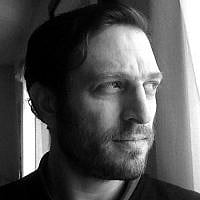
Wan-I Yang Interview | Alexandre Gilbert #342.3

Wan-I Yang is a Taiwanese professor at the Institute of Philosophy, National Sun Yat-sen University.
III. SOLITUDE AND THE OTHER
The transformation of the meaning of truth
The transcendental meaning of the tradition opened by Socrates and Plato shapes the construction of the modality of the subject in Western philosophy; this kind of subject, which transcends the limit of existence, is no longer “the human being” caught within the real of existence. This kind of transcendence, realized in opposition to existence, thus appears as an irreversible movement that denies its own origin in the direction of an ascent. According to Parmenides, being is immobile; according to the coherent principle between being and thought, what thought holds is therefore eternal truth. Transcendence in the tradition of Socrates and Plato is a spiritual activity oriented toward eternal truth; it is also an effort to escape the dilemma of being, in pursuit of universal value — just as Abraham indicates: the path of transcendence is Isaac’s relief.
Kierkegaard’s account produces a strong dramatic tension between Isaac and Abraham, who points Isaac toward transcendental truth; it seems that Isaac, who is about to be killed, is deeply convinced by the words of the father who is about to kill him. If we say that Isaac believes his father regarding transcendence, we should rather say that his trust in Abraham brings about his belief. We see once again how immanence realizes transcendence by being the origin of transcendence. But as the analysis above shows, the path of transcendence indicated by Abraham is grounded in his love for Isaac; once Abraham’s immanence is lost, it seems that Isaac can no longer continue to believe this truth. Once the modality of the value of objectivity, universality, and eternity that appears in the transcendental mode leaves its origin — immanence — would it harden into mere rule? Once the eternal transcendental truth of traditional philosophy loses its immanent foundation, what would become of it once it leaves behind life and the feelings between people?
In the tradition that opposes the world to reason and opposes immanence to transcendence, the subject of philosophy is reason transcending the limit of existence, but not the human being. Under this tradition, the relationship between reason and the human appears as opposition because of human immanence; the modality of truth constructed by the tradition of intellectualism grounded in this reason must hold itself apart from humanity. If we affirm that the subject of philosophy is the human being, then the first mission of philosophy is to reduce the relationship between the human and the phenomenon, and also to recognize that the human vision is not absolute. For the human being, truth is always found within concealment; one must strive to exhaust its possibilities from various angles of view — the effort of “even if it is impossible to possess the truth, one must still try to approach it” thus appears as the “truth” of the human being. Such a replacement of judgment by description, in order to avoid the power (for Plato) and the violence (for Derrida) constructed by the single view of reason, is perhaps one of the possibilities that constructs the modality of human truth.
If truth is always found in concealment for the human being, then when we think of this father who suddenly becomes the hideous Abraham within this modality of truth, we discover that Abraham directs Isaac, through his words, toward transcendental truth (the heavenly father of absolute universal truth) in order effectively to hide their bond of blood and kinship. When Isaac faces transcendental truth in the manner of belief, the human truth to which he belongs (as Abraham’s son) is further concealed. This leads us to recall Oedipus, who fulfills the oracle instead of escaping it. The oracle is fulfilled upon him precisely because, being extremely intelligent, he interprets the oracle through reason. He attempts to escape misfortune through causal reasoning, but because of this very reasoning, he gradually fulfills the oracle. As a construction of the oracle, does the multidimensional truth presuppose that the human being will construct the characteristics of absolute truth through the laws of logos — totality? Does it presuppose that the absolute truth constructed by reason would cover over the other dimensions of truth? If Oedipus accepts that the truth belonging to the human being is always in concealment, yet does not reason in a rational manner in order to take refuge, would the oracle still occur? Perhaps we should ask ourselves: “Would the oracle still be an oracle?”
The human for the Other — A bold hypothesis for Socrates’s heart, prompted by Abraham’s immanence in Kierkegaard
Isaac, loved by Abraham, is the continuation of Abraham’s own greater self by blood; Isaac is also someone other than Abraham — an other. Abraham’s love and duty toward Isaac are not merely affection for his son, but also affection for the other. Yet when Abraham, about to kill his son, points Isaac toward the transcendental path through logos, at that moment the relationship between Abraham and Isaac is simply the affection of a human being for another; because once Isaac is killed, Abraham’s greater self would lose its continuation (Isaac being Abraham’s only descendant), Abraham’s pointing Isaac toward the transcendental path cannot save his greater self from extinction — it carries only compassion for the other.
Through Abraham, we discover that the realization of transcendence is grounded in affection for the other; we also discover that phenomenal reality — affection — which stands opposed to eternal truth, is the driving force for realizing truth. Abraham’s immanent love (or his affection for the other) is a reality that cannot be theorized; this reality, valid only within the phenomenal, cannot be “seen,”[^27] which recalls how Levinas, in God, Death, and Time, invites us to pay attention to those who are not “seen” in the history of philosophy — those who face Socrates’s death with their emotional side,[^28] in contrast with Socrates, who does not see feelings and always faces his own death with reason. His transcendental image, as described by theory, is retained; even today people can understand the meaning of transcendence in Socrates’s theory, but they forget (because they do not see) or never pay attention to the feelings of those around Socrates.
When the human being follows the path of transcendence indicated by Socrates, presenting the scheme of truth with ever more global thought, reason with ever greater sovereignty, and a construction of ever greater solidity, the relationship between feeling and the human being (immanence) is nonetheless covered over by the grandeur of the scheme of truth. “This is the whole intention of the Phaedo: theory stronger than the anguish of death,”[^29] but within Socrates’s intention to cover over feeling with theory, might it be possible to understand a spirit that does not wish those around him to suffer because of his death?[^30] Just as, in our bold hypothesis, Abraham points Isaac toward the path of transcendence because of his feeling for Isaac — if we were to ground the entire development of Western philosophy’s advance toward transcendence upon Socrates’s feeling for the other, would this too greatly violate the character of transcendental truth as detached from the profane?
Just as, if we were to ground the meaning of transcendence upon immanence, would this provoke contestation for violating the purity of transcendental truth? Rational reasoning can lead people to believe in the meaning of transcendence, which is why the truth of philosophy can be pursued to this day; but faced with the feeling that even Abraham cannot express through logos, we can explore nothing of Socrates’s interiority. As for the I that presents itself[^31] in the modality of the citizen, the solitude that can only be endured, but not understood, is the only interpretation of immanence that we can offer.
CONCLUSION
The temptation to say what cannot be said arises from the desire to let feeling reappear within the domain of philosophy. The wish to let solitude express itself through its silence comes from the confidence that feeling for the other matters more than understanding. If the transcendence (belief) achieved through the virtuality of logos emanates from love, does the act of writing, grounded in “the confidence that feeling for the other matters more than understanding,” likewise constitute a transcendence flowing from immanence? Upon the foundation of love, we are able to have confidence (transcendence); because of this confidence, the human being manages to advance toward the other by freeing himself from his own immanent solitude. The clarification that holds immanence as the foundation of transcendence is not to be found in the distance separating transcendence and immanence; rather, it wishes to state that philosophy (the transcendental act of thought) arises from feeling for the human being — the interaction and the twofold face of the totality between transcendence and immanence are among the most obscure of dialectics, and yet, nonetheless, altogether real.
Notes:
[^26]: “How did reason come into the world? As it must, in an unreasonable way, by chance. It must be deciphered like a riddle.” Nietzsche, Daybreak (Aurore), Paris, Gallimard, 1989, p. 103. As in Nietzsche’s description of the birth of reason, reason, arising from irrationality and chance, possesses its own immanent foundation.
[^27]: What can be seen is rational reasoning, that is, theory — it is also the death of Socrates as described in its theoretical mode. Lévinas, Dieu, la mort et le temps, Paris, Éditions Grasset & Fasquelle, 1993, p. 27.
[^28]: Looking at Socrates’s death from the point of view of the others present, we discover that everyone weeps in the end; although most hold back their tears at first, when Socrates actually drinks the poison, each one weeps, covering his face. Crito leaves, covering his face; Apollodorus does not stop weeping. Despite Socrates’s reason and calm, an overwhelming sorrow is expressed by all present. All of them, in the end, face Socrates’s death with their emotional side; they feel consternation at the death of someone they love, unable to remain indifferent before the extinction of another’s life — even though Socrates finds that the body is merely a limit of the soul, and that death is the soul’s deliverance, the humanity of the others does not allow them to face the extinction of another’s life with the very reason Socrates taught.
[^29]: E. Lévinas, Dieu, la mort et le temps, Paris, Éditions Grasset & Fasquelle, 1993, p. 27.
[^30]: We understand that this is no ordinary person before us, but Socrates — who remains reasonable even in the Symposium, on the subject of love; when we say that this is someone whom even Dionysus cannot approach, and who nonetheless acts out of affection for the other, we must recognize that this hypothesis appears rather bold.
[^31]: Here, we hold that the relationship between the I of the subject that presents itself in the modality of the citizen, and the Self of immanence as its bearer (the Self in objective mode), appears as “representation” [représenter], and its name, “representation” [représentation], appears as mere semblance. The French word représentation carries the sense of “performing” (performing a play); the essence of theater lies in form, not in substance. As Lévinas mentions in De l’existence à l’existant: “The theater is a reality that leaves no trace; the nothingness before it equals the nothingness after it.”
Bibliography
*Kierkegaard, Søren (2000). Fear and Trembling, Paris, Éditions Payot & Rivages.
*Lévinas, Emmanuel (2004). De l’existence à l’existant, Paris, J. Vrin.
*Lévinas, Emmanuel (1993). Dieu, la mort et le temps, Paris, Éditions Grasset et Fasquelle.
*Nietzsche, Friedrich (1989). Daybreak (Aurore), Paris, Gallimard.
*Plato (1970–1971). Complete Works. Paris, Gallimard (Bibliothèque de la Pléiade, 2 vol., no. 58 and 64).