


Writing Where Intelligence Meets Strategy
War at the Speed of Light
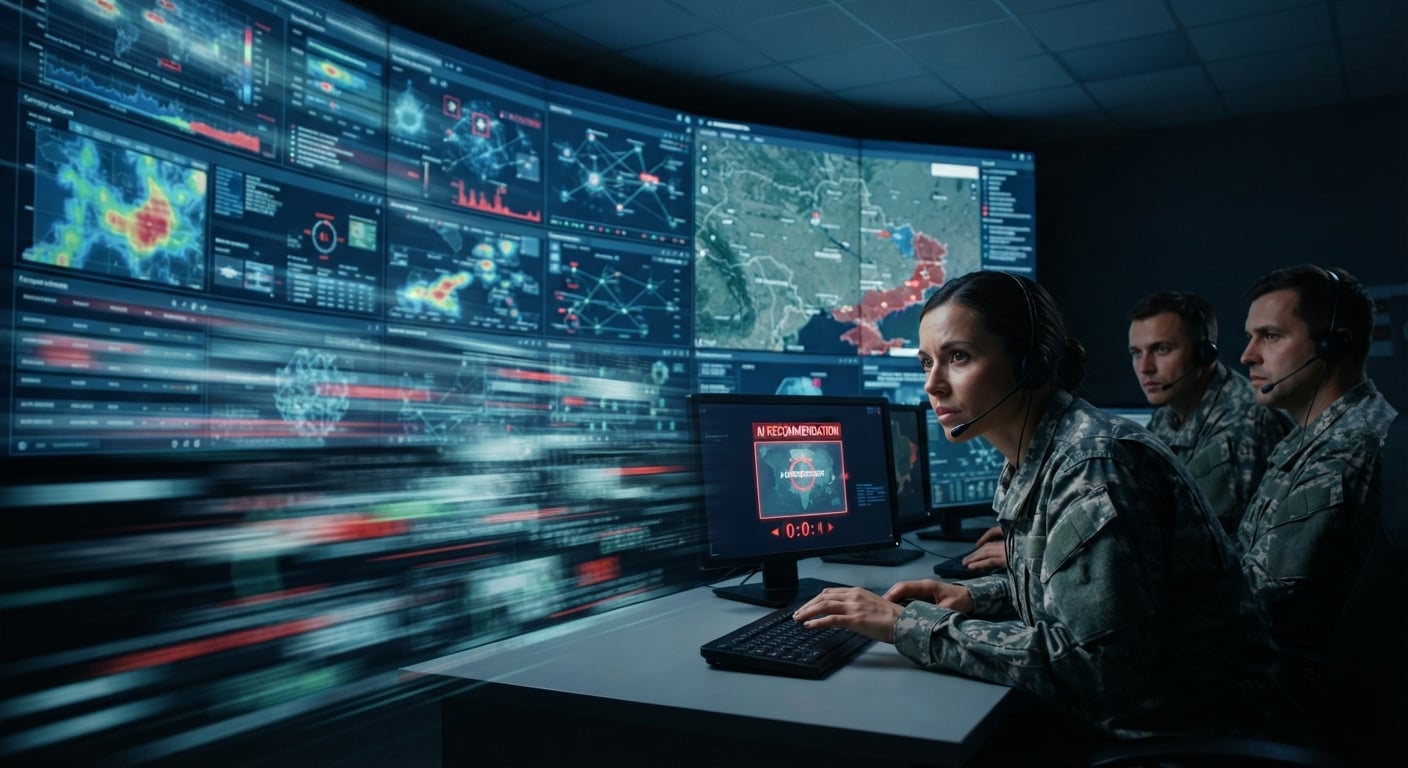
Image: AI Generation
The battlefield of the 21st century unfolds at a speed where humans can no longer think. Are we handing over the keys to the machines that run our wars?
In the operations rooms of modern warfare, time is the one resource that cannot be repurchased. As frantic streams of data from satellites, sensors, and networks flood into collection systems, intelligence officers find themselves in a losing race against an algorithmic stopwatch. Right here is where the quiet drama of the artificial intelligence era unfolds: the head-on collision between blind automation and human judgment.
The dilemma is no longer whether AI is smart enough, but what happens when it is too fast for us. Autonomous systems managing strike chains or generating targets at machine speed push commanders out of the loop. What initially looks like a wet dream of operational efficiency quickly becomes a trap: humans become helpless rubber stamps for decisions made in fractions of a second by code that does not know how to feel empathy, understand a broad political context, or recognize when data itself is biased.
This threat gains heightened significance when we realize that the adversary on the other side is not just a human army, but autonomous agents running unpredictable cyberattacks and intelligence campaigns. When an algorithm fights an algorithm, the battlefield transforms into a cold, linear space where a small error in pattern analysis could ignite an entire region before anyone has time to ask “why.”
The great paradox of technological warfare is precisely that in an era where we have more information than ever before, we understand less than ever. Victory in the wars of the future will not be decided by who holds the strongest AI system, but by the military that knows how to brake the machine in time, and bring the human back to center stage, even at the cost of losing speed.