


War, Oil and Opportunity: How the Iran War Is Accelerating the Energy Transition
The images appearing on our television screens are stark and increasingly familiar: tankers anchored uselessly outside the blockaded waterway, energy ministers in emergency session and markets convulsing with each new headline from the Persian Gulf.
Since Iran’s conflict with Israel and the United States escalated in late February, the Strait of Hormuz, through which roughly one-fifth of the world’s oil and liquefied natural gas once flowed daily, is now effectively shut. Some commentators are calling the conflict “the largest oil supply disruption in recorded history.” As of today, Brent crude stands at $109.77 per barrel, and West Texas Intermediate has surpassed $112 a barrel. Californians, never strangers to pain at the pump, are paying a statewide average of $5.89, a gallon of gasoline with San Franciscans pushing past $6.81. The world, it seems, is once again hostage to the vicissitudes of the Middle East.
And yet, neither we nor our political leaders have internalized, that something remarkable is happening beneath the surface of this crisis: the war may be accomplishing in five weeks what a decade of climate diplomacy could not.
The New Energy Calculus
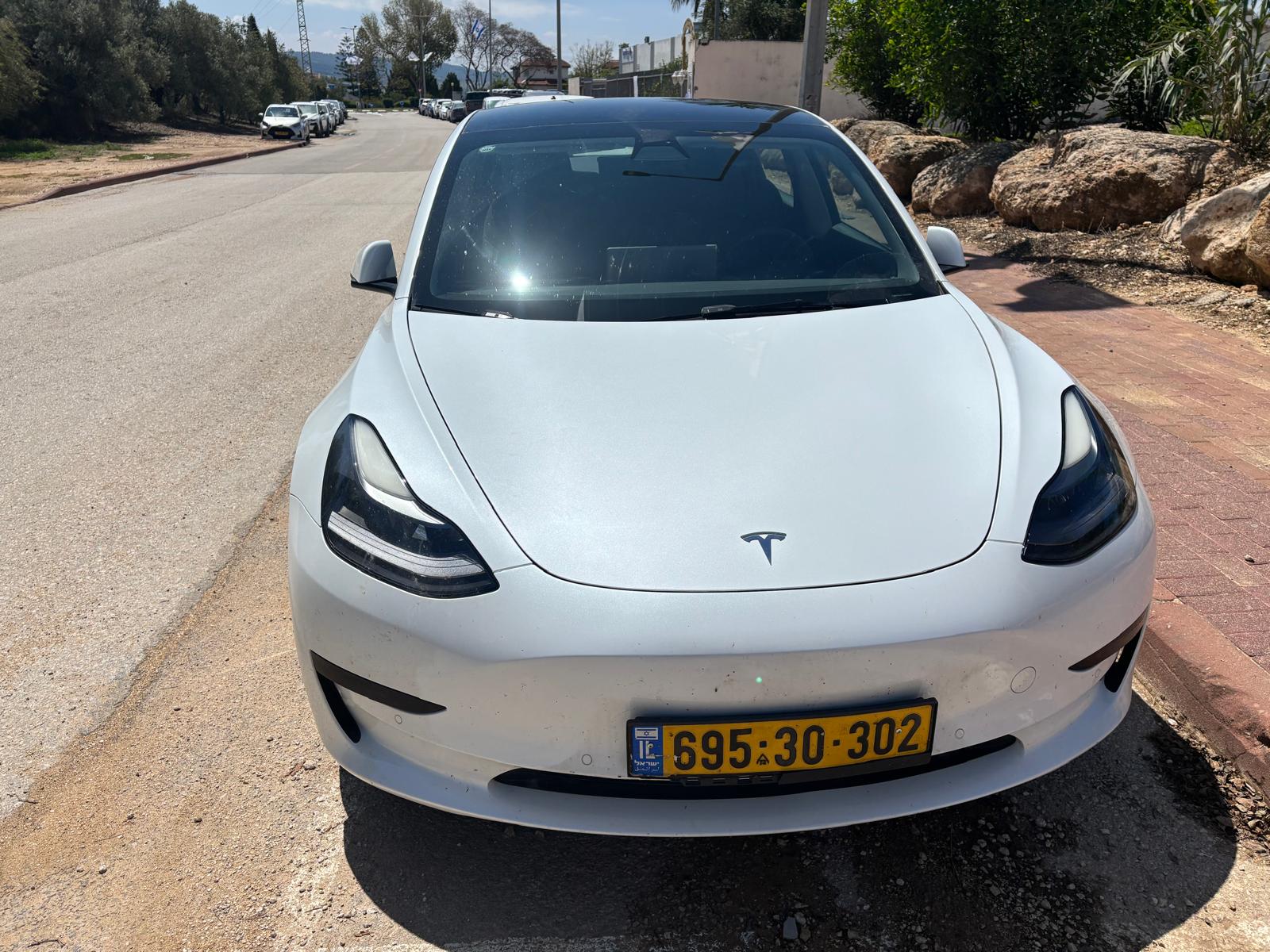
After oil prices spiked past $100 a barrel, the economics of personal transportation transformed overnight. Autrotrader reports a 28% surge in electric vehicle inquiries with electrified vehicles, accounting for a record 26% of new vehicles sold in the first quarter of 2026. In Germany, EV-related traffic on automotive platforms jumped 40%. Across Europe, used electric vehicles are flying off lots as petrol becomes simply unaffordable for working families. The $4-per-gallon threshold that economists long identified as the American tipping point for EV adoption has been blown past so decisively that it is well to ask whether the internal combustion engine as a mass-market product has much of a future at all.
This shift is not merely behavioral; it reflects a technological reality advancing before the first missiles flew. Battery energy density has improved dramatically in the past three years: the latest innovations exhibited recently by the Chinese manufacturer BYD include batteries that can be charged from 10% capacity to 70% in five minutes. The batteries maintain 80% of their capacity after 4,000 fast-charging cycles, the equivalent of one million kilometers of driving.
The total cost of ownership of an electric vehicle: purchase price, fuel, and maintenance combined, has dropped far below that of a comparable gasoline-powered car in most markets. The war merely accelerated the moment when the arithmetic for new car owners became impossible to ignore.
The World Returns to Renewables
Governments from Jakarta to Lisbon have responded to the crisis with a speed that years of UN climate summits could hardly have dreamed of. Indonesia, the world’s fourth most populous nation and a major fossil fuel consumer, has announced an audacious target of 100 gigawatts of solar power by 2030. A 200-megawatt solar plant is already under development in East Nusa Tenggara, and floating solar projects in West Sumatra totaling 170 megawatts are slated to come online by late 2026. In 2025, global renewable capacity grew by 692 gigawatts — a 15.5% annual increase, with Asia alone contributing 74% of all new additions.
Wind power is booming on almost every continent. Europe invested €45 billion in new wind energy in 2025. The UK has awarded 8.4 gigawatts of rights for offshore wind capacity. France is developing floating projects in the Mediterranean and fixed-bottom turbines off Normandy. Taiwan, South Korea, the Philippines, and India are all accelerating offshore wind programs. The conspicuous exception, it is painful to note, is the United States, where the current administration’s retreat from clean energy policy has left American wind developers watching from the sidelines as competitors race ahead.
The great beneficiary of all of this, of course, is China. Beijing’s industrial strategy, dismissed by some Western observers as market manipulation, now looks like geopolitical prescience. Chinese manufacturers control approximately 69% of the global EV battery market. CATL alone holds more than 50% of China’s domestic EV battery share and 38% globally. Chinese companies produce nearly all of the world’s solar panels at costs that Western factories cannot approach. In the global battle over visions of a sustainable versus an unsustainable economy, thanks to the Iran war, China can already claim important victories.
Israel: Vulnerable, but Beginning to See the Light
For Israelis, the energy dimension of this war is at once abstract and intensely personal. Following Iranian strikes in early March, the Leviathan and Tamar platforms, Israel’s largest offshore gas fields sat dormant for 32 days, costing the economy an estimated NIS 1.5 billion in electricity costs, lost royalties, and reduced asset values. It was a sobering reminder of how tenuous Israel’s energy infrastructure actually remains. Blackouts rippled into Egypt and Jordan, both of which depend heavily on Israeli natural gas. Environmentalists, however, should not be celebrating yet: the country’s power grid fell back on coal and diesel, fuels with their adverse health impacts and high carbon footprints. Leviathan has since resumed partial operations, but Israel’s energy vulnerability has been exposed for all to see.
Fortunately, before the war, Israel was not standing still. The Ministry of Energy has an entire division dedicated to expanding renewable capacity. Today the country is home to approximately 40,000 renewable energy installations. Israel’s formal target, submitted to the UN Climate Convention Secretariat of 30% of electricity from renewable sources by 2030, once seemed delusional. But then the Ministry of Energy’s promulgated a plan to add 100,000 additional solar systems, backed by regulatory incentives, including tax exemptions. So, we might just get there. Interest in electric vehicles has also risen by 66% since the war began, as Israelis draw the same conclusions their counterparts in Europe and the United States are reaching.
A Painful but Necessary Reckoning
Let us be honest about what this war has cost: lives, displacement, economic devastation and a humanitarian crisis that will take a long time to remedy. None of the energy silver linings discussed here justify suffering. But history rarely offers clean choices about when and how transformation arrives. And the current crisis may be providing precisely the “kick in the pants” that the international community needed to realign itself with the sustainable energy paradigm.
During 2025, the global sustainability efforts took a major hit: President Trump’s withdrawal from the Paris Climate Accord sent a signal that the world’s largest economy had abandoned the field. Investment in fossil fuels crept back up. Solar manufacturers recently recorded $40 billion in losses, as China’s top five solar companies produced twice as many solar panels as the market demanded. They were forced to cut their workforce by more than 30 percent. The war has changed this. Against all odds, the surplus panels are getting bought and production is being expanded.
The war in the Gulf has administered a shock to the global energy system that no diplomatic communiqué could have delivered. Energy security is once again at the forefront of national priorities. The fragility and foolishness of oil dependence has become very real. It is manifested in fuel queues, in electricity bills, and perhaps if things get worse, in darkened cities. If the world responds by redoubling its commitment to renewable energy, to electric mobility, and to genuine energy independence, then the current crisis may come to be seen as a brutal, but pivotal turning point. The question for Israel, and for the world is whether we will have the wisdom to seize it.