
Was the Unabomber Right?
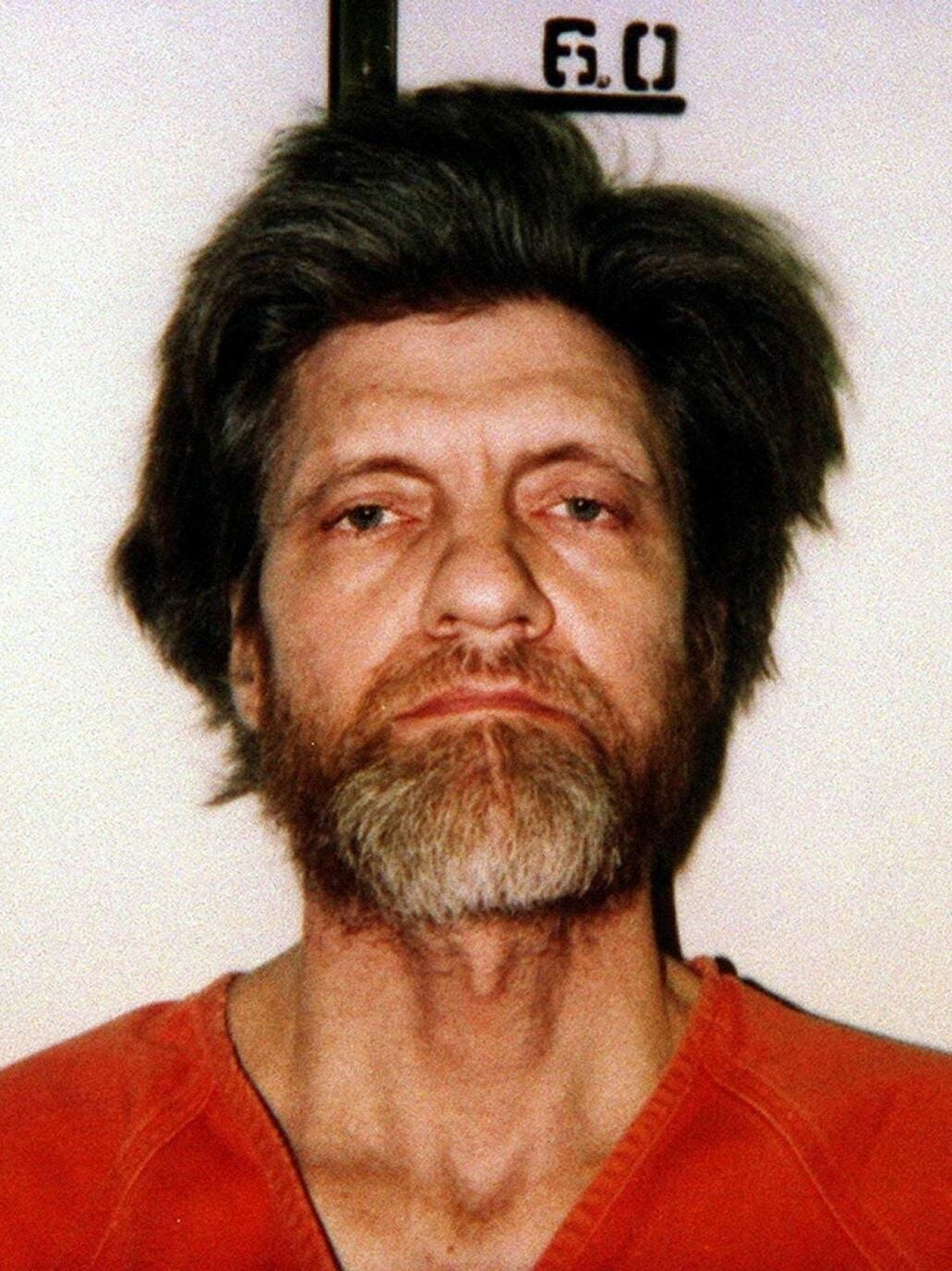
*DISCLAIMER: The author wishes to clarify that this article in no way approves, endorses, or validates the violent actions carried out by Ted Kaczynski, nor does it diminish the pain inflicted on his victims and their families to which the author wholeheartedly extends his solidarity. The author explicitly condemns all forms of violence and terrorism.
Some who read the title of this article might think I am looking to be provocative, but I am not; this is a serious analysis of the industrial revolution and its consequences for humanity that Ted Kaczynski criticized in his Unabomber Manifesto.
In the last meeting of Dizengoff Writers Group, when commenting on my article “Born to Fly”, Nathan Lyons said that I was a Luddite.
First, I thought this was a venereal disease, but then he explained that a Luddite is anyone opposed to new technology, especially computers and automation.
Historically, the term refers to early 19th-century English textile workers who smashed machinery in protest against job losses and poor working conditions.
“By G-d, I thought, that is exactly what I am!
I do not oppose technology in general; I oppose the internet revolution and openly oppose generative AI. I believe in technology that serves the human being.
Ted Kaczynski was a former Harvard-educated mathematics professor who waged, in the 80s and 90s of the last century, a 17-year mail bombing campaign across the United States, killing 3 people and injuring 23. He was driven by a radical anti-technology ideology.
In his manifesto, written in 1995, called Industrial Society and Its Future, discovered by the FBI on his compound, Kaczynski argues that the Industrial Revolution began a deeply harmful process in which technology progressively destroys the natural world and forces human beings to adapt to machinery, creating a social and political order that suppresses individual freedom and human potential. Rather than seeking reform within the system, Kaczynski takes the radical position of rejecting technology itself, arguing that its advancements have led to the erosion of human autonomy and widespread psychological suffering.
The core of his argument rests on what he calls the “power process,” the idea that human beings only achieve genuine fulfilment through tasks that require real autonomy and effort toward their own survival. As industrial society advances, he argues, people are stripped of this process, leaving them miserable, purposeless, and dependent on a system they cannot control. He saw modern institutions, corporations, governments, and even leftist movements as different expressions of the same impulse to manage, regulate, and ultimately domesticate human beings.
When it came out, the manifesto seemed extreme, and not only because of the monstrous ways Kaczynski found to direct his struggle, but because he fundamentally overlooked the overwhelming benefits of the industrial revolution that lifted billions out of poverty. Between 1820 and 2000, the global extreme poverty rate fell from 90% to under 10%, driven largely by industrial production making food, clothing, and goods affordable for ordinary people. It also extended human life dramatically, with average life expectancy in industrialized nations rising from around 35 years in 1800 to over 75 today, thanks to medical advances, sanitation systems, and infrastructure that only industrial capacity made possible. And it collapsed the distances that once made large-scale trade and communication unthinkable, shrinking the cost of moving goods by over 90% through railways and steam shipping and laying the foundation for the connected world we live in today.
Notice that those statistics stop at the year 2000, when the internet became a major part of everyday life. Some people believe that after that point, globalization and changes in industry began to create new problems for society, reducing some of the benefits that the Industrial Revolution had brought over the previous 150 years.
Kaczynski predicted a world in which human beings would gradually become redundant to the systems that govern their lives, not enslaved by force, but made unnecessary by convenience. AI is the final stage of that process.
The Industrial Revolution took physical autonomy. Machines replaced the farmer, the craftsman, the builder, people whose daily survival required genuine skill and effort. That was the first blow to the power process. But humans adapted by retreating into cognitive work. We still plan, create, decide, write, and reason. Our minds are still our own.
AI is now taking over those tasks as well. For the first time in History, the chores that defined human irreplaceability: analysis, creativity, judgment, and communication are being automated at scale. The lawyer who no longer researches, the writer who no longer drafts, the doctor who waits for the algorithm’s diagnosis before forming an opinion: these are people whose power process has been outsourced. They are still present, but they are no longer the ones doing the work, and that is a fundamental distinction. Humans are not in charge any longer. They are working towards their extinction.
What makes this era the completion of the Industrial Revolution, rather than just its extension, is that there is no longer anywhere outside the system to retreat to.
Kaczynski’s nightmare was a humanity that could not opt out, where the system had become so total that survival outside it was impossible. We are not close to that system. We are there. A person who cannot navigate without GPS, think without search engines, write without AI assistance, or work without platforms owned by five corporations is dependent in a way that would have confirmed every one of his predictions.
He was fundamentally wrong about the solution. He was not wrong about the direction. 2026 is the Unabomber nightmare, and unless we find ways to reverse the madness of the past 26 years, it will only get worse.