

We Do Not Rely on Miracles, and the Seal of God Is Truth
A recent controversy over a newly hired eighth-grade history teacher in Newton, Massachusetts, has caused me to consider how Jews can defend themselves against falsehoods. Before beginning her job, the teacher had written an undergraduate thesis about pro-Palestinian campus protests in which she described Hamas simply as a “militant Palestinian nationalist group,” accused Israel of collective punishment and genocide, and omitted the October 7 massacre and hostage-taking from her account of the war.
Since teachers are allowed to have political views, and since there was no evidence that this teacher had brought those views into her classroom, parents faced a quandary. Was there anything that could reasonably be done before a problem occurred to ensure that controversial subjects would be taught accurately, with appropriate historical context and credible sources, and with contested claims presented as contested rather than established fact?
I found myself thinking about Eitan Hersh, a Tufts political scientist who lives in Newton and is the author of Politics Is for Power. His central argument is that politics isn’t supposed to be something we watch and complain about. Real political engagement means organizing, building relationships, participating in institutions and acquiring the ability to accomplish something. Hersh calls the alternative—consuming political news and arguing about it without doing the difficult work of organizing—“political hobbyism.”
That argument made me think about the Jewish response to the situation in Newton. Perhaps Jewish parents need to become more involved in their communities—to attend meetings, understand how decisions are made, organize, support candidates and perhaps run for office themselves.
In other words, they need to acquire some power.
The problem with Jewish power
I thought about that question again during the recent controversy involving Macklemore, Ed Sheeran and Robert Kraft.
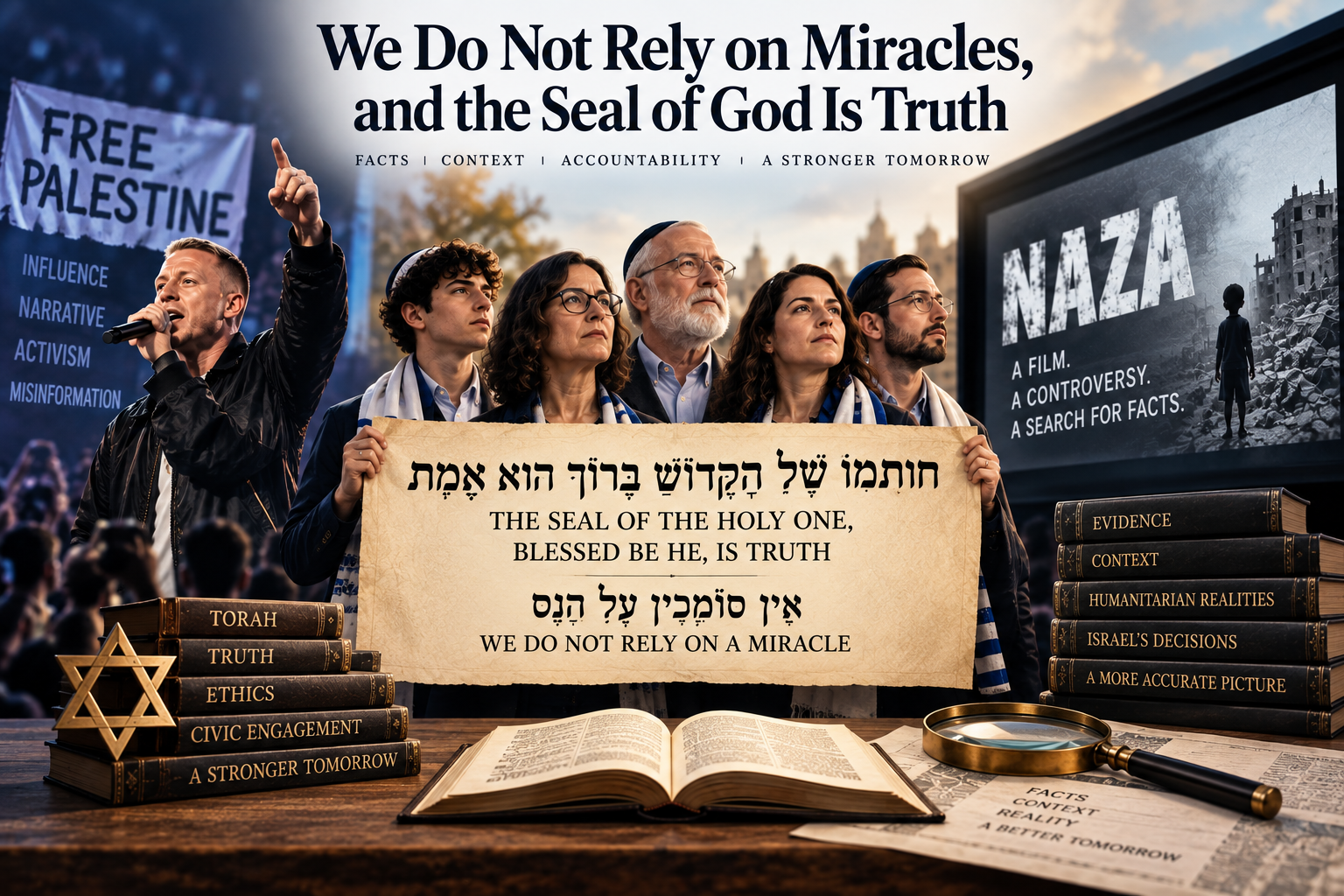
Macklemore used his appearance before an enormous Ed Sheeran concert audience to deliver a political message about Gaza, including an accusation of genocide. The audience had come to hear music, not to attend what became, for those few minutes, a political rally. Images from Gaza and pro-Palestinian protests appeared on the screens while Macklemore delivered an emotionally charged indictment of Israel.
Imagine how that felt to Jews and Israelis in the audience. They were surrounded by tens of thousands of people while enormous screens showed images from a terrible war and the man controlling the microphone accusing Israel of genocide. While Macklemore tried to assure Jews that his criticism wasn’t antisemitic, his words rang hollow for many Jews, including the Jewish singer Pink.
Pink responded to Macklemore in an Instagram post: “You don’t get to decide that for us.” She explained that the performance had frightened her and people she loved and asked others to think about the Jewish family nearby who might feel scared or targeted.
Of course, there was no military expert onstage to explain the extraordinary difficulties of urban warfare, no discussion of Hamas’s conduct or the military environment in which Israel was fighting, and no one to tell the audience that experienced military analysts have reached very different conclusions about Israel’s efforts to protect civilians. John Spencer, one of the world’s leading scholars of urban warfare, has visited Gaza with the IDF and studied its civilian-protection measures in detail. His conclusion could hardly be more different from the picture Macklemore presented: “They are doing more … to protect civilians than any military has in the history of war.”
A microphone, an enormous audience, and the ability to present a one-sided description of an extraordinarily difficult urban war—that is power too.
Robert Kraft has another kind of power. He is a wealthy Jewish businessman, owner of the New England Patriots, and a man who has devoted considerable resources to combating antisemitism. Kraft objected to Macklemore’s continued participation in the tour, and he was not alone. Multiple venue owners ultimately told the promoter that they would not host concerts with Macklemore on the lineup, and Macklemore was removed from the remaining dates.
Immediately the discussion turned to another kind of power: the power of a Jewish billionaire. Representatives Alexandria Ocasio-Cortez and Pramila Jayapal were among those who objected to what had happened. Both focused on the power being exercised against Macklemore and his political expression.
But what about the Jews?
A member of Congress doesn’t have to agree with Robert Kraft’s response to recognize why many Jews found Macklemore’s performance disturbing. Acknowledging that experience doesn’t require minimizing Palestinian suffering.
What troubled me was the asymmetry. Kraft’s power became part of the story. But what about Macklemore’s power? And what about the people in that audience who experienced his use of that power not as a courageous political statement but as something frightening?
Entertainers acting insensitively is one thing. But I expect more from members of Congress. They should make an effort to understand the people on both sides of a controversy, particularly when one of those groups is a tiny minority with a very long history of discovering that accusations against Jews can have consequences.
Jews constitute only about 0.2 percent of the world’s population. When accusations against Jews or Israel spread through the vastly larger surrounding culture, Jews can easily find themselves badly outnumbered.
That makes other legitimate forms of influence—political organization, institutions, wealth and cultural influence—especially important if Jews are to be able to defend themselves.
A people that could not win by numbers
There is something else worth considering about Jewish smallness.
Judaism does not require the rest of humanity to become Jewish, and Jewish tradition recognizes that there are righteous non-Jews. Nor are Jews permitted to conquer the world. The great medieval Jewish sage Nachmanides—Ramban—famously understood conquering and settling אֶרֶץ יִשְׂרָאֵל — Eretz Yisrael — the Land of Israel as a positive commandment. Indeed, he explicitly says that Jews may not leave the Land of Israel in order to conquer and settle other lands for themselves. Judaism envisions a Jewish people rooted in a particular land, not a Jewish people charged with making the world Jewish through either conversion or conquest.
For most of our history, therefore, Jews could not expect to prevail by sheer numbers. We could not expect to control the governments under which we lived. We could not force the surrounding society to accept our understanding of ourselves. Very often, our defense had to begin with four simple words: But that isn’t true.
A religion of truth
The importance the Torah places upon truth is difficult to overstate.
One of the Ten Commandments says:
לֹא תַעֲנֶה בְרֵעֲךָ עֵד שָׁקֶר
Lo ta’aneh v’rei’akha ed shaker.
“You shall not bear false witness against your neighbor.”
The immediate command concerns false testimony. But its moral resonance for a people repeatedly subjected to false accusations is hard to miss.
The Torah makes another demand:
מִדְּבַר שֶׁקֶר תִּרְחָק
Midvar sheker tirchak.
“Distance yourself from falsehood.”
It does not merely tell us not to lie. It tells us to keep far away from lies.
And חֲז״ל — Chazal — our Sages of blessed memory make an even more extraordinary statement:
חוֹתָמוֹ שֶׁל הַקָּדוֹשׁ בָּרוּךְ הוּא אֱמֶת
Chotamo shel HaKadosh Baruch Hu emet.
“The seal of the Holy One, blessed be He, is truth.”
Truth is not merely a precept in Judaism. It is associated with God Himself.
And that understanding gave Jews the strength to persevere when persecuted by grotesque false accusations.
Jews were accused of murdering Christian children and using their blood for Passover. They were accused of poisoning wells. They were accused of deicide. A Jewish community facing a blood libel had few defenses other than to state: But that isn’t true. They could point to Jewish law, which prohibits consuming blood. They could produce their texts. They could appeal to rulers, church officials or courts willing to examine evidence. They could try to demonstrate that the accusation itself was false.
Truth did not prevent Jews from being murdered because of lies. But it was a defense we always had, and it helped prevent other people’s lies from changing what we knew to be true about ourselves.
Nowhere was that more consequential than in the Jewish relationship to the Land of Israel. For nearly two thousand years, Jews remained true to the story of who they were and where they came from. That story was preserved in our Bible, our prayers, our holidays and our rituals. Jews prayed facing Jerusalem. At Passover we said, “Next year in Jerusalem.” We mourned the destruction of the Temples on Tisha B’Av. We continued to call the land אֶרֶץ יִשְׂרָאֵל — Eretz Yisrael — the Land of Israel, and Jewish communities maintained a presence there through the centuries.
Even when return seemed almost unimaginable, Jews remained true to that history. And when the Zionist movement eventually made the case for a Jewish return to the Land of Israel, it could draw upon a truth the Jewish people had preserved through centuries of exile.
Indeed, the Jewish claim to the land was not merely a modern political aspiration. It rested upon a documented historical connection that even the United Nations Special Committee on Palestine acknowledged in 1947 when it referred to the Jewish people’s “historical association with Palestine.”
And by then another truth had become impossible to ignore. The nations of Europe that had so often presumed to judge Jews—our religion, our customs, our loyalties and our morality—had demonstrated the terrible limits of their own moral authority. The Holocaust was perpetrated by one of Europe’s most culturally and technologically advanced societies, aided by collaborators across the continent, while other countries had too often closed their doors to Jews trying to escape.
The majority cultures had possessed the power to judge Jews, persecute Jews and spread falsehoods about Jews. What they did not possess was the power to make those falsehoods true. In the end, a tiny and often powerless minority’s commitment to truth proved more enduring than the falsehoods imposed upon it.
When the accusation is against us
That principle is being tested right now.
A new Israeli documentary, NAZA, makes extremely serious allegations about IDF conduct in Gaza. It relies on testimony from 24 anonymous Israeli military and intelligence personnel. The IDF strongly disputes some of the film’s allegations. But what interests me most about the controversy is not simply that the two sides disagree. It is the question at the heart of this essay:
Where is the truth?
Veteran Israeli journalist Raviv Drucker is one of the relatively few Israelis who has actually seen the entire film. When he interviewed co-director Yuval Abraham, Drucker repeatedly challenged him about how the filmmakers could adequately verify some of the film’s allegations when the 24 military sources are anonymous. Abraham responded that the filmmakers had verified the witnesses’ identities and the cases they described. Drucker was particularly troubled by the difficulty of independently checking such serious claims when viewers are not given the witnesses’ names, units, dates or locations.
One of the film’s most extraordinary allegations is that a strike was once approved in which as many as 500 civilian deaths were anticipated. The anonymous source does not claim that 500 civilians were actually killed, and I can find no documented Israeli strike in Gaza that caused anything near that number of civilian deaths. More importantly, estimating how many civilians might be harmed by a proposed strike is what a military is supposed to do when deciding whether an attack is lawful and whether it should proceed. The IDF, however, disputes the premise of the allegation itself, saying that no such strike was ever planned or approved.
Those are serious challenges to NAZA. But they do not settle the question. The IDF still has an obligation to investigate the film’s allegations completely and honestly.
מִדְּבַר שֶׁקֶר תִּרְחָק
Midvar sheker tirchak.
“Distance yourself from falsehood.”
This is a fundamental Jewish obligation which applies when we are examining ourselves as well. And Israel has demonstrated before that an investigation does not always end in a self-exoneration.
When seven World Central Kitchen aid workers were killed by Israeli strikes in April 2024, the IDF’s investigation found grave errors and violations of procedure. Two officers were dismissed and senior commanders reprimanded.
When Palestinian-American journalist Shireen Abu Akleh was killed in Jenin in 2022, the IDF ultimately concluded that although it could not unequivocally determine the source of the gunfire, there was a “high possibility” that she had been accidentally struck by IDF fire.
If NAZA has uncovered genuine wrongdoing, Israelis should want to know. And if its most sensational allegations cannot withstand serious investigation, that should be established too.
Integrity isn’t demonstrated by discovering that our side was right every time. It is demonstrated by wanting to know the truth even when the truth may condemn us.
חוֹתָמוֹ שֶׁל הַקָּדוֹשׁ בָּרוּךְ הוּא אֱמֶת
Chotamo shel HaKadosh Baruch Hu emet.
“The seal of the Holy One, blessed be He, is truth.”
The difficulty of defending Jews
Which brings me back to Newton. What should Jews do when they believe something false is being said about them? Eitan Hersh’s argument in Politics Is for Power helped me see one part of the answer. We need to organize, participate and acquire legitimate democratic power. There is a Jewish principle that seems particularly relevant here: אֵין סוֹמְכִין עַל הַנֵּס — Ein somkhin al ha-nes — “We do not rely on a miracle.” Truth matters, but we cannot simply assume that because something is true, the truth will inevitably prevail. Jewish history provides too much evidence to the contrary.
That means Jews should be involved in their schools, municipalities and institutions. We should not apologize for participating effectively simply because effective participation gives us influence. Nor should Robert Kraft apologize merely for being a wealthy Jew with influence. His particular decisions can be debated like anyone else’s. But Jews cannot accept the idea that when an individual Jew acquires political, cultural or economic influence and uses it to defend Jewish interests, the exercise of that power is somehow inherently suspect. There are simply too few of us for that.
The same principle applies to Israel. Jews cannot return to the condition in which we depended upon other peoples for our physical protection. We do not rely on miracles. But power cannot be our only defense either. Truth did not always save us, but it remained something that no ruler, church or mob could take away from us.
Today we can do both. We can organize politically, build institutions and use whatever legitimate economic and cultural influence we possess. Israel can protect Jews who no longer have to depend entirely upon the goodwill of others. But we can also continue to defend ourselves with one of the oldest defenses we possess: truth. Not “our truth,” but truth that demands evidence from those who accuse Israel and also requires us to acknowledge evidence that makes us uncomfortable; truth that requires the IDF to investigate accusations against its own soldiers; truth that sometimes vindicates us and sometimes tells us something we would rather not hear.
The Torah tells us מִדְּבַר שֶׁקֶר תִּרְחָק — Midvar sheker tirchak — “Distance yourself from falsehood.” Perhaps that commitment to truth is one of the most important things Judaism has to offer the world. We live at a time when people increasingly seem to begin with the conclusion they want to reach and then search for facts to support it, when what is true can depend upon which political side is speaking, and when repetition can turn an accusation into accepted wisdom. Judaism demands something harder. חוֹתָמוֹ שֶׁל הַקָּדוֹשׁ בָּרוּךְ הוּא אֱמֶת — Chotamo shel HaKadosh Baruch Hu emet — “The seal of the Holy One, blessed be He, is truth.”
That is a lesson Jews have needed throughout our history, and it is a lesson we should be teaching the world.