
We haven’t learned the lessons of the Suez exodus
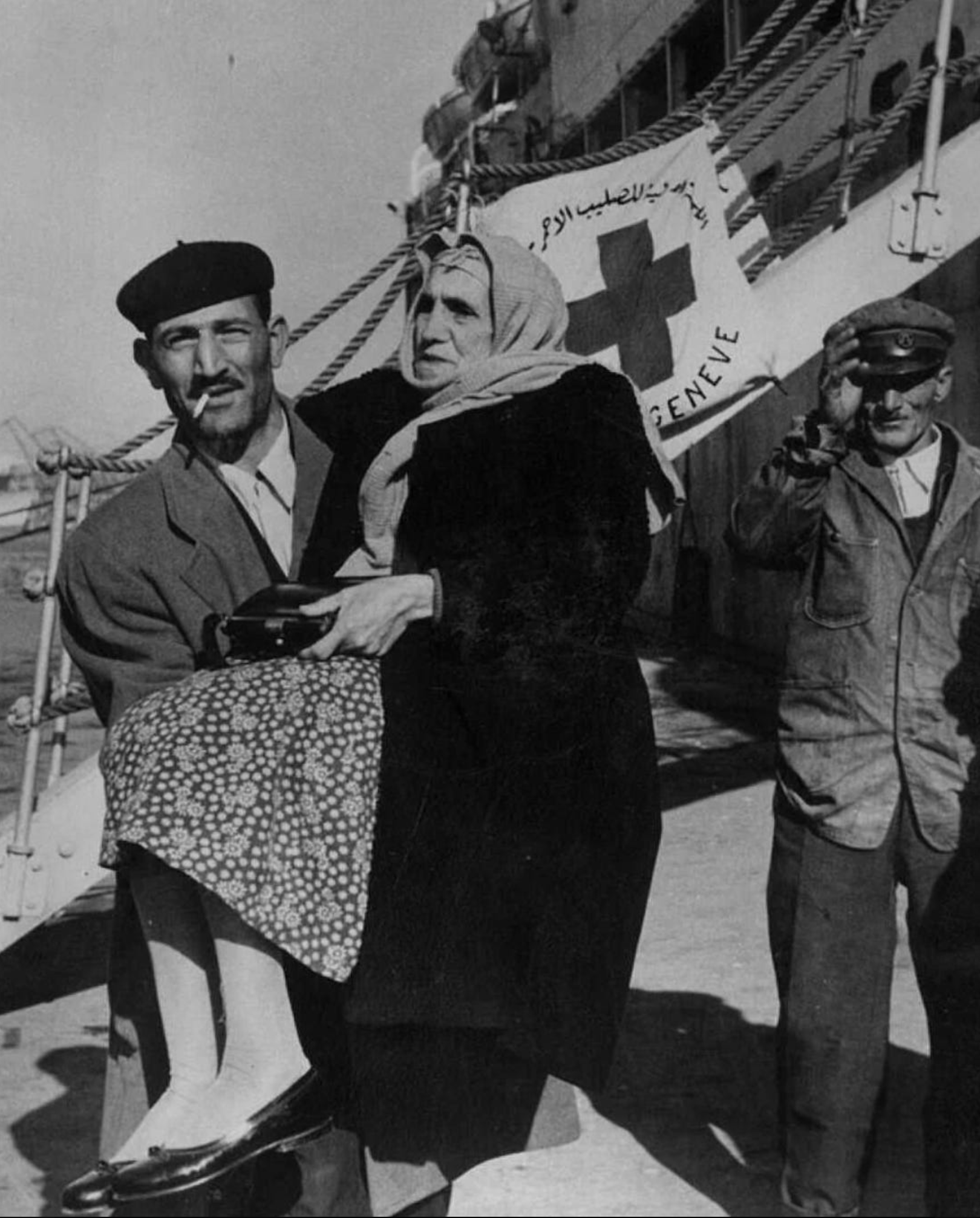
As 30 November approaches, the date in the calendar designated by the Knesset to remember the exodus of almost a million Jews from Arab countries and Iran, thoughts turn to the 70th anniversary of the Suez crisis. In the autumn of 1956, the Egyptian regime, under President Gamal Abdel Nasser, took its revenge against Britain, France and Israel for their ill-fated bid to retake the Suez Canal. The expulsion that followed was the most dramatic experienced by Jews in Arab countries. Many were given 24 hours, or a few days, to leave the country. Of 80,000 Jews in Egypt, five or fewer still live there today.
Lilian Abda was swimming in the Suez Canal when she was hauled into a police station in her bathing suit and accused of relaying information to the Israelis. The next day she and her family were expelled.
Jews who now mainly live in the UK, France, Australia, Brazil and Israel have their own memories of leaving Egypt. They recall armed men marching through their apartment brandishing their expulsion order. Fathers could not earn a living – they arrived at their offices and businesses to find the doors were sealed.
Initially the expulsion affected French and British nationals, many Jews among them. Soon enough, the persecution took on an antisemitic character, as it extended to Jews of every nationality and none, although no Jew was a citizen of Israel. In November 1956 the regime issued a proclamation : all Jews are Zionists and enemies of the state. Hundreds were interned for months and summarily deported, while their property was seized. They left with a laissez passer marked ‘One way, no return’ – bidoon ragoon. Some 25 – 30,000 Jews fled within the next 18 months.
Jews across Arab countries had property, land and assets worth $263 billion seized by Arab states. Jews in Egypt sustained the greatest losses of any Jewish community – almost $60 billion. The Smouha family built a suburb of Alexandria which to this day is known as Smouha City. They were given little compensation. The Jewish Baron Felix de Menasce owned tracts of land equivalent to 224 football pitches, but his descendants have failed to get justice. The plight of the silent and invisible Jewish victims, rich or poor, goes unnoticed, while their rights to recognition and redress go unmentioned.
Uprooted and forced to rebuild their lives elsewhere, the atomisation of communities, the dispersal of Jewish families around the world, was perhaps the most painful aspect of the expulsion.
It used to be true that the displacement of almost a million Jews was a blessing in disguise. Despite the struggles, the need to find work and learn a new language, they were lucky to resettle in free and democratic societies.
But for the last three years, Jews in the West have felt rattled. And Jews who escaped Arab states forty, fifty, 70 years ago are experiencing a sense of déjà vu. The 7 October appears almost a carbon copy of a pogrom in Libya in 1945 or the 1941 Farhud in Iraq. The bloodcurdling cry itbach al Yehud – slaughter the Jews – shouted by mobs on the Arab streets or bellowed by Umm Kulthum on Egyptian radio, finds an echo in the slogan ‘globalise the intifada’.
Supporters of the Palestinians claim that they are against Zionism, not Jews. But the Egyptian example shows how in practice the two are easily conflated. The result is collective punishment. We are not yet at the point when Zionism is being criminalised, but the early-warning signs, the main ingredients in this toxic mix, are already in place to threaten Jewish life in the West – boycotts, ostracism, intimidation, harassment and lethal violence. Already Jews in the West are thinking that they might not have a future, just like Jews in Egypt.
In the same way as Holocaust education teaches ‘never again’, so too it is imperative to teach our children about the Jew-hatred in Arab and Muslim countries – so that we are better equipped to fight antisemitism in the present – and future.