We Make Coffee Anyway
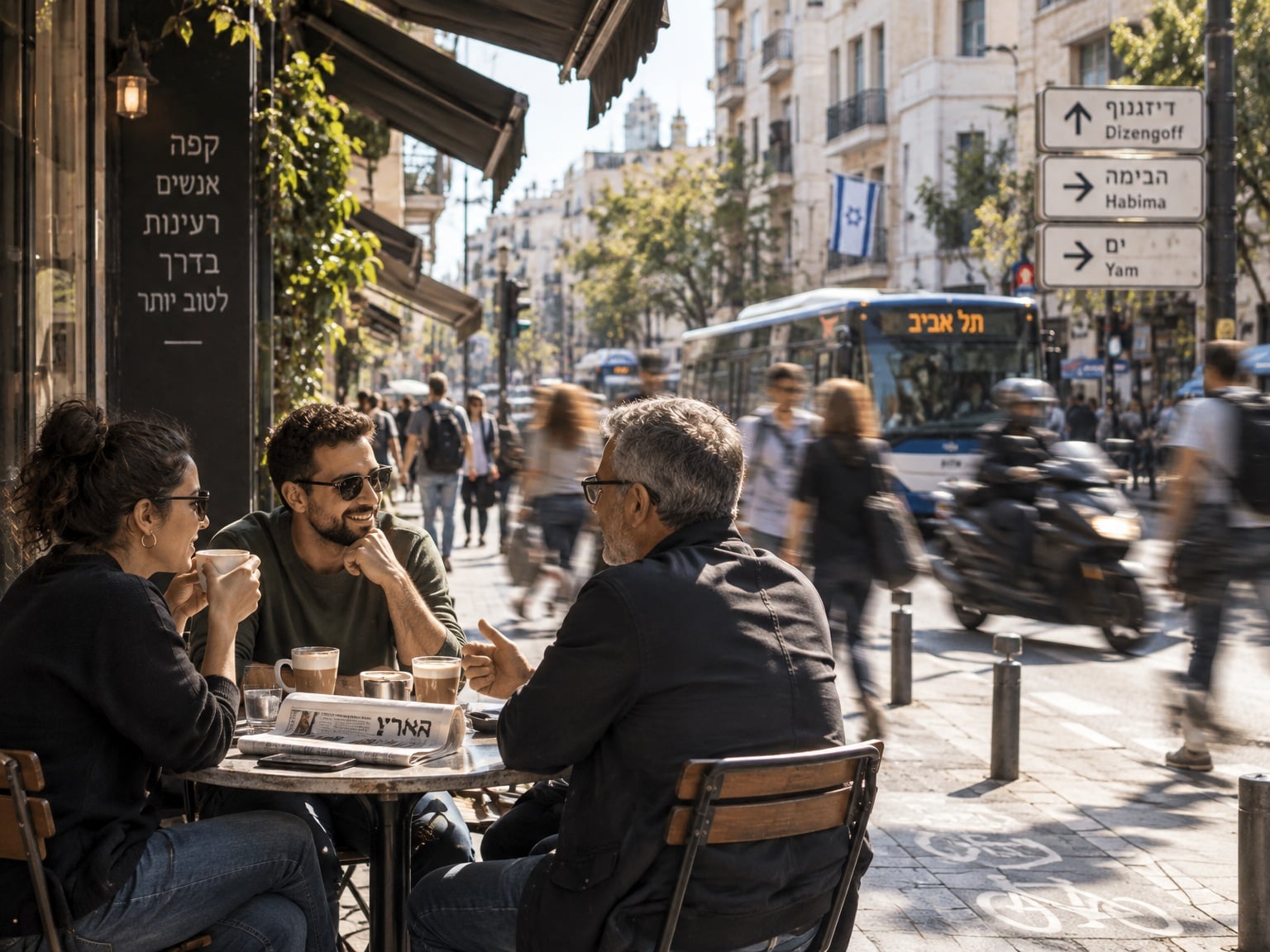
An election without a winner, a war without an ending, allies without a plan. We wake up to all of it at once and carry on.
Wednesday morning
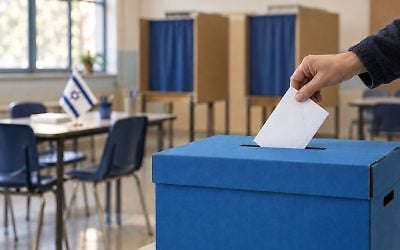
Last Tuesday we voted. On Wednesday we woke up to a country that might have a government, or might have more elections. The count gives Netanyahu’s bloc 53 seats and Gadi Eisenkot’s bloc 48, with the Arab-led parties sitting on the twenty or so seats neither side will touch. Official results land on November 4. If nobody gets to 61, we’re back at the ballot box for the seventh time since 2019.
And that was only the first item on the news. The second was Iran. The war that started in February has gone quiet, and nobody can tell you if the quiet is an ending or an intermission. Trump says America still has one or two targets to take care of. A senior Iranian official says there will be no nuclear talks and no reopening of the Strait of Hormuz until Washington accepts Tehran’s terms. The analysts say everything, another round of strikes, a deal signed over our heads, a long silence that solves nothing, waits for the American midterms. Those are tomorrow. The shape of our winter might come down to voters in Michigan.
We read it all in a few articles over coffee before we got the day started.
We trained for this
Corona was the dress rehearsal. We made aliyah in 2020, straight into the middle of it, and spent our first fourteen days as Israelis in quarantine in a rented house. The country we’d just joined was learning to plan life two weeks at a time. School was a Zoom window. Grandparents were faces behind glass on a Friday afternoon. Couples cut their wedding lists from four hundred to twenty, moved the chuppah to a parking lot, and danced anyway. We stopped asking the calendar for promises, and it turned out we could live that way.
The war finished the course. Three years of sirens taught my kids to tell an interception from an impact by sound alone. Families moved semachot into reinforced halls and kept the date. Bar mitzvah invitations now come with a backup plan the way they come with an address. In miluim I served with guys who ran their businesses over WhatsApp between shifts, closing deals from a base in the south. Rockets in the morning, invoices in the afternoon.
Somewhere in those years, uncertainty turned into weather. We check the forecast, dress for it, and leave the house.
The cost of carrying on
Now for the unpopular part. This skill we’re so proud of has a price.
A family that can absorb anything slowly stops demanding that anything change. A public that can function without a government stops insisting on one that governs for everyone. For three years we pushed off every hard national argument until after the emergency, and the emergencies learned to travel in convoy. Carrying on got us through the week, every single week. It also let our leaders treat open wounds as background noise.
Live with uncertainty long enough and it hardens into policy. A country can run for years on open questions, but only if its people agree on the direction they’re walking. We’ve got the first part down to an art. The second part is the one we keep avoiding.
The streets of Europe
We used to think instability was an Israeli specialty. Look at Europe right now. What started in September as a teachers’ strike in a Paris suburb turned into nearly a million French citizens in the streets, with burned buildings, thousands of arrests, and teenagers maimed by crowd-control weapons. By Halloween the anger had jumped the border into Berlin and more than thirty German cities, and the wave has reached Italy, Spain, Austria, Belgium, and Portugal. Spain just called a snap election of its own. A whole continent is rioting over school funding, wages, fuel, and the price of a month’s rent.
And somewhere inside a protest about rent and school budgets, rioters in Lyon found time to burn Israeli and American flags while the crowd chanted that Israel is a murderer. The chaos is general, the scapegoat is familiar. We saw that clip too, somewhere between the coalition update and the Iran update, and we moved on with our morning. That shrug says a lot about the world we’re living in.
A continent this distracted protects nobody. While the streets burn, Europe’s governments wobble, its deterrence thins, and its attention turns inward at exactly the moment wars are being decided on its doorstep. The world is sorting itself into blocs, powers that build strength together and powers that drift until someone else sorts them out. The comfortable middle ground, where a small country could stay vague and trade with everyone, is disappearing. Countries that can’t decide get decided about.
The riot the Middle East owes itself
Watching Paris, I keep thinking about a different set of streets. Europeans fill their squares over pension ages and electricity bills. The people of Gaza, Beirut, and Tehran live under something far worse than an expensive winter, armed movements and a regime that took their lives hostage for a nuclear project. And the sparks are already there. In the spring of 2025, thousands of Gazans marched against Hamas at real personal risk, and Lebanon’s 2019 protest wave told Hezbollah’s patrons exactly what the public thought of them. Those sparks need to become the fire. The change the region needs most is Arab publics standing up with the energy Europe spends on fuel prices, filling their own streets, and chasing Hamas, Hezbollah, and Iranian influence out of their countries for good. No air force can do that work for them, and no agreement signed in Geneva will hold until they do.
A turning point is a choice
Everyone can feel that this stretch could be the turning point. An election with no winner, America voting tomorrow, our own official results a day after that, a war with Iran hanging between another round and an agreement, a continent in flames. I think it can be, on one condition. Turning points are built by what people do after the news, and ours has to start at home. Whoever ends up forming a government, with 61 seats or after another trip to the ballot box, the demand from the rest of us should be the same: no more governing half the country against the other half. The math of this election is saying something the politicians refuse to hear. No tribe in Israel is big enough to rule alone anymore. Fifty-three seats can’t impose a vision on a country of ten million, and neither can forty-eight. A coalition built to punish the other camp will fall, we’ll be back in line at the kalpi, and the moment will pass us by.
The same logic points outward. Our security this year ran through an alliance, through interceptors, intelligence, and diplomacy that worked because the partnership worked. A deal signed over our heads and a war renewed on someone else’s timetable teach the same lesson. Influence belongs to partners, and a partner is a country that shows up whole. The fracture lines of the next decade are being drawn right now, between democracies that hold together and everyone else. Our place is in the first camp, and we earn it with unity at home and reliability abroad, in that order.
Today, America votes, and our radio will read out the same stack. Coalition math, centrifuges, exit polls from Ohio, burning streets in Europe. We’ll make the coffee anyway, and there’s real strength in that, the quiet, stubborn strength this country runs on. Turning points don’t announce themselves on the morning news. They show up later, in what people chose to do with days exactly like these. We learned to live without certainty. The next skill is living with each other. The mornings ahead will ask for both.