
We Want to Hear Mojtaba Khamenei…At Least
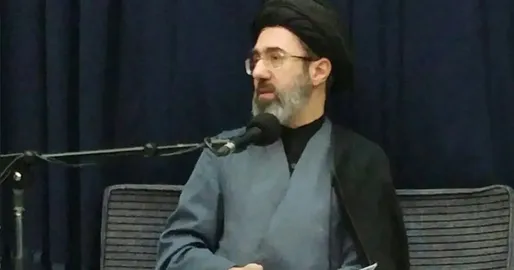
On July 11, one day after burying his father, Iran’s Revolutionary Guard released a fresh written statement in the name of Supreme Leader Mojtaba Khamenei. It vowed to avenge the blood of Ali Khamenei and of every martyr of the two wars, and it warned the killers they would carry the dream of a peaceful death in their beds to their graves. It reached wider still, declaring that free people across the world would soon each take up part of what it called a divine mission of revenge. The tone was fierce, sweeping, and precise.
And then one line, offered almost in passing. This matter, the statement said, “does not depend upon my presence,” nor on that of any other official. Read it again, because the regime has just conceded half of my case. No one is demanding his presence. No one needs him to stand in a square or ride in a motorcade, and the vengeance, the succession, and the state can all move forward without his body in view. Granted. Yet a cause pressed in his name still rests on the one thing the statement steps around. It rests on his voice.
Notice what the statement is doing. No one forced the Islamic Republic to address his absence, and yet it did, insisting the cause does not hinge on him. A confident state does not explain why its leader cannot be seen. Iran explained it unprompted, which tells us the question has already reached the inside, and the pressure with it. As with every message before it, this one arrived as text. No face, no video, no voice.
A ladder of excuses
Let me grant the regime its reasons, one at a time. Grant that he cannot appear in the open, since Israel has marked him for death and a single marksman would reach him in almost any square. Grant, too, that he will not appear on video, since a disfigured or crippled leader projects weakness before a nation at war, and the regime has spent months insisting he is whole. Grant both.
A voice is another matter entirely. What excuse survives against a recording? It gives away no location and puts no body before a sniper, and it can be made in a sealed room and carried over any loudspeaker. The security argument covers his person. It never once touches his voice. Unless the author of those war orders and vengeance threats has, somehow, also gone mute.
A republic born from a cassette
The irony runs deep, because this movement understands the power of a recording better than any other on earth. The Islamic Republic was born from one. Ruhollah Khomeini toppled the Shah from his exile in Paris, with no army and no territory, armed with cassette tapes copied and smuggled from mosque to mosque. A single voice on tape lit the revolution of 1979.
So the excuse collapses against the regime’s own legend. If a clerical voice on primitive tape could raise a nation under the watch of the Shah’s secret police, thirty seconds in a sealed studio in 2026 should be effortless. The house founded on a cassette cannot produce a cassette.
The stage has closed
The funeral offered every occasion a living heir could want, and it has now passed. For seven days the coffins of Ali Khamenei and his family moved through Tehran, Qom, Najaf, Karbala, and Mashhad, drawing more than fifteen million mourners before the burial on July 9. Mojtaba appeared at none of it. The closest the week came to a sighting was a grainy video of a robed figure watching from a Tehran balcony, a face too blurred to name, alongside AI clips that claimed to show him walking in disguise among the crowds. A nation searched for its leader in doctored footage and shadows.
At least a voice
So the demand narrows to its smallest and most reasonable form. We are not asking him to stand in a public square. We are not asking him to risk his guards or the foreign envoys who came to mourn. We are asking for the one proof that costs nothing and endangers no one. If he lives, and if he leads, let his own voice say so.
It has not come, not at the funeral, not after it, not in the statement promising to avenge his father. Iran does not need to hide the voice of a leader who is alive and in command. The Islamic Republic has hidden it anyway. So we will keep asking, and the silence will keep answering. We want to hear Mojtaba Khamenei. At least that.