Wealth Does Not Buy Safety for Palestinians
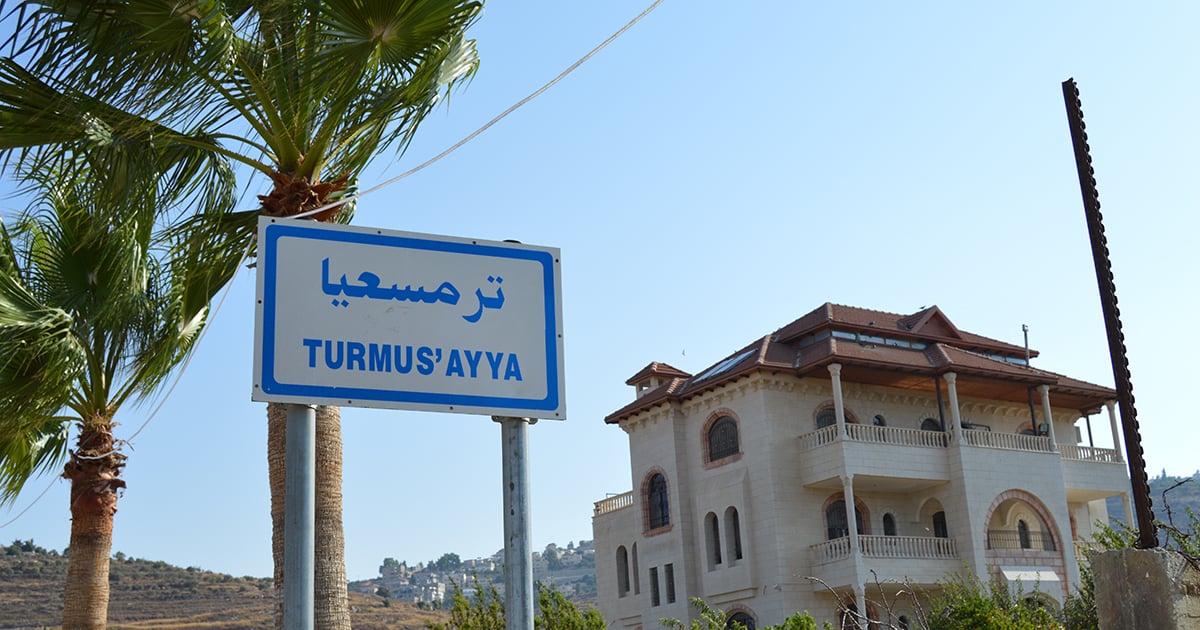
Driving north on Route 60, just past Ramallah, you reach Turmusaya, a Palestinian town sometimes referred to as “Little America.” Palm trees line the entrance. Mansions rise behind stone walls. SUVs fill wide driveways. For a moment, it does not look like the West Bank at all.
In Israeli media and commentary, Turmusaya is sometimes described as the “Beverly Hills” of the West Bank. That image is sometimes used to suggest that Palestinians are exaggerating — or even fabricating — the dangers they claim to face.
Turmusaya is wealthy. Many of its residents are Palestinian Americans who spent decades working in the United States before returning home. But what this image obscures is a basic reality of life in the West Bank: wealth does not buy safety.
In most countries, wealth comes with buffers. Money provides access to safer neighborhoods, private security, effective legal representation, and political influence. This is how capitalism normally functions: capital can be converted into protection.
In Turmusaya — and throughout the West Bank — that conversion does not work.
There are no gated communities. No private security forces with real authority. No reliable way to translate wealth into physical safety or legal protection. Economists refer to this as the convertibility of capital. In the West Bank, that convertibility is broken.
Even in societies marked by inequality and discrimination, wealth usually provides insulation. In the United States, for example, a wealthy African American may still face racism, but the state generally enforces property rights, contracts, and legal remedies. Institutions function. Wealth is defensible.
This is the core misunderstanding behind portrayals of Turmusaya as evidence that Palestinians are “doing fine.” Economic success is mistaken for security. The reality is very different.
Capitalism only works when the state enforces rights. Inside Israel proper, wealth functions because contracts are enforced and property is protected. In Turmusaya, those guarantees do not exist. Despite its mansions, the town is no safer than refugee camps.
This year alone, Palestinian Americans from the area were killed. Among them were 14-year-old Omar Rabeea from New Jersey and 23-year-old Saif al-Deen Mussalat from Tampa, Florida, who came from a wealthy town neighboring Turmusaya. Their money, U.S. citizenship, and education did not protect them.
One central reason is that violence by Israeli settlers in the West Bank is rarely punished. Palestinians live under Israeli military law, while settlers are subject to Israeli civil law. When violence occurs, Palestinians cannot rely on equal policing, thorough investigations, or effective legal remedies. Wealth cannot protect against armed civilians, nor can it reliably secure justice afterward.
A common Israeli response is that Palestinians are not Israeli citizens and therefore Israel has no obligation to protect them. The Palestinian Authority, meanwhile, lacks meaningful power to intervene. But occupation creates responsibility. Under international law, Israel exercises effective control over the territory. Palestinians therefore have rights — including the rights to life, security, and due process. Those rights are not consistently enforced.
What exists instead is a system in which Palestinians generate wealth through labor, land, and business but cannot insure it against political violence. They cannot rely on courts. They cannot guarantee that property will remain accessible, intact, or inheritable.
This reality should concern Israelis as well. A system that cannot protect civilians under its control erodes its own legal and moral foundations. It deepens international isolation, fuels radicalization, and breeds despair. It teaches Palestinians that no amount of success will ever make them safe — and teaches Israelis that power can substitute for law.
When I drive into Turmusaya, past the palm trees and the mansions, I am reminded that appearances can deceive. If there is one thing I want outsiders to understand, it is this:
Palestinians in Turmusaya live in a system that renders wealth meaningless.