
Week 4 Teaching Hebrew In Laquia: The Smell Of Clementines
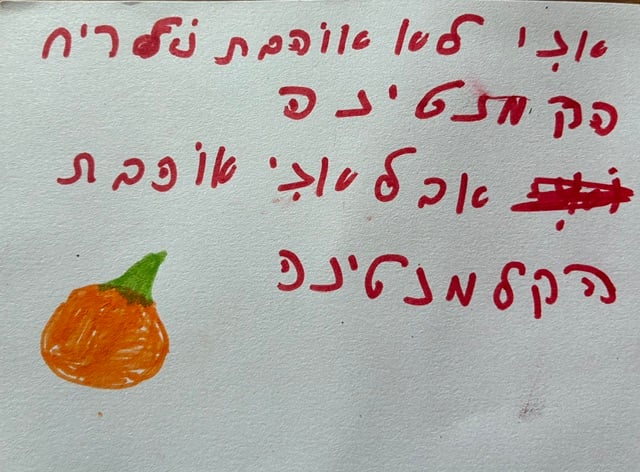
My plan for the day was to start the conversation in my spoken Hebrew class with the topic of clementines. But I was in for a big surprise: it turned out that the students couldn’t stand the smell of the fruit and made quite a drama out of it. They were ready to flee the room, and we had to put the basket of clementines outside. Nevertheless, we started the lesson with this incident: the students learned how to say in Hebrew, “I hate the smell of clementines,” and we went on to discuss winter and its fruits. In the following lessons, I left the clementines outside the room and found other topics to talk about.
The second group of students, the eighth-graders, had gone on a school trip to the Dead Sea the previous week. Contrary to their expectations, they admitted that they had had a wonderful time. They were especially impressed by their tour of the Dead Sea Visitor Center and tried to describe what they had seen in Hebrew. They had also enjoyed a short hike and spent some time at the Dead Sea Mall, where they were able to buy the food they liked and walk around.
It seems that the organizers of the school trip knew exactly how much new information and how many new sights the students could absorb, thereby ensuring that they had a wonderful day.
One student told us that he had missed the trip because of a family celebration, and he described in great detail what they had eaten at the celebration. I felt that the lesson had been successful because the students were interested in these topics and wanted to share their experiences and talk about them.
The last lesson of the day was a bit too lively. We continued working on the names of colors in Hebrew and played a game of Go Fish using colors. It seemed that the students were not familiar with the game, and I hadn’t explained the rules clearly enough. Still, I had the feeling that by the end of the lesson, they knew more about the names of colors in Hebrew.
As usual, one of the students told me, “We, the Bedouin, like or dislike something,” when what she actually meant was, “We, teenagers…” They are much more like other teenagers than they seem to realize.