
West Bank Outposts Are More Than an Enforcement Failure
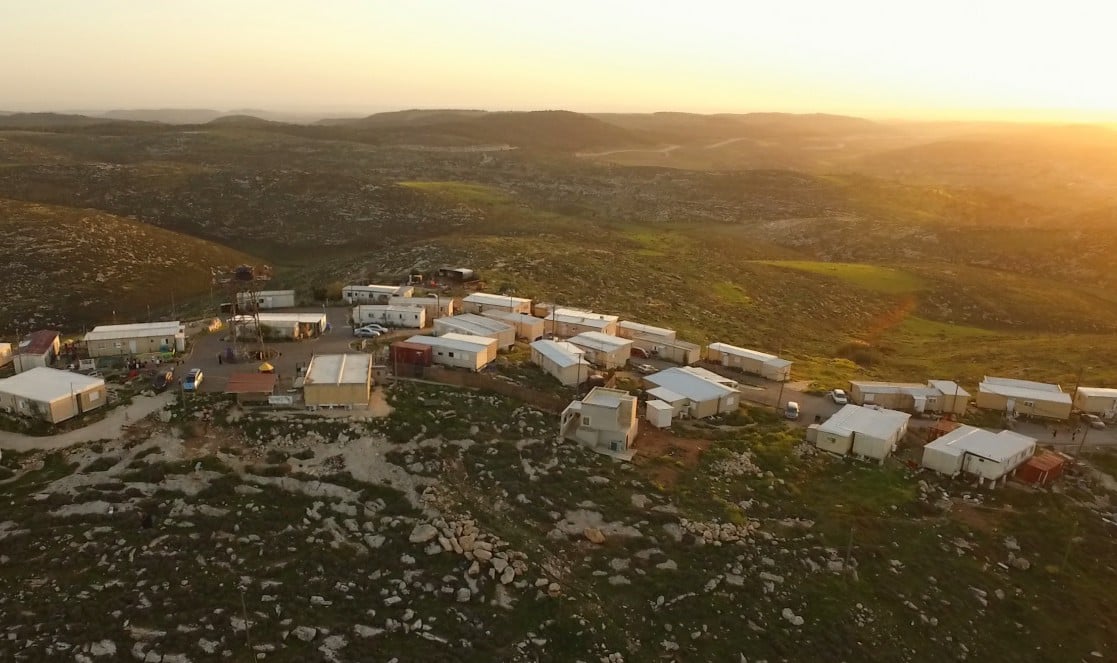
Over the past week, Israeli settlers built an illegal outpost beside Palestinian homes in Qusra and blocked the families’ access to them. The first attempt to clear the outpost failed, and after clashes with settler activists who converged on the area, Chief of Staff Eyal Zamir ordered another battalion sent in. The IDF called the activity “illegal, reprehensible and unacceptable.”
To describe this simply as another failure to enforce the law against extremist settlers is to isolate one part of a larger mechanism.
Consider what happened in earlier cases. A short drive from Qusra stands Evyatar, an illegal outpost evacuated by agreement in 2021, where settlers returned in 2023, and which the cabinet approved in June 2024 for regularization as a settlement. Homesh offers another example. A yeshiva operated there for years in violation of the law, despite repeated evacuations and demolitions. In March 2023, the Knesset repealed the provisions of the Disengagement Law that had barred Israelis from the area; two months later, the head of the IDF Central Command revoked the military order barring their return.
These precedents change the calculation. An ideological lawbreaker does not act with the authority of the state, but he may have reason to believe that he will not remain in conflict with it. He can act illegally today knowing that the political system may treat the result differently tomorrow. He is not acting for the state. He is running ahead of it. Anyone who builds an outpost today is not gambling blindly.
One might argue that those willing to act this way are a small fringe, and that much of the settlement movement itself condemns them. Both may be true. But the significance of a small group does not depend only on its size; it also depends on the conditions in which it operates. A relatively small number of people can repeatedly create facts on the ground if experience gives them reason to believe that persistence may succeed.
One of those conditions is the risk of punishment. According to Israel Police figures for 2019 through 2025, only 6.6 percent of investigations into nationalist crimes against Palestinians led to an indictment. Failed enforcement is not the whole story. But a low likelihood of punishment changes the calculation too.
That is where the role of the government becomes relevant. This government did not invent settler violence, nor did weak enforcement begin with it. Both long predate the current government. What has changed is the institutional setting on both sides of the equation: the system responsible for enforcing the law on Israeli citizens and the system responsible for settlement policy.
On the enforcement side, the number of police investigations into Jewish nationalist violence in the West Bank fell by 73 percent between 2023 and 2025, under National Security Minister Itamar Ben Gvir, even as the number of incidents recorded by the IDF increased. A decline in investigations during a period of operational strain would not be surprising in itself; what requires explanation is a decline of this size while recorded incidents were rising. On the settlement-policy side, key civilian powers were transferred from the military administration to the Settlement Administration under Bezalel Smotrich. In 2024 alone, the government legalized or began legalizing ten illegal outposts and made dozens of others eligible for government funding; Smotrich also pushed government bodies to begin preparations for the legalization of 68 more.
No single one of these facts establishes the mechanism. A low indictment rate does not make an illegal outpost government policy. The legalization of an earlier outpost does not authorize the next one, and a change in institutional authority does not turn a lawbreaker into an agent of the state. The significance lies in the combination. Past decisions shape expectations; the likelihood of punishment affects the willingness to act; illegal action creates new facts for the authorities to confront; and what the state does with those facts becomes part of the calculation the next time around. The mechanism does not require coordination between the actors involved. It only requires that each actor’s actions become part of the conditions shaping the next step.
The mechanism has another consequence: it disperses responsibility. The lawbreaker acts without state authority; the state later decides how to respond to a reality it did not formally create. The illegal act and the political response therefore belong to different actors, even when they become parts of the same sequence. What is divided is not only the exercise of power, but responsibility for how the result came about.
That is why failed enforcement is only half the story. Understanding the mechanism matters because it changes where the problem lies, and therefore what is required to address it. If the problem were simply a failure to enforce the law, the solution would be straightforward: enforce it. But if the problem is a cycle in which illegal acts create new realities and the state’s responses shape what comes next, enforcement alone cannot address it.
What happens in Qusra will not be decided at the ballot box. But the approaching election brings part of this mechanism back into the realm of political responsibility. Israeli voters cannot decide whether an ideological lawbreaker will break the law, but they do decide who governs the institutions around him: who is responsible for enforcement, who shapes settlement policy, and what priorities those institutions pursue. Breaking that cycle requires changing the political conditions that sustain it.