Western Europe’s Jewish Question
Eva Hoffman, the Polish-born writer best known for her memoir Lost in Translation, once observed that Eastern Europe was “imagined as inferior, obscure and altogether insignificant by the inhabitants of what was considered Europe tout court: Europe, which stood for civilization itself.” That prejudice still shapes how the continent sees itself. Western Europe casts itself as enlightened, modern, and civilized—but it faces a stark question today: can it still protect its Jews? While the West lectures the East on civility and progress, Jewish communities in Paris, Berlin, and now Manchester are confronting violence that challenges the very ideals the continent claims to uphold.
Blood stained Yom Kippur yesterday when a terrorist rammed a car into Manchester’s Heaton Park Synagogue, stabbing a guard and killing two worshippers before police shot him dead. Jihad al-Shamie, a 35-year-old British citizen of Syrian descent, turned a day of atonement into a day of horror—another grim marker in Europe’s surge of antisemitism since October 7, 2023.
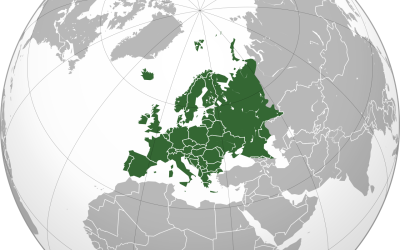
That surge is not evenly spread. It is concentrated in Western Europe, while Eastern Europe—long caricatured as the darker, less civilized half of the continent—has seen far fewer such attacks. Which raises the uncomfortable question: can the West still protect its Jews when the East, against stereotype, may be the safer refuge?
The stereotypes have deep historical roots. Eastern horrors are easy to summon—centuries of pogroms like the 1648 Khmelnytsky uprising that killed tens of thousands, or the 1903 Kishinev massacre that left 49 dead in a single day. But the West has its own ledger: the Holocaust, the systematic murder of six million Jews engineered by Germany, stands as antisemitism’s darkest zenith. Long before that were the 1190 York massacre, when 150 Jews were slaughtered, and the 1492 expulsion of more than 200,000 Jews from Spain. Eastern pogroms were brutal and chaotic; Western Europe perfected persecution through bureaucracy. Civilization had a very efficient filing system for Jews.
Today’s numbers tell a stark story. In 2023, the EU recorded roughly 9,000 antisemitic incidents, overwhelmingly concentrated in the West. France (with a population of 67 million) reported 1,676 incidents—a 185% increase from 2021—including synagogue arsons and cemetery desecrations. Germany (84 million) logged 5,164 offenses in 2023, up 75% over two years and spiking 300% after the Hamas attacks of October 7. The UK (67 million) recorded 1,978 incidents in just the first half of 2024—the highest six-month total ever. That equals 10–15 antisemitic incidents per 100,000 people.
Eastern Europe is not idyllic for Jews today, but it is strikingly safer. The OSCE counted 436 antisemitic incidents across Poland (38 million), Hungary (10 million), and Czechia (10 million) in 2023—about 0.75–1 per 100,000. Poland’s Jewish discrimination rate is the EU’s lowest at 19%. Unlike in Paris, Berlin, or now Manchester, no synagogue stabbings disrupt Warsaw or Budapest.
The pattern extends beyond hate crimes to terrorism. Europol’s 2025 report recorded 58 terrorist attacks in 2024, two-thirds in Western states like France. After October 2023, antisemitic incidents jumped 400% in Austria and Sweden, while rates in Eastern Europe barely moved. The 2025 Global Terrorism Index reports that antisemitic attacks in the West doubled to 67 in 2024.
The lived experience of Jewish communities confirms what the numbers suggest. The European Union Agency for Fundamental Rights conducted comprehensive surveys on antisemitism in 2018, revealing stark differences between East and West. Jewish respondents in France and Germany reported significantly higher levels of antisemitic harassment and violence than their counterparts in Eastern Europe. Western European Jews expressed greater concern about rising antisemitism and reported more discrimination in employment, education, and housing. In the East, both the actual incidents and the sense of threat were measurably lower. ADL polls find antisemitic attitudes in France and Germany at 10–17%, versus about 5% in Eastern countries.
Population differences don’t explain this. France and Germany’s combined 150 million residents inflate raw totals, but per-capita figures confirm the pattern. Immigration levels track the same fault line: Eurostat reports Western states have 10–15% immigrant populations, compared with under 5% in Eastern ones. Diversity has not automatically meant safety. Human Rights Watch has warned of “parallel societies” in enclaves such as Paris’s banlieues, where radicalization fuels violence—seen most vividly in the 2015 Bataclan massacre. Eastern border controls have limited such imported tensions.
Eastern Europe has high antisemitism and democratic deficits. Hungary’s media controls and Poland’s judicial reforms raise legitimate concerns about liberal democracy. But Jews facing violence today cannot measure safety in abstract democratic principles. The East’s stricter border policies have, so far, meant fewer physical attacks.
If this feels implausible—if you instinctively believe Warsaw must be more dangerous than Paris—you may be reacting less to data than to the cultural prejudice Hoffman identified. Western Europe long defined itself as “civilization” itself, while relegating Eastern Europe to the status of “the Other Europe.” But for Jews weighing where to live, democratic norms and physical safety operate on different timescales. One is a long-term ideal worth defending; the other determines whether their children come home from religious school alive.
Today, the Jewish question that Enlightened Europe must confront is unmistakable: ideals alone will not protect Jewish lives. Until the West does, its claim to enlightenment rings hollow.