International Speaker, Author, Educator, Tour-Guide, Artist, Zionist
What 1973 Still Teaches Us About National Survival
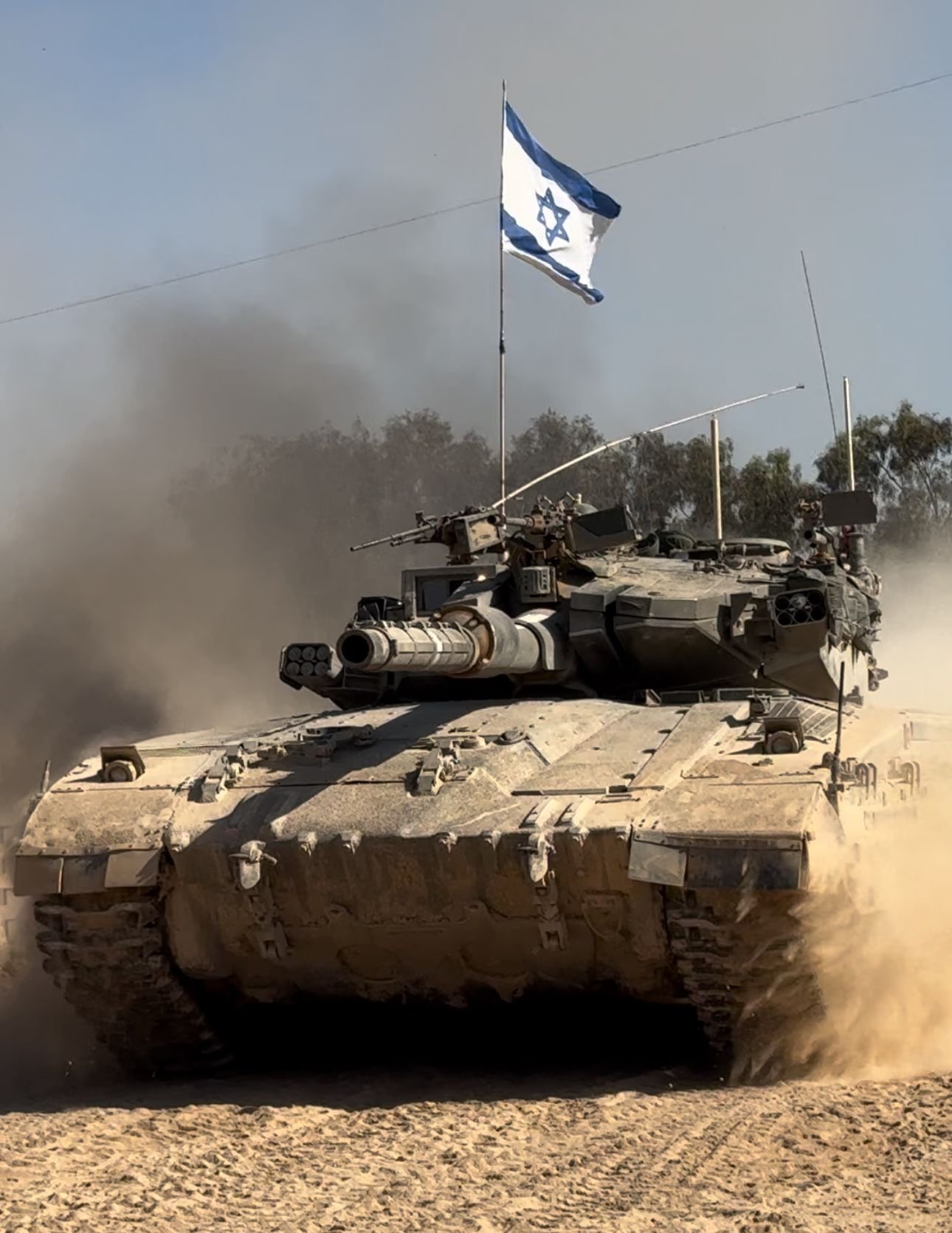
Merkava tank on the Gaza border. Photo ©️ T. Book, 2026
This week, Israel marks fifty-three years since the Yom Kippur War, and the anniversary lands with a weight it has never carried before, because on October 7, 2023, we watched history repeat itself with terrible precision.
Fifty years apart, on the holiest day of the Jewish calendar, Israel’s intelligence services and strategic planners were caught catastrophically off guard. In 1973, it was a doctrine of static defence and a fatal assumption, “the conception,” that the Arab armies lacked the will or capability to change how they fought. In 2023, it was a mirror image of that same arrogance: a belief that Hamas had been deterred, boxed in, contained behind sensors and fences. Both times, we were wrong. Both times, the enemy exploited exactly the blind spot our own certainty had created.
And both times, when the strategic and doctrinal failures of the state left a vacuum, it was filled, at terrible cost, by the courage of individual soldiers.
In October 1973, the last line between the Syrian army and the destruction of northern Israel was a single armored battalion: Oz 77, commanded by 29-year-old Lt. Col. Avigdor Kahalani, the son of Yemenite immigrants who had already suffered horrific burns in the Six-Day War and chose to stay in the Armoured Corps anyway. On the fourth day of fighting, some forty Israeli tanks under Kahalani’s command faced roughly five hundred Soviet-supplied Syrian tanks pouring up from the valley north of Kuneitra. If the Syrians reached the plateau, they could fan out across the central Golan and potentially cut Israel in two.
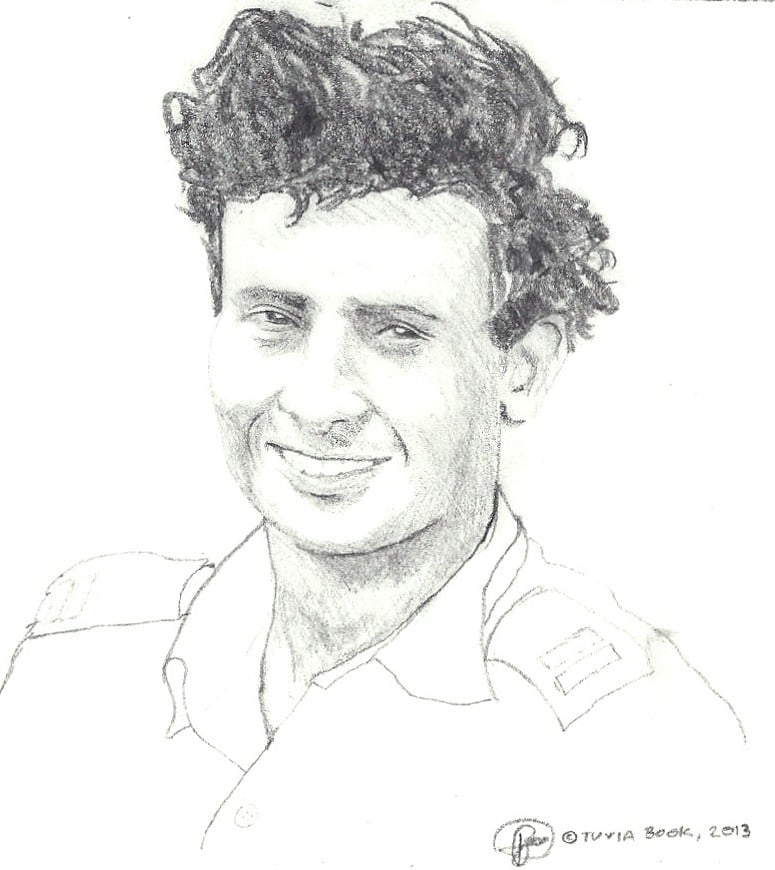
Kahalani led a final push toward the enemy line; certain his exhausted men were behind him. They weren’t. He found himself alone, facing three Syrian tanks at close range. His crew destroyed two. As the third took aim, Kahalani’s own gun jammed, and in that instant, the tank exploded, hit by soldiers who had finally heard his voice on the radio and rallied behind him after all. “We are stronger than them,” he had shouted. They believed him just in time.
By nightfall, 260 Syrian tanks and 500 armoured personnel carriers lay burning across what became known as Emek HaBacha, the “Valley of Tears. “The men of the 7th Armoured Brigade had fought for more than fifty straight hours. General Rafael Eitan later told them plainly: had they not held that line, the State of Israel would have been destroyed. “You saved the people of Israel,” he said. “First and foremost, you.”
I think of Kahalani often now. Because on October 7th, it happened again, ordinary soldiers, policemen, and civilians, with no time to wait for orders from above, running toward the sound of gunfire instead of away from it, holding lines that should never have been left so thin. The failure at the top was, once again, catastrophic. And once again, individuals, not doctrine, not technology, not a “conception, ‘were what stood between catastrophe and survival.
Fifty-three years apart, the lesson is the same, and we forget it at our peril: strategies fail, assumptions collapse, and intelligence can be wrong in ways that cost thousands of lives. What does not fail, what has never failed us, is the soldier who chooses to turn and fight when the line breaks, the one who believes, against all evidence in the moment, that “we are stronger than them.” Israel’s survival has never rested solely on its generals or its planners. It rests, repeatedly, on soldiers like Kahalani, and on the men and women of October 7th who, in their own valley of tears, made the same choice he did.
–
Dr. Tuvia Book currently serving on IDF reserve duty. He is the author of Heroes of Palmar: How one IDF Unit Revolutionized Combat Medicine in Gaza. It is published by Gefen Publishing House and is available either from gefen.com or Amazon.com. He also authored “For the Sake of Zion, A Curriculum of Israel Education” and “Jewish Journeys” books on both the First Temple and Second Temple periods (Koren). In addition, Tuvia is a much sought after public speaker and is a Ministry of Tourism licensed Tour Guide, Jewish educator and a Judaica artist. www.booktuvia.com.
Related Topics