What a 99-Year-Old Holocaust Survivor Taught Me

I didn’t expect to find clarity on Zionism at a luncheon in Los Angeles.
A few months ago, I joined a support group organized through the Jewish Federation of Los Angeles for Jews struggling with the aftermath of October 7th and the rise in antisemitism that followed. For five weeks, a small group of us gathered with a therapist who moderated the group. We put away our phones, spoke honestly, and shared experiences that many of us had never fully processed.
One participant described feeling isolated by the hostility he encountered in artistic and cultural circles. Another participant spoke about growing up in an environment where antisemitism was commonplace. One story that stayed with me was his memory of being blamed for killing Jesus while attending a college party.
I was struck by how old some of these accusations are.
I did not know it at the time, but that memory would take on even greater significance the following day. At the luncheon, Miriam would recount being accused of killing Jesus as a young Jewish girl in Europe. Hearing the same accusation echoed nearly a century later, on a different continent and under entirely different circumstances, was a sobering reminder that some forms of antisemitism never truly disappear. They simply adapt to a new time and place.
That realization came back to me yesterday at a Holocaust Survivor Day luncheon hosted through Café Europa and the Jewish Federation.
Walking into a room filled with Holocaust survivors felt surreal. These were not names in history books. They were living witnesses to one of humanity’s darkest chapters. There was music, dancing, conversation, and laughter. Volunteers served lunch. Survivors sat with their children and grandchildren. The atmosphere was warm and joyful, yet there was an unspoken awareness that every person in the room carried a story.
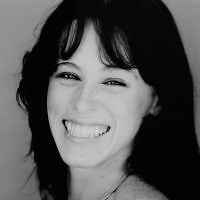
The highlight of the afternoon was hearing a 99-year-old Holocaust survivor named Miriam speak.
Before she began, I had no idea she was 99 years old. I assumed she was somewhere in her 80s. Even as she addressed the room, she radiated an energy, warmth, and vitality that defied her age. There was something remarkable about her presence. She was not only vibrant, but deeply gracious and full of life.
Today she goes by Mary, a name she adopted in part to help conceal her Jewish identity amid the antisemitism she encountered after the war. Yet despite everything she endured, there was no bitterness in her voice. Instead, there was wisdom, gratitude, and an unmistakable appreciation for life.
Before she took the microphone, four teenage girls spoke about their visits with her and the friendship they had developed. Miriam beamed with pride as she described their kindness and dedication. Then she turned to the girls and said something I have not stopped thinking about.
“You are lucky,” she told them. “You have a homeland. We didn’t.”
It wasn’t a political statement.
It wasn’t a slogan.
It wasn’t an argument.
It was a memory.
For Miriam, Israel was not an abstract concept. It represented something she and millions of Jews lacked when Europe turned against them: a place of refuge, self-determination, and safety.
On one side of her name tag was her name. On the other side was a reproduction of the yellow star Jews were forced to wear during the Holocaust. She spoke about what it was like to be identified, isolated, and targeted simply for being Jewish. She described returning home after the war and seeing other people wearing her family’s belongings. She remembered the insults, the humiliation, and the hatred that preceded the camps.
Listening to her, I realized something.
The debate over Israel often takes place at the level of governments, policies, and politics. Those discussions are important. Like every democracy, Israel’s leaders and policies can be debated, criticized, and challenged.
But Miriam wasn’t talking about governments.
She was talking about vulnerability.
She was talking about what it means to belong to a people that, for much of history, had nowhere to go when doors closed and borders tightened.
Whether one agrees with every decision made by an Israeli government is beside the point. Miriam’s lesson was simpler than that. She was reminding a room full of young Jews that Jewish sovereignty is not merely a political concept. For many survivors, it is inseparable from the lessons of lived experience.
As she spoke, I found myself wishing that more people could hear her story directly. Not because it would end every disagreement, but because it would humanize a conversation that has become increasingly polarized.
Statistics rarely change hearts.
Stories do.
The generation that survived the Holocaust is leaving us. Every year, there are fewer opportunities to hear these voices firsthand. That reality makes gatherings like Café Europa more precious than ever.
I left the luncheon with a renewed appreciation for the survivors themselves, not only for what they endured, but for what they continue to teach.
Their message is not one of bitterness.
It is one of resilience.
And in the case of Miriam, it was also a reminder that history is not something we merely inherit from textbooks. Sometimes it sits across the table from us, smiles at a group of teenagers, and quietly shares a lesson nearly a century in the making.