
What a Hostage’s Mother Taught Me About Staying Human
There is a precise, suffocating fog that settles over a home when waiting becomes a full-time job. It isn’t just the terror of what might happen. It’s the quiet, daily erosion of the mind living inside an eternal “maybe.” In Israel, and across the Jewish world, we have become experts in this fog. We read the news, check our phones, scan the skies, and attempt to run households on adrenaline and fragmented sleep.
Recently, at an American Friends of NATAL gathering hosted in the Hamptons by Ran Eliasaf and Isabelle Bichler-Eliasaf, I spent time with Meirav Berger. As can often happen, our conversation was particularly meaningful during the four-hour car ride from New Jersey to our venue on Long Island.
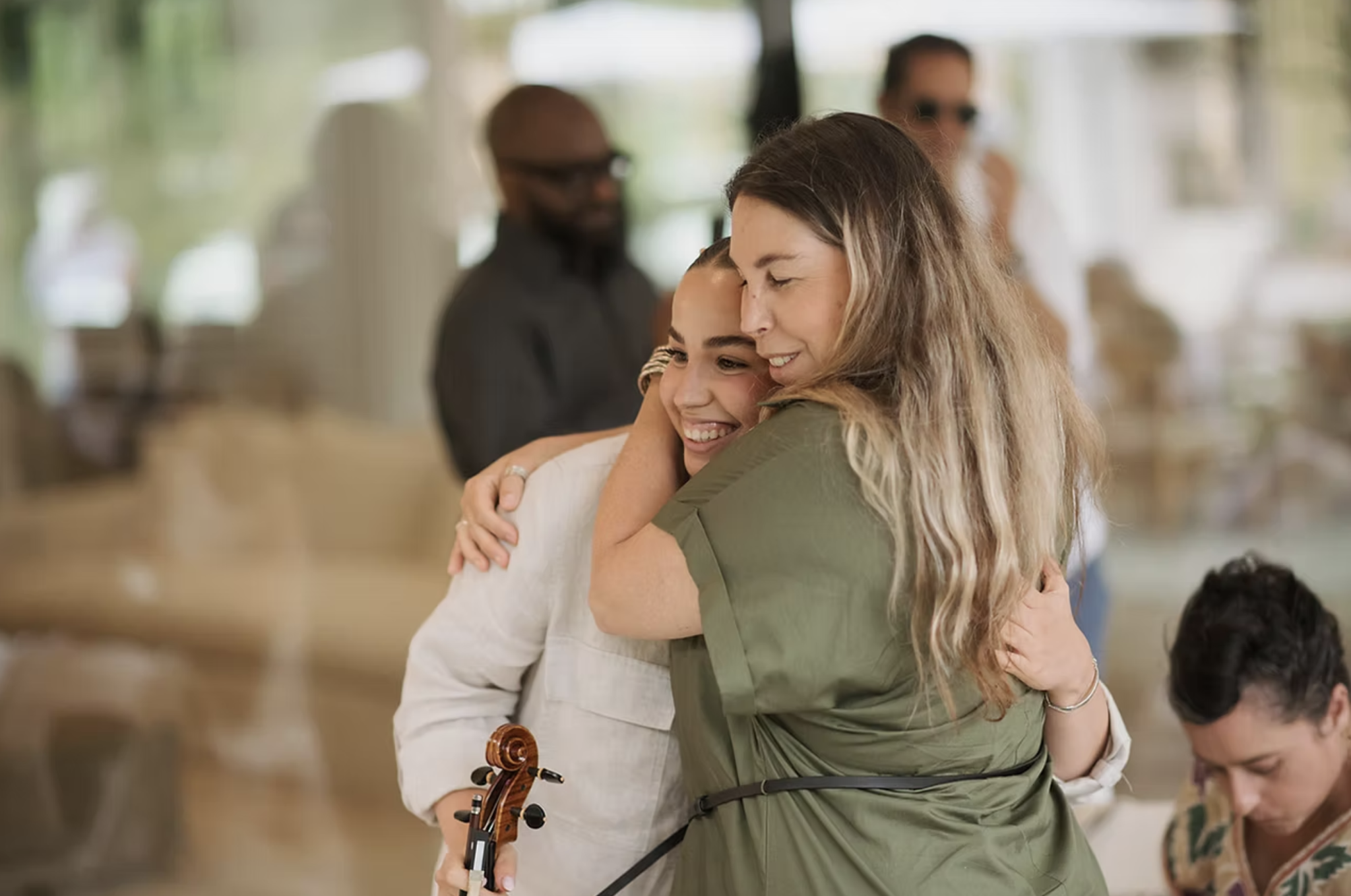
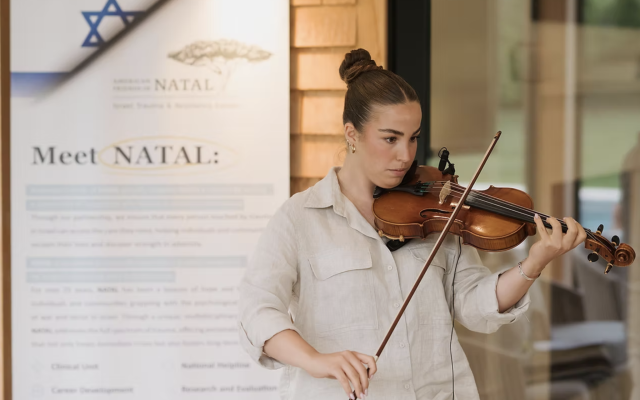
Meirav is the mother of Agam Berger, the IDF lookout soldier who was kidnapped from the Nachal Oz base and held hostage for 482 days. At the event, Meirav sat next to Agam who was holding her violin, an instrument that became her voice of resilience.
We often put the families of hostages on pedestals. We call them heroes, icons of strength, symbols of national endurance. But sitting there, listening to Meirav speak, I saw much more than a symbol. I saw a mother. A mother who was exhausted, who was deeply faithful, who shared dark humor with her daughter, and who was navigating the incredibly strange, profound, and messy work of being a parent in the wake of catastrophic trauma.
When the Unthinkable Becomes Mundane
When Agam first came home, Meirav made her a promise: Whenever you’re hungry, no matter what time it is, tell me. I will make you whatever you want.
It was the ultimate maternal reaction. The instinct to feed, to nurture, to undo months of starvation with warm home cooking. A few nights later, Agam woke Meirav up.
“I’m hungry,” she said.
Meirav, bleary-eyed and bone-tired from months of running a global campaign to save her daughter’s life while carrying the emotional weight of her three other children, looked at her.
“Just go get a pita or something,” Meirav groaned.
They both laughed when they told this story. It was a sharp burst of dark humor shared between a mother and daughter who have been through horrific times. Because a pita, as it turns out, was virtually the only thing Agam had been fed while held captive in the dark tunnels of Gaza.
In that simple, unvarnished interaction lay a quiet miracle. It wasn’t a cinematic reunion where every word is scripted for a documentary. It was a teenager waking up her tired mom in the middle of the night, and a mom reacting like a mom.
How do you remain just a mother and daughter after the world has torn your family open? How do you return to the plain, ordinary rhythms of life when the background noise of your life has been terror?
I watched the way Meirav and Agam bantered. They often used dry, protective humor to bridge the gap between where they had been and where they were now. It struck me that healing doesn’t mean speaking in hushed, sacred tones all day. Sometimes, healing looks like telling your child to go find a snack so you can sleep for twenty more minutes. It’s the ability to hold onto normal moments in the aftermath of the abnormal.
The Weight of the Other Children
During the long months of fighting for Agam, a relative said something to Meirav that stayed with her—and has stayed with me ever since. They told her: You will be remembered not only by how you fight for Agam, but by how you treat your other three children during this time.
As parents, our instinct in a crisis is to pour every ounce of energy into the challenge in front of us. But what happens to the rest of the house when all the effort is focused in one place?
Meirav has four children, including Agam. To parent through trauma is to perform a desperate act of triage. You are trying to pull one child out of the abyss while making sure the others don’t feel invisible in the shadow of the crisis. It requires a terrifying amount of emotional agility.
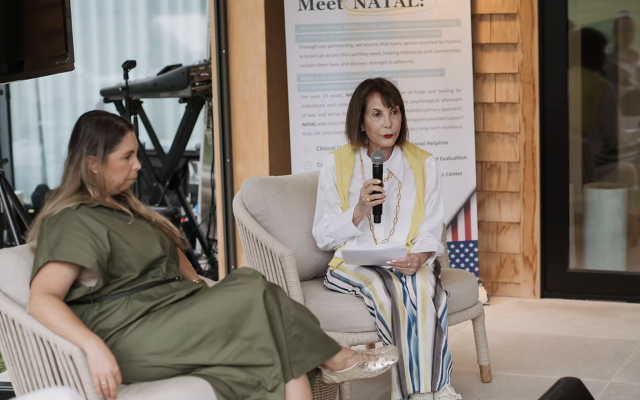
Dr. Dity Brunn, licensed psychologist in Beverly Hills, California, a Professor of Psychology at Pepperdine University, and AFN Board Member, facilitated the Q&A that afternoon, highlighting the profound psychological toll this uncertainty takes on a family structure. She shared:
“Perhaps the most profound psychological wound is that uncertainty prevents closure. The family cannot fully mourn, cannot fully hope, and cannot fully move forward. In this sense, captivity creates a kind of ‘psychological hostage situation’ for the family as well. The hostage is physically confined, while the family can become emotionally confined by the absence, the waiting, and the uncertainty. And importantly, when the hostage returns, the psychological story does not necessarily end. Reunion itself can be complicated: The family spent months or years waiting for return. But return is not the same as restoration. The person who comes home is not the same person who left.” She continued, “Faith was Agam’s anchor in captivity and her mother Meirav’s anchor through 482 days of waiting. Each held onto faith differently, but equally. Not because it removed the fear, but because it gave them ground to stand on when everything else shifted. And neither stood alone – a community prayed, said their names, refused to let them be forgotten. Communal faith is itself a form of healing.”
And as Irit Aloni, Clinical Social Worker and Director of the Clinical Unit at NATAL, so accurately describes:
“As clinicians, we understand that the psyche’s greatest enemy right now is not just the physical threat, but the endless fog that precedes it. Uncertainty has become a quiet terror that erodes everyone’s mental defenses. The human brain, body, and mind would rather receive confirmed bad news than live inside an eternal maybe. When there are facts, we know how to organize ourselves. But when the forecast changes three times a day, the brain gets stuck in a constant state of alert. The pulse races, the muscles tense, and the body experiences chronic stress that breeds extreme fatigue, irritability and painful regressions in the clinic.”
Living in that “eternal maybe” is what thousands of Israeli families are doing right now. NATAL’s (NATAL – Israel’s Trauma and Resiliency Center) work exists precisely in this space by helping parents and children regulate their nervous systems when the world around them refuses to stop shaking.
Anchor in the Storm
Throughout the evening, Meirav spoke openly about how she survived the nightmare. She didn’t offer a formula or a sermon. She found her anchor in her faith in God, in the Torah, and in her Jewish identity.
Yet, what impressed me most was her utter lack of preachy dogmatism. She wasn’t lecturing anyone on how to be Jewish or telling us which practices to observe. Her message was much simpler, and much deeper: Find your belief, whatever it is, and hold on for dear life.
When trauma strips away every illusion of control like when your child is taken, when the future is completely opaque, when the news changes three times a day, you need something solid to press your back against. For Meirav, it was faith. For others, it is community, music, or the quiet discipline of showing up for the children who are sitting at the dinner table right now.
Agam’s violin music that night didn’t erase the trauma. The dark jokes didn’t erase the months in the dark. But they proved that trauma doesn’t get the final word.
We cannot always cure the uncertainty that surrounds us. We cannot always clear the fog. But as parents, as human beings, we can choose to keep showing up in the small, ordinary moments, even if it’s just to argue about a pita in the middle of the night.