What Are Memorials For? A Shirt at Mauthausen
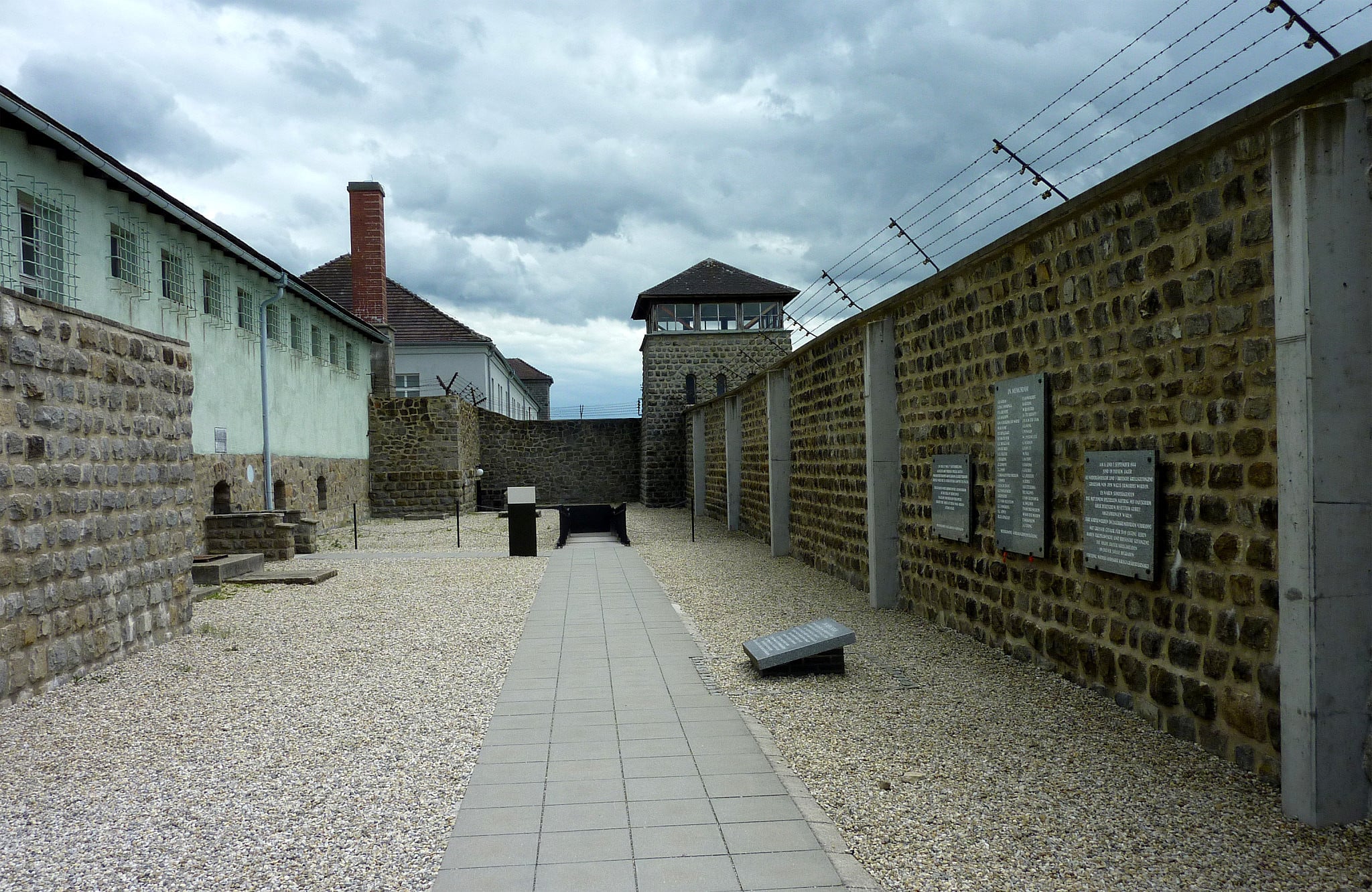
In early August, at the Mauthausen memorial in Austria, a young Jewish woman confronted a touring school group. One student wore a “Free Palestine” shirt, while some of his teachers and peers told her that Israel is committing genocide in Gaza. The confrontation ended when the site’s staff summoned the Austrian police. Who was right in that argument is the obvious question, and it will be asked everywhere. It is also the second question. The first is this: what is supposed to happen when a teenager walks through the gates of a Nazi concentration camp?
What that particular teacher told her students before the trip is unknown, and no intent should be attributed to her. But something was said out loud at Mauthausen, and it rests on a logic that is becoming self-evident in many places: that the site is available as an explanation for the present. Under that logic, the quarry, the barracks, and the crematorium are not only what happened there. They become what genocide looks like, and a group standing in front of them is looking at the present as much as the past. The past becomes a parable, and the present gets an illustration.
A memorial does not exist to provide imagery for political arguments. It exists on a concession: that some events must be learned from before they are used. That concession is the entire idea. An abandoned granite quarry in Upper Austria, a place where estimates of the dead run from ninety thousand upward, tens of thousands of them Jews, is kept as it was. The stairs are maintained, the lists of names are kept current, and sixteen-year-olds are brought there by the busload. All of it rests on an admission that we do not yet understand how it happened, and that standing in front of it quietly should come before deciding what it says about us.
And here is the failure. Every time we walk into a memorial with a conclusion already formed, we stop learning from it. We are no longer asking what happened here, how it was done, who agreed, who stayed silent, at what point it could still have been stopped. We are asking one question only: how does what happened here prove what we already thought before we arrived? In that state, the site teaches us nothing. It notarizes.
What it supplies is gravity. The comparison does not carry information from the past to the present; it carries weight, and weight is the one thing an argument is supposed to earn on its own evidence. Whatever the case for the word genocide is, it either stands on Gaza or it does not stand.
Mauthausen is not the first site to be enlisted this way. In May 2024, a small group of activists stood at the entrance to Auschwitz with Palestinian flags and a banner about genocide in Gaza as the March of the Living passed, and one of them asked the marchers through a loudspeaker how they dared honor the dead while a new genocide was underway. The marchers answered by singing Hatikvah. Both sides that day were certain the site was on their side.
One could object that this is an artificial distinction, and that memorials have always been about the present. It’s a serious objection. “Never again” is a sentence in the present tense, not the past. Many European memorials, Mauthausen among them, run educational programs on contemporary racism, xenophobia and political violence, and nobody considers that a desecration. The difference is not between a pure past and politics. It is the direction of the question.
A program that asks how an ordered European society, one with a constitution, universities and courts, arrived here, and that then asks the student to look for the same mechanism in the world outside, risks an answer it did not expect. Someone who points at a pile of ash and says “exactly like there” risks nothing at all. He came with the answer and asked the place for a signature.
The same move is available at any site set aside for memory. A history museum that becomes a room full of evidence. A monument that serves as the backdrop for a photograph meant to say something about this week’s argument. A military cemetery where the dead are conscripted, years after they were killed, to a side in a dispute they were never part of and whose views on it we cannot know. In each case the ritual survives intact. Visitors stand, lower their eyes, light a candle. Only the content is inverted. Instead of a place where the past interprets the present, we get a place where the present makes use of the past.
Perhaps that is why the image from Mauthausen unsettles even people who hold no firm view on Gaza. Not because politics entered a memorial; politics has always been part of how we remember, and anyone who pretends otherwise is lying. It unsettles because a place preserved to complicate our understanding has been made to confirm it. At that moment the site stops being a place of learning and becomes scenery.