


Lawyer & Law Professor
What Gets Decided Without Us
Israel votes today. Millions of Diaspora Jews will live with the result without ever casting a ballot
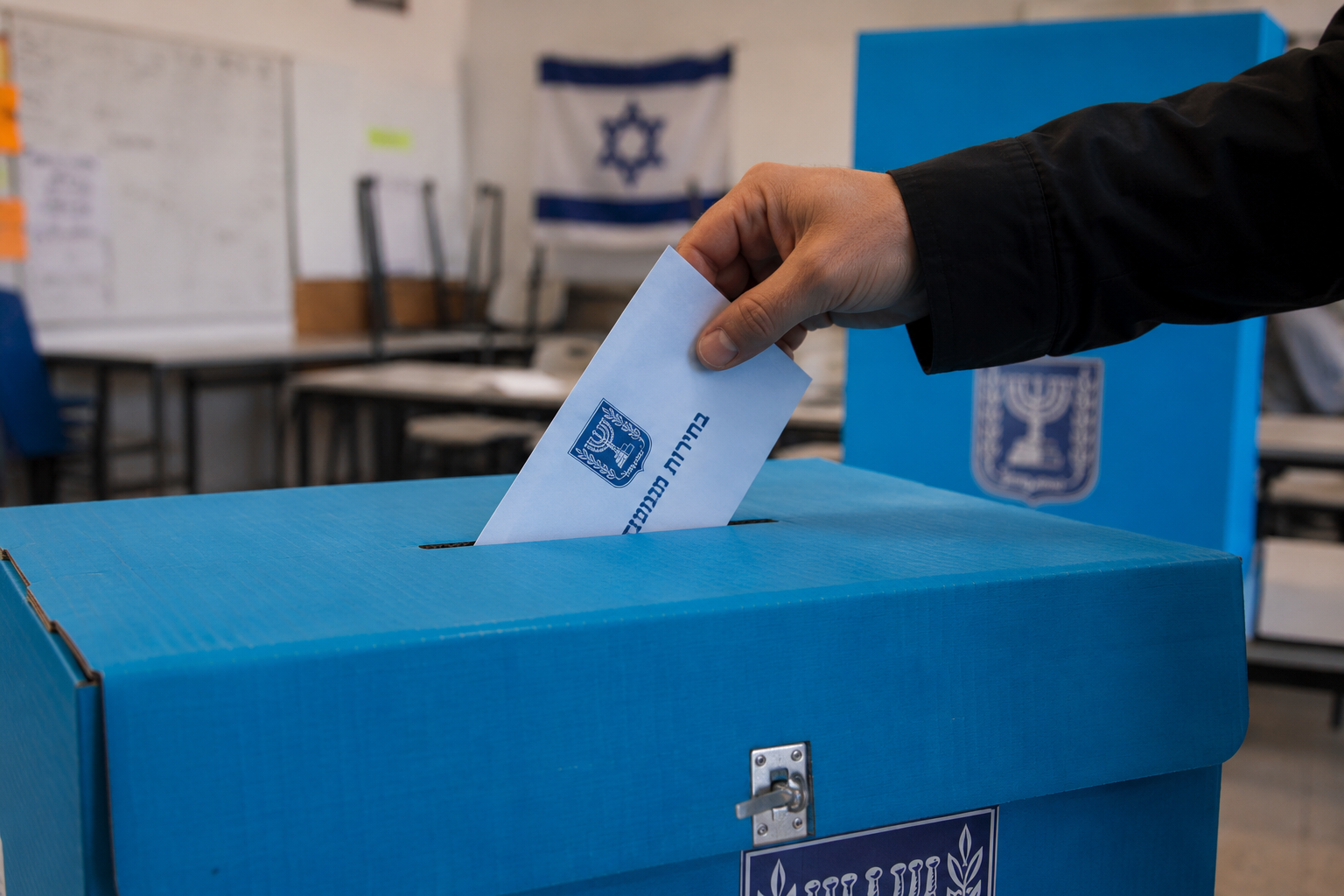
Image Created by ChatGPT with GPT Image 2, 2026.
Today, October 27, Israel elects a new Knesset. Millions of Jews outside Israel are following the count as though something of our own were at stake, even though none of us holds a ballot. Israel lets only its citizens vote, and only on Israeli soil, with a narrow exception for diplomats and official envoys. Still, whatever is decided there will reach us sooner or later: in the synagogue, in the community center, in our children’s schools and in the way our neighbors look at us.
Therein lies the paradox I want to explore. Jews in Israel and in the Diaspora share an identity, a mutual responsibility and a common destiny. Yet only one part of our people, those who hold Israeli citizenship, chooses the leaders whose decisions affect us all.
Let’s begin with what binds us. A Jew in Mexico City and a Jew in Haifa recognize each other as members of the same people, even if they carry different passports and speak different languages at home. This belonging comes with mutual responsibility: what happens to one part of the people morally implicates the other, whether or not their political rights match. It also comes with shared vulnerability. Events in Israel can directly affect the safety of a community thousands of miles away, and the way its members live their Jewish identity in public.
Of course, every form of collective belonging has its nuances, and ours shows them when it comes to rights. The vote belongs to those who live in Israel, pay its taxes, send their children to the army and run for shelter when the sirens sound. The asymmetry is reasonable. The question it raises is one of belonging: where do those of us who share this destiny from abroad fit in? The Diaspora can stand with Israel, disagree with it and influence it. None of that amounts to demanding a ballot.
Even so, the decisions of the governments Israel elects, and the events it lives through, ripple directly into the lives of Jews everywhere. October 7, 2023 made this brutally clear. The massacre carried out by Hamas, and the war that followed, unleashed a wave of antisemitism that struck, and continues to batter, Jewish communities around the world. In the United Kingdom, the Community Security Trust recorded the worst day of antisemitic incidents in its history just four days after the attack. Tel Aviv University reported that 20 Jews were murdered in antisemitic attacks in 2025, the highest toll in more than 30 years.
The paradox even reaches institutions. Israel has a Ministry of Diaspora Affairs, devoted to those of us who live abroad, yet no one in the Diaspora votes for the officials who run it. It is therefore legitimate to ask what place we should have in conversations about Israel’s future, always with full respect for its democratic sovereignty.
What remains is how that responsibility should be exercised, and there are two serious answers. The first holds that the Diaspora should back Israel publicly, whoever is in power: the country faces enemies bent on its destruction, and disagreements belong at home. The second holds that it is also legitimate to dissent publicly from specific decisions of the Israeli government, even before non-Jewish audiences. On this view, such criticism is another way of caring for Israel, and of showing that a government and a people are not the same thing.
Both positions want the same thing: a strong Israel and a united people. Yet an uncomfortable question remains about the effect of speaking out when antisemitism is already here and growing. The fight against that hatred is a shared responsibility. Israel and the Diaspora face it together. Or they lose together. This interdependence forces us to think about the limits of public criticism. Legitimate criticism of a government can be seized by those who hate Jews and turned into a weapon. The antisemite deliberately erases the line between a Jew in Mexico City and the cabinet in Jerusalem, then hands the first the bill for the decisions of the second.
From all this, I draw three conclusions. The first is that democratic sovereignty and collective responsibility are compatible. Israeli citizens have the right, and the responsibility, to choose their leaders. Those of us in the Diaspora do not vote, yet we carry a legitimate responsibility for the shared future of the Jewish people. Acknowledging it does not diminish Israel’s sovereignty. It leaves intact the rights that belong to its citizens alone.
The second is that solidarity with Israel can coexist with critical thinking. Genuine commitment calls for solidarity, independent judgment and discernment, qualities that automatic support for every government decision eventually dulls. Dissenting in public can be legitimate and, at certain moments, an act of responsibility toward Israel. Such freedom demands prudence, awareness of its consequences and sensitivity to the antisemitism Jewish communities face.
The third is that a shared destiny requires recognition in both directions. Israel must recognize that its governments’ decisions shape the lives of millions of Jews beyond its borders. The Diaspora must recognize the particular responsibility of those who live in Israel, who bear the consequences of those decisions firsthand and who, by every right, cast the vote. This relationship is built on dialogue, on mutual recognition and on the conviction that the future of the Jewish people involves all of us, wherever we live.
When the polls close in Israel tonight, we will follow the count from afar, knowing that whatever comes out of those ballot boxes will reach us too. Belonging to one people means our responsibilities do not end where our political rights do.