Writer, Thinker, Tour Guide
What Intimidation Is Costing the Haredi Public
We are currently in a state of affairs where rabbis are silenced, families threatened, and private gatherings have become dangerous places to express opinions. In the Haredi world, religious persuasion has turned into political coercion and is carried out in the name of Torah and this needs to change.
A Home Gathering Becomes a Test of Loyalty
I tried to organize a small gathering in a private home in Afula, where I live. I was not organizing a rally or asking a synagogue to sponsor a political event. I wanted to sit with people, explain why I am passionate about the HaTzibbur HaChareidi party, and discuss questions that deserve an honest conversation inside our community.
I did not even consider asking the local shul where I used to daven to host the gathering. I knew that a shul connected to the campaign could face pressure, and I did not want to put its members or its plans for expansion at risk. Instead, I asked a friend who shares many of my concerns whether he would open his home.
The answer came quickly. A rabbi called him and told him that hosting me would be a terrible idea, and that both of us would be unwelcome. My friend was told that the shul hoped to obtain municipal land for an expansion, and that people whose support mattered might look unfavorably on the community if they heard that some of its members had attended a meeting for our party. The message was unmistakable: host this gathering, and the shul’s plans could be jeopardized.
My friend was frightened, and I understood why. He tried to find another home. People barely connected to the shul also worried about becoming involved. Several people told him that many families would stay away because their children attend a particular school, and their parents feared consequences for the children if they were seen at the gathering.
Eventually, another friend, whose family is involved in our party, agreed to host. I announced the meeting on a general mailing list, not a synagogue forum. The calls began almost immediately: Why was I publicizing politics in the community? Why was I putting the entire community at risk? Another influential rabbi called with the same message, and my host received repeated calls urging him to cancel.
A healthy Torah community does not fear a living-room conversation. It answers ideas with ideas, and disagreement with argument—not threats
The gathering has effectively been shut down. The host has been intimidated, and potential attendees have been frightened away. A handful of people wanted to meet in a home for a civil discussion. That was enough to put municipal support, community standing, and children’s schooling into the conversation as threats.
Sadly, this is not an isolated incident, nor is it unique to Afula. It reflects a broader phenomenon throughout the Charedi world in Israel. A woman employed in a non-political office role by our party recently received a letter from her children’s school stating that, because she worked for us, her children could be expelled unless she resigned.
Nor does this affect only HaTzibbur HaChareidi. In many communities, those who depart even slightly from the mainstream fear ostracism, whether through consequences for their children’s schooling, family shidduchim, or their standing in schools, shuls, and the wider community.
The pressure takes many forms: a venue suddenly becomes unavailable; a school threatens a family; a shadchan refuses to arrange matches; a rabbi is warned to stay silent. At times, even prominent Rabbonim are physically attacked, and their homes or institutions vandalized. The message is clear: even attending a private discussion can come at a cost.
Nor is this limited to elections. Families fear that if a child unsuited to full-time study chooses another path, his siblings may suffer the consequences. Parents worry that pursuing education or a profession will brand them as disloyal. Those who wish to serve the country, earn an honest living, or speak positively about Medinas Yisrael can be treated as though they have betrayed their community.
Private Support, Public Silence
The pressure reaches every level of Charedi society. Dozens of Rabbonim have told us privately that they support the need for change and intend to vote for us, yet will not say so publicly for fear of repercussions for themselves, their families, their institutions, or their supporters. As a result, open discussion of major issues facing the community becomes extraordinarily difficult.
A stark double standard prevails. What is sanctioned by the established system is considered legitimate; alternatives are vilified, and their supporters are ostracized or, at times, effectively excommunicated. On the same community channel where my gathering was denounced as dangerous political activity, a rally featuring prominent Gedolim and supporting Gimmel was promoted without objection. This is not about principle. It is about control and intimidation.
When Political Control Speaks in Torah’s Name
There is a deep perversity in invoking Daas Torah to enforce a political line through fear. The Torah teaches us to seek guidance from Rabbonim, respect their wisdom, and take their words seriously. But when political gatekeepers decide which rabbis count, which views may be heard, and what consequences await those who disagree, they are using Torah’s name to protect a monopoly on power.
A community that truly believes in the authority of Torah should be confident enough to allow people to hear arguments, ask questions, and consult the rabbis they trust. The Mishnah’s instruction, Asei Lecha Rav, “choose for yourself a rav,” cannot mean that every individual must accept whichever rabbinic voice a political establishment has selected for him. There have always been different rabbinic approaches and legitimate disagreements about how Torah should guide public life. Respect for rabbanim does not require pretending otherwise.These pressure tactics do not bring beauty to the Torah world; quite the opposite. They trap people, isolate families, and make ordinary life choices feel like acts of rebellion.
The overwhelming majority of Israelis are not anti-Torah. They have no problem with Haredi Jews who want to devote themselves to Torah study. They object to religious coercion. They want a fairer sharing of civic burdens, and they want those who serve, work, and support their families to be treated with dignity instead of mocked. They also want soldiers and police officers spoken about as human beings, not vilified with ugly epithets, even called Nazis, while they carry out their responsibilities.
A Haredi community that can answer those concerns with honesty and gratitude will be better understood, and more faithful to its own values.
That is why this campaign matters to me. I am a candidate for the Knesset on the HaTzibbur HaChareidi list. Our community needs a voice that is deeply committed to Torah and prepared to engage constructively with the State of Israel and the broader Jewish people. A political party should not dictate which rabbi anyone must follow. It should help create conditions in which people can make responsible choices without fear.
A Different Haredi Future Is Possible
At our rally in Jerusalem this past Motzaei Shabbos, I saw a different possibility. A writer who attended described arriving wrapped in layers of cynicism and despair. He wrote about years of poverty, educational deprivation, and frustration with institutional politics, problems caused and sustained by the policies of Haredi leadership and the cynical use of Daas Torah. He left with a measure of hope: he had seen Haredi Jews who wanted to live as human beings, build families, learn Torah, work, and take part in Israeli society.
I am angry about what happened. I am also saddened. I do not know what it will mean for my relationship with the shul where I once davened. But the answer cannot be silence. If the only people permitted to speak are those who repeat the party line and sanctioned opinions, the community will lose the very voices it most needs to hear.
Challenging the grip of intimidation does not weaken the Haredi world. It makes room for the many sincere, God-fearing Jews who want to help it flourish.
The choice before us is between a community held together by fear and one held together by shared commitment, responsibility, and love of Torah. I believe many people are ready to choose the latter.
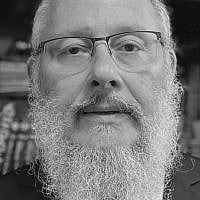
Rabbi Yehuda Oppenheimer is running for Knesset with the Hatzibur HaCharedi party and is #8 on the party’s list. He is a former congregational rabbi, attorney, writer, editor, and licensed tour guide. He lives with his family in Afula.
Related Topics
Related Posts