What Jewish and Muslim Communities Taught Me About Education, Medicine, and Service
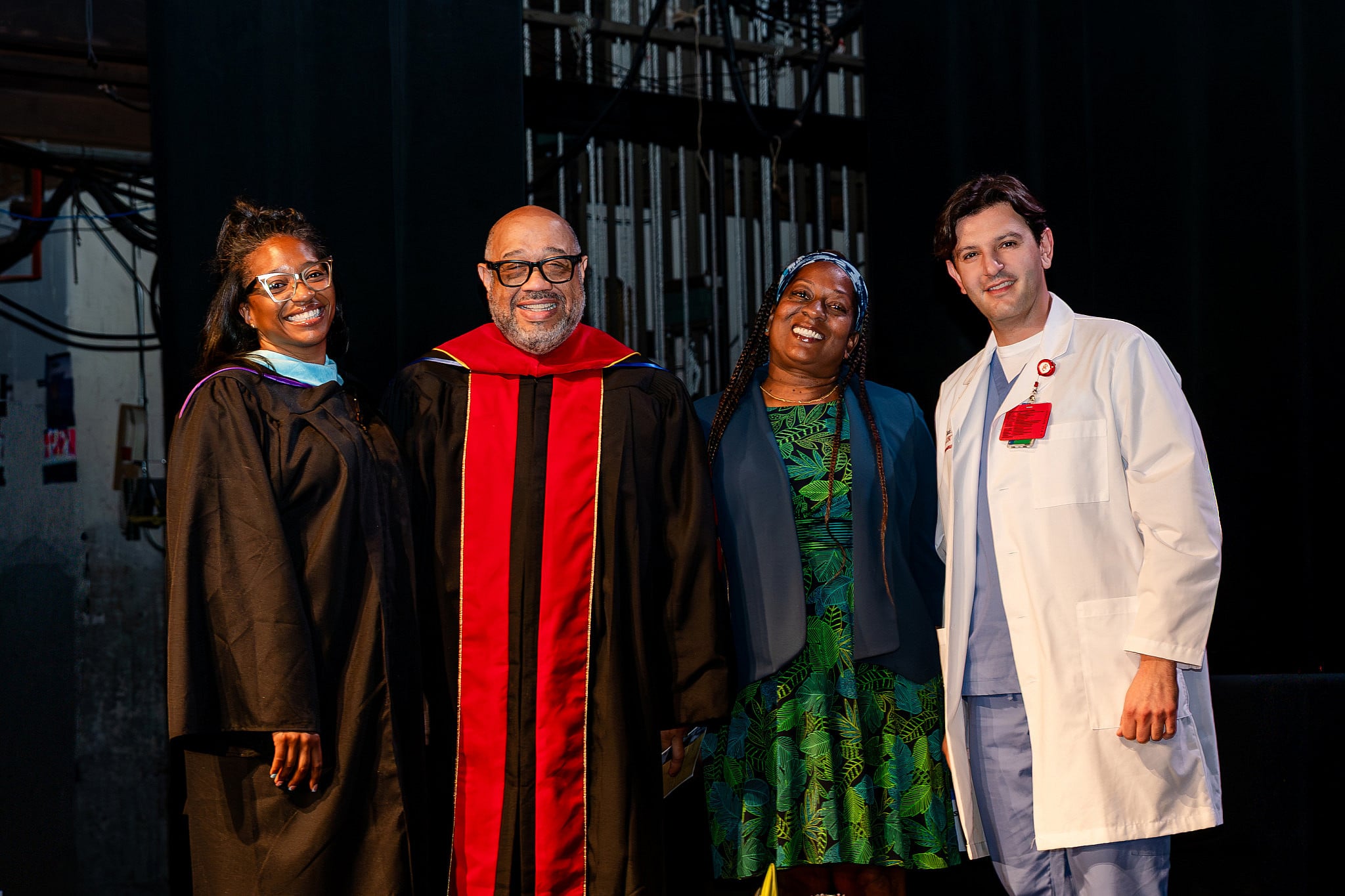
BEVERLY HILLS, CA, UNITED STATES – On June 8, 2026, I had the privilege of returning to my alma mater, Los Angeles High School, as the keynote speaker for its graduation ceremony at the historic Saban Theatre on Wilshire Boulevard. As I stood before the graduating Class of 2026, I found myself reflecting on a journey that began many years ago in the classrooms of Los Angeles High School and eventually led me to UCLA, USC, Harvard Medical School for postdoctoral training, and later to Bahrain as a Fulbright Fellow at Arabian Gulf University, School of Medicine. Today, as a professor of family medicine and public health, I have had the opportunity to teach, conduct research, and work with students and colleagues around the world. Yet on that evening, standing before those graduates, I was reminded that some of life’s most important lessons are learned long before we enter a university or begin a professional career.
As I looked out at the graduates, my thoughts returned to the young student I once was. Every morning, I boarded Metro Bus 217 at Hollywood Boulevard and traveled across the city to attend Los Angeles High School. Looking back, I realize that the bus ride itself was an education. Students from different cultures, religions, languages, and family histories came together each day carrying stories of sacrifice, migration, hardship, and hope. Every student occupied a seat, but each seat contained an entire world. Long before I understood concepts such as diversity, inclusion, or multiculturalism, I witnessed them firsthand in the hallways and classrooms of LA High. It was there that I learned one of the most enduring lessons of my life: the world becomes one when people are willing to learn from one another.
Los Angeles High School was not simply a school. It was humanity gathered in one place. It was a living example of the American dream, where students from vastly different backgrounds shared the same classrooms, studied the same books, and imagined futures that stretched far beyond the limits of their immediate circumstances. Sitting among those students, I dreamed of higher education, of traveling the world, and of making a difference in people’s lives. What I did not realize at the time was that the neighborhood surrounding my school was teaching its own lessons. As a student, I was equally inspired by seeing Jewish families entering synagogues, Muslims gathering at mosques, and Christians attending churches. Watching people devote time to worship and community taught me an important lesson: regardless of faith, places of worship often serve as centers of learning, service, belonging, and shared values. It was a powerful reminder of the role that both education and faith can play in strengthening communities.
Years later, when I lived and taught in Bahrain as a Fulbright Fellow, I found myself reflecting on similar lessons. Just as I had watched Jewish families gather at synagogues near Los Angeles High School, I now observed Muslim families gathering at mosques throughout Bahrain. Although the traditions and practices differed, the underlying values felt remarkably familiar. Places of worship served not only as centers of faith but also as centers of education, service, community, and mutual responsibility. In both settings, I witnessed how religious communities help transmit knowledge across generations, care for those in need, and cultivate a sense of belonging. These experiences reinforced my belief that learning extends far beyond classrooms and that communities often become our most important teachers.
Schools do not exist in isolation. They are part of communities, and communities help shape the values, aspirations, and worldview of the young people who grow up within them. Los Angeles High School sits in an area long associated with one of the most vibrant Jewish communities in the United States. Synagogues, Jewish schools, community organizations, and cultural institutions have been part of the neighborhood’s fabric for generations. Whether students fully recognize it or not, they are growing up in an environment where learning, scholarship, and community engagement are deeply valued.
As I reflected on the graduation ceremony, I found myself thinking about the connection between a school and a synagogue. At first glance, the two institutions appear quite different. One is primarily secular and focused on formal education, while the other serves religious and communal purposes. Yet both are fundamentally dedicated to the pursuit of knowledge and the development of character. Both bring people together across generations. Both encourage individuals to ask questions, seek understanding, and participate in something larger than themselves.
One of the most remarkable aspects of Jewish tradition is its commitment to lifelong learning. Education is not viewed as a task that ends with graduation or the completion of a degree. Rather, learning is considered a lifelong responsibility and privilege. Throughout Jewish history, study has been regarded as a sacred endeavor. The practice of examining texts, debating ideas, asking questions, and pursuing deeper understanding has sustained Jewish communities across centuries and continents. There is a profound respect for intellectual curiosity and a recognition that wisdom grows through continuous learning.
As someone who has spent a career in medicine and public health, I find this concept particularly meaningful. Medicine is, by its nature, a profession of perpetual learning. Scientific knowledge evolves constantly. New treatments emerge, diseases change, technologies advance, and our understanding of health continues to deepen. The moment a healthcare professional believes there is nothing more to learn is the moment they cease to grow. The same principle applies beyond medicine. Whether one becomes a teacher, scientist, artist, business leader, engineer, or public servant, success depends on maintaining the humility to continue learning throughout life.
During the graduation ceremony, I wondered how many students sitting before me might someday pursue careers in healthcare. At a time when communities face increasingly complex public health challenges, the need for compassionate physicians, nurses, public health professionals, researchers, and mental health specialists has never been greater. I hope that some of these graduates will choose paths dedicated to healing, service, and the advancement of human well-being. Yet even for those who follow entirely different careers, the underlying values remain the same. Every profession benefits from curiosity, discipline, empathy, and a commitment to serving others.
This is where the lessons of the school and the lessons of the surrounding community intersect. One of the enduring themes found within Jewish thought is the belief that individuals have a responsibility not only to improve themselves but also to contribute to the betterment of society. Education is not merely a means of personal advancement; it is also a tool for strengthening communities and improving lives. Knowledge carries with it an obligation to act. Learning, therefore, is not simply about achievement; it is about responsibility.
These values resonate deeply with the goals of public health. Public health is built upon the understanding that our well-being is interconnected. Healthy communities depend on cooperation, mutual responsibility, and concern for the welfare of others. In many ways, the same spirit that motivates a community to educate its children, support its institutions, and care for its most vulnerable members also forms the foundation of a healthy society.
As the graduates crossed the stage and received their diplomas, I was reminded that commencement is not an ending but a beginning. Their education is far from complete. In fact, the most important learning experiences of their lives may still lie ahead. Some lessons will come from universities and professional schools. Others will emerge from workplaces, families, friendships, travel, and community involvement. Many of the most meaningful lessons will be learned outside traditional classrooms altogether.
Standing before the graduates of Los Angeles High School, I realized that the school’s greatest lesson is not mathematics, science, or history. Its greatest lesson is that learning does not happen only inside classrooms. It happens within communities. It happens through conversations, mentorship, service, and shared experiences. And few communities demonstrate the lifelong pursuit of learning more visibly than the Jewish neighborhood surrounding the school.
As I left the Saban Theatre that evening, I found myself reflecting on Maya Angelou’s thought I had shared with the graduates. When we enter a place, we enter as one, but we stand as many. We carry the sacrifices of our families, the wisdom of our teachers, the traditions of our communities, and the experiences that shaped us long before we arrived. None of us succeeds entirely alone.
The graduates of Los Angeles High School inherit not only the legacy of California’s oldest public high school, but also the example of a community that has long understood the value of learning, responsibility, and service. If they continue to seek knowledge, embrace people whose stories differ from their own, and dedicate themselves to improving the lives of others, they will discover what generations before them have learned: education is not merely preparation for life. It is a way of life.
The young boy who once rode Metro Bus 217 via Fairfax Boulevard to Los Angeles High School could never have imagined all the places that education would eventually take him. Yet looking back, I now understand that the most important destination was never Harvard, Bahrain, or any professional title. It was the realization that learning is a lifelong journey and that our greatest growth often comes through the communities that surround us.
That may be the most enduring lesson Los Angeles High School and the neighborhood that helped shape it has to offer future generations.