
What Matti Caspi left behind was not just music
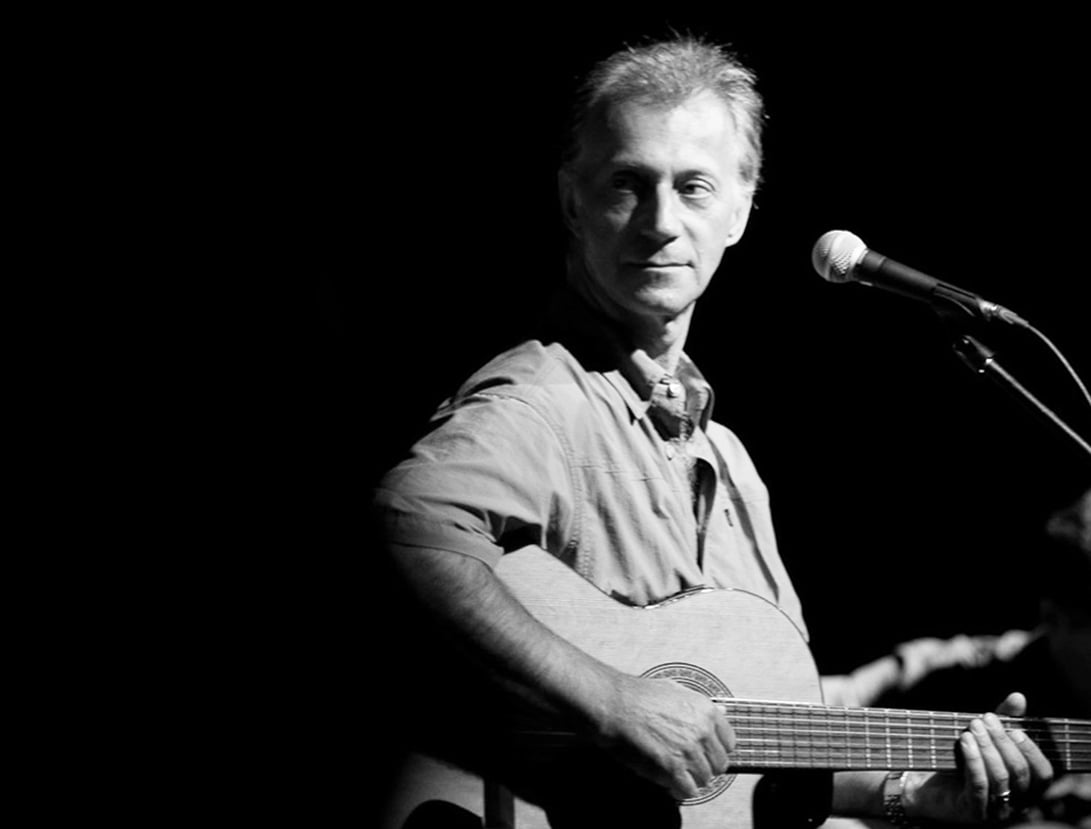
Matti Caspi, who died Sunday at 76, composed, performed, and produced over a thousand songs that shaped Israeli culture. But what he left behind is larger than any body of work. Caspi left behind a way of being a creator: a model of artistic authenticity that is now, precisely when it matters most, in danger of disappearing.
Caspi never wrote on commission. He refused to tailor his work to external expectations. “A creative person does not depend on any master plan,” he once said. “I must be faithful to myself.” But this was not withdrawal from the world – far from it. In 1973, when Leonard Cohen flew to Israel during the Yom Kippur War, Caspi joined him on guitar and together they performed for soldiers next to a Sinai landing strip as troops emerged from C-130 planes heading for the Suez Canal. At the end of that day, the two musicians helped carry wounded soldiers to helicopters.
In 2014, during Operation Protective Edge, he drove south on his own initiative to perform for kibbutz communities stuck in safe rooms. In 2021, he publicly criticized the government’s handling of the pandemic. In 2023, he and Shalom Hanoch dedicated an album to Guy Illouz, taken hostage on October 7.
None of this was dictated by a committee, a ministry, or a political camp. Every act was a choice: his choice. That is the distinction that matters. The question was never whether Caspi engaged with political reality. He did, repeatedly and forcefully. The question is who decided when and how. The answer, every time, was Caspi himself.
The philosopher Søren Kierkegaard argued that authenticity is not about the content of a choice but about one’s relation to it – a commitment that comes from within, not from conformity or obedience. By that measure, Caspi was one of the most authentic artists Israel has produced. Not because his music avoided politics, but because every creative decision he made originated from a place of genuine inner conviction. That is a rare and fragile thing.
It is also precisely what is now under threat.
From outside Israel, a growing wave of cultural cancellations is stripping artists of the ability to choose for themselves. When French author Emmanuel Carrère canceled a planned meeting with Israeli readers in Tel Aviv not over what would be said but because the event itself “stirs controversy”, the message was clear: participation in Israeli cultural life was no longer a personal or artistic decision. It was a political verdict rendered in advance. In other recent cases, performances and collaborations between Israeli artists and international musicians were blocked under political pressure, including in the case of Jonny Greenwood. Here too, the decision was no longer theirs. Authenticity, the artists’ relation to their own decision, was removed from the equation.
From inside Israel, the same dynamic operates through different means. This year, Culture Minister Miki Zohar abolished dozens of longstanding creative awards and proposed replacing them with a committee that would ensure ideological balance. Culture, he declared, “belongs to all the people of Israel, not just to one side of the political map.” In practice, this means recognition is no longer about the work. It is about the creator’s political positioning. The artist’s authentic relation to creation is overridden by an external criterion: not what you made, but which camp you belong to.
The mechanisms are vastly different. A foreign writer’s personal capitulation to public pressure and a government minister’s institutional power are not the same thing. But the underlying logic converges on one point: someone other than the artist gets to decide what a cultural act means. From the outside, presence is declared endorsement. From the inside, recognition is conditioned on loyalty. In both cases, the Kierkegaardian space of authentic choice – the space Caspi inhabited his entire life, is being closed.
And here lies the cruelest irony. A cultural policy that subordinates artistic recognition to political identity not only betrays Caspi’s legacy at home. It confirms the logic of those who boycott from abroad. If Israel’s own government treats culture as a branch of politics, it becomes impossible to argue that a cultural encounter with Israelis is anything other than a political act. The internal policy and the external boycott feed each other, each validating the other’s premise. The space for authenticity shrinks from both ends.
Caspi warned us. “Without culture there is no state,” he said. He was not being sentimental. He was describing a chain: culture without authenticity is not culture. It is propaganda, or entertainment, or representation, but not the real thing. And without culture, a society loses something no policy can replace. When both external boycotts and internal directives strip artists of the freedom to choose for themselves, what remains may still look like culture, but it has lost the quality that makes it matter.
The best way to honor Caspi’s legacy is not just to stream his songs, but to defend the space that made them possible. That means pushing back in both directions at once – against those who cancel from outside, and against those who dictate from within. Because without that space, the next Caspi cannot happen.