


What More Do We Want from Them? A Coalition with Arab Parties Is Essential
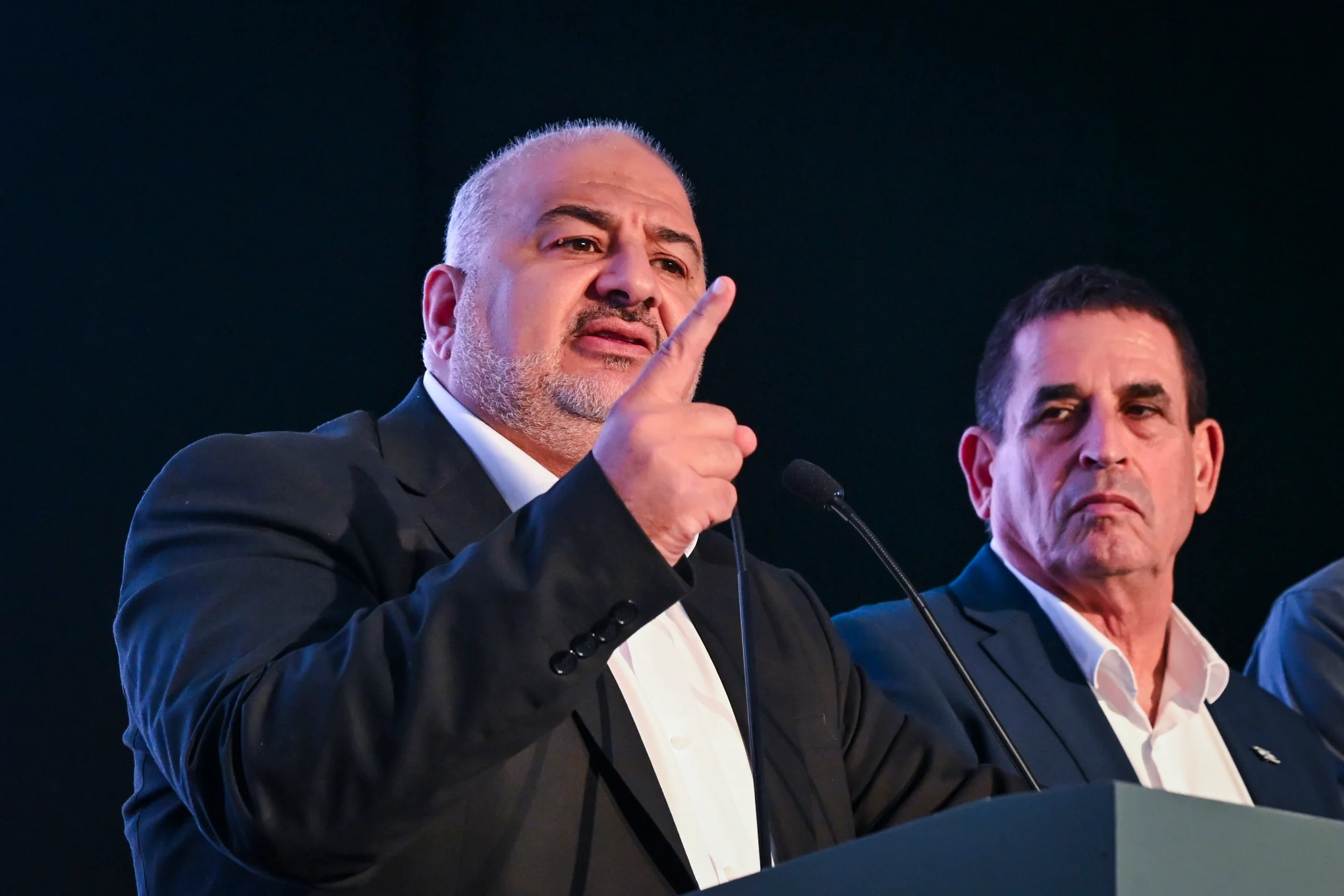
They save lives in our hospitals, turned out to vote in record numbers, and are willing to shoulder their share of the burden. Bringing them into a governing coalition is no longer merely a political question, but an essential act of social repair. Closing the door on them will cost Israel their partnership for good.
Not long ago, I accompanied someone close to me to a hospital for treatment. There was a nurse there from Kafr Qasim, the town that still bears the scars of the 1956 massacre. During a conversation, he said something that has stayed with me ever since.
“We genuinely want to become part of Israel. We’ve had enough of being peasants. All my friends work here. They’re doctors, nurses like me. We keep this hospital running, yet we are not considered legitimate by the people we work with, or by the patients.”
Later, he added quietly: “We don’t want to make decisions about security or policy. We want to take part in civilian life, to share responsibility for this society. If it doesn’t happen now, either, I don’t see us remaining partners in Israel.”
I left the hospital with one question echoing in my head: What more do we want from them?
They have stood with us since October 7. When the terrorists broke through into the communities near the Gaza border, Bedouins from the Negev went out unarmed and unprotected to rescue families and help survivors of the Nova music festival massacre. Amer Abu Sabileh, from Abu Tlul, was killed in Sderot while rushing to save two little girls. At least six Bedouins were abducted to Gaza, and Youssef and Hamza al-Ziadna, a father and son, returned only in coffins. Bedouin children were killed by rocket fire because we, the state, had failed to provide shelters for their homes.
And in the months that followed, while hatred was raging across the countries around us, Arab citizens here remained part of Israeli society. A month after the massacre, a survey by the Israel Democracy Institute found that Arab citizens reported their highest sense of belonging to the state since the institute began asking the question in 2003.
They do not merely feel that they belong. They carry this country on their backs. A quarter of all doctors in Israel are Arab. So are 27 percent of its nurses, and nearly half of its pharmacists. When you arrive at an emergency room at two in the morning, there is a good chance that the person who saves your life will be that same nurse or doctor from Kafr Qasim.
And here is one small statistic for those who like to talk about sharing the burden: in the year of service before the war, approximately 3,800 Arab Muslims and Christians joined military or civilian service. According to official figures, the corresponding number of ultra-Orthodox Israelis was about 1,800. So who, exactly, is failing to shoulder the burden?
What has the state given them in return? The Israeli government has spat in their faces. Three weeks ago, in a telephone vote among cabinet ministers, Bezalel Smotrich pushed for nearly NIS 1 billion to be cut from the five-year development plan for Arab society. Classrooms, sports fields and employment centers were wiped out at a stroke.
At the same time, violence is killing them, and the police are abandoning them. By the end of October, approximately 190 people had been murdered in Arab society. Since Itamar Ben-Gvir, the filthy racist and one of the most inept ministers in the history of politics worldwide, took charge of the police, more than 900 people have been murdered there. Nine hundred. Had this happened in Ramat Gan or Ra’anana, the government would have fallen within a week. Actually, more people were killed on October 7, and the government survived, but you get the point.
And on election morning, as Arab citizens came out to vote, police raided the homes of Ra’am activists in the Negev, based on information originating from the Prime Minister’s Office. To this day, no substantive evidence has been found.
It does not have to be this way. We have already seen that things can be different. Under Rabin’s government, we abolished the position of “Adviser on Arab Affairs”, which still carried the lingering stench of military rule, and replaced it with a committee of director-generals dedicated to Arab society. I was there, and I saw how treating people as citizens rather than as a security problem can change everything.
Rabin was no bleeding-heart leftist. He was a tough security-minded leader, and precisely for that reason he understood that a country that alienates a fifth of its citizens weakens itself and shoots itself in the foot, or even in the head.
Despite the discrimination, Arab citizens went to the polls. Approximately 77 percent voted, compared with 53 percent in 2022, a turnout approaching the record set in 1996. They won 19 Knesset seats. They did exactly what we have been demanding of them for 78 years: choose the democratic path, influence the system from within, and become part of it. And now, everyone, on the right and the left, is busy figuring out how to form a government without them.
Meanwhile, something else happened, and it almost went unnoticed. Gadi Eisenkot set out conditions for any party wishing to join a government led by him: a military or national service law applying to everyone; recognition of Israel as a Jewish and democratic state; a commitment to the values of the Declaration of Independence; and recognition of Hamas as a terrorist organization that must be destroyed.
Mansour Abbas, chairman of the United Arab List (Ra’am), responded that these conditions would not stand in the way of his joining the government. The man who condemned the October 7 atrocities, and who had already stated publicly this summer that civilian service for young Arabs was “an essential need in Arab society”, accepts the fundamental principles laid down by the former IDF chief of staff.
Think about that for a moment. The leader of an Arab party is willing to sign on to universal service, something that could also accelerate, or compel, similar processes among the ultra-Orthodox, and move the country closer to an Israeli consensus. What more must happen before we recognize him as a legitimate partner?
As far as I am concerned, the legitimacy of Abbas and Ra’am is beyond question. Anyone who still rules them out after this is simply looking for an excuse.
Put politics aside. Even if Eisenkot forms a government without them, and even if Netanyahu puts one together, the right thing to do is bring them in. They are not asking to sit in the room where decisions about war are made. They are asking to participate in civilian life: health, education, welfare, local government, and the fight against the crime that is decimating their communities.
Civil partnership in exchange for civic responsibility. Ra’am already proved in 2021, in the Bennett-Lapid government, that this is possible, and that the sky does not fall. It is morally right, and it makes strategic sense, too. At a time when a wave of sanctions is approaching from Europe, and when Israel is being portrayed around the world as a country built on discrimination, nothing would rebut that accusation more clearly than an Arab minister running a civilian government ministry in Israel. Above all, this is about repairing Israeli society itself.
And the pressure is no longer coming only from Europe. This week, following the Republicans’ crushing defeat in the US midterm elections, Vice President JD Vance published a lengthy post analyzing the loss. Three of the four reasons he listed had to do with Israel. The vice president of the United States, from the very party on which Netanyahu wagered everything, down to his underwear – and ours along with it – is openly saying that relations with Israel are one of the reasons his party lost.
At this point, Israel must, absolutely must, change course immediately. Now, while there is still hope that it is not too late. And changing course starts at home. A government with an Arab partner who has accepted the state’s fundamental principles, and whom no one can reasonably disqualify anymore, would send the clearest possible message to Washington and the rest of the world: Israel is stopping, looking at itself, and choosing a different path.
Because if we still fail to extend a hand to them now, where are we heading? An Arab young man who worked night shifts during the war, went out to vote, believed in the possibility of partnership, and was once again met with a closed door will not return to the polls next time. His son may already be looking for partners elsewhere, in the best-case scenario. In the worst, he will develop hostility toward the state. This is the reality we are creating with our own hands, only to act surprised later.
“We’ve had enough of being peasants,” the nurse from Kafr Qasim told me. He is ready to take responsibility. The only question is whether we are ready to let him.