
Learning The Lessons Of History
What October 7 Changed for Jews
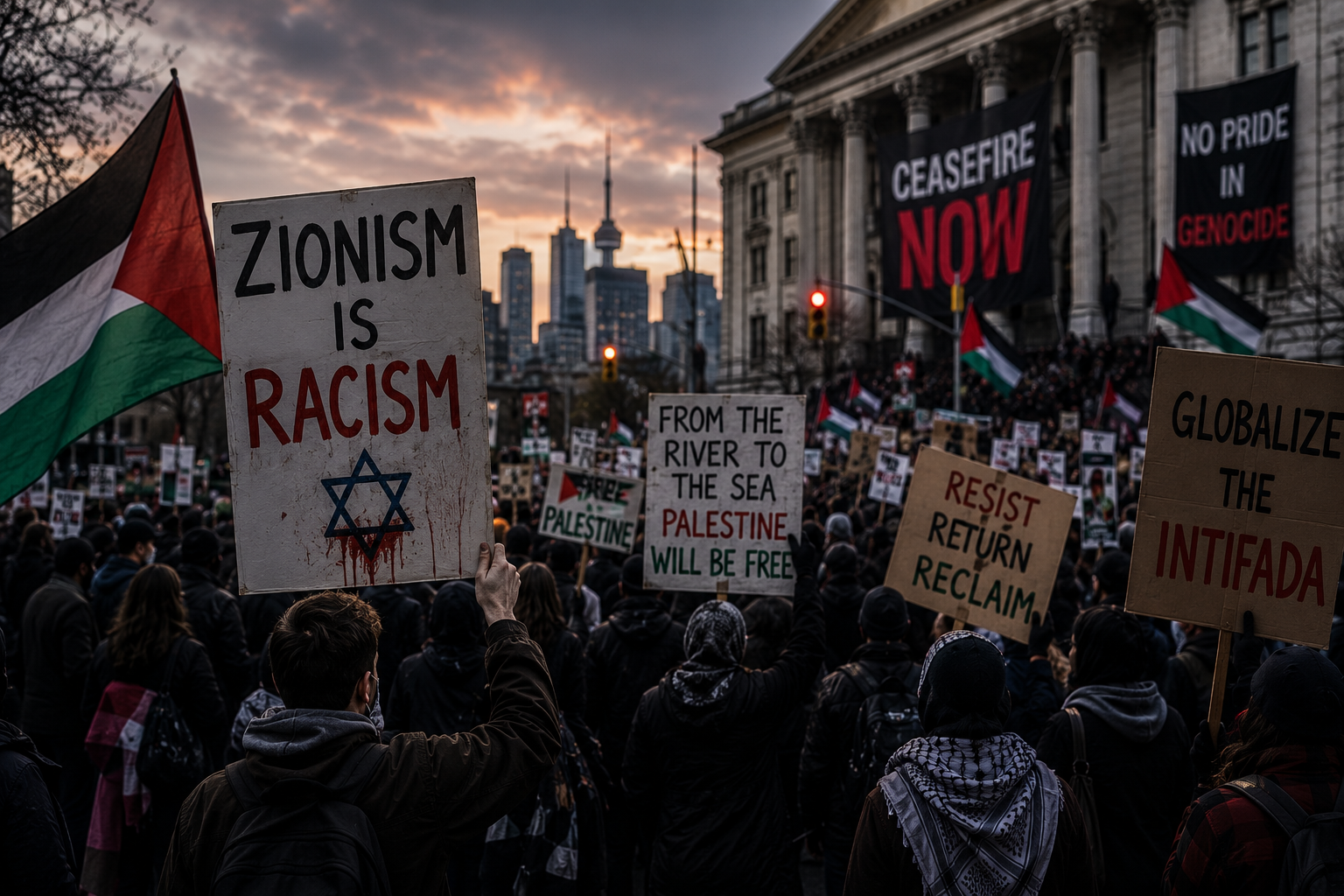
On October 7, 2023, the world changed for Jews. The Hamas attack on Israel was the deadliest single-day massacre of Jews since the Holocaust, and the murder, kidnapping and deliberate brutality were horrifying in themselves. Yet for many Jews, the shock did not end with the attack.
What followed was equally unsettling. Across North America and Europe, antisemitic incidents rose sharply, Jewish students reported harassment and intimidation on university campuses, synagogues increased security, Jewish schools reviewed emergency procedures, and community organizations reassessed assumptions about safety that had existed for decades.
For many Jews, October 7 became more than a terrorist attack in Israel. It became a psychological turning point that changed how they viewed their security, their place in democratic societies and their confidence in the institutions responsible for protecting them.
The Return of Questions Many Thought History Had Settled
For generations after the Holocaust, many Jews believed liberal democracies had learned the lessons of history. They placed their trust in constitutional rights, independent courts, public institutions and the broad social rejection of antisemitism. They believed that while hatred had not disappeared, democratic societies had developed the safeguards needed to contain it.
October 7 did not erase those protections, nor did it make today’s democracies equivalent to Europe in the 1930s and 1940s. Such comparisons would be historically inaccurate and would diminish the unique horror of the Holocaust. What October 7 did, however, was force many Jews to reconsider assumptions they had rarely questioned.
How secure are Jewish communities in democratic societies? At what point does hostility toward Jews become more than a series of isolated incidents? When does political rhetoric cross into intimidation, exclusion or incitement? How should institutions respond when antisemitism becomes increasingly normalized, and when does preparation become prudent rather than alarmist?
These are not questions about predicting another Holocaust. They are questions about recognizing risk before certainty exists and understanding when changing conditions require more than reassurance.
Danger Rarely Announces Itself
One of the most important lessons of history is that danger seldom arrives fully formed. It usually develops gradually as rights narrow, public attitudes shift, institutions weaken and hostility becomes more acceptable.
Conduct that would once have been condemned may be explained, excused or treated as a temporary reaction to events elsewhere. Taken individually, each development may appear manageable, but together they may represent a meaningful change in the environment.
The difficulty is that people must make decisions while events are still unfolding. They do not have the clarity of hindsight. They see fragments, conflicting reports and competing interpretations. Some voices warn that conditions are deteriorating, while others insist that concerns are exaggerated.
Institutions often reassure the public that existing systems remain capable of managing the problem. That uncertainty can make delay feel reasonable, but uncertainty is not the same as safety.
The Lessons Before Auschwitz
My mother, Mary Katz Claman, survived Auschwitz after being deported from Hungary in 1944. Like many survivors, she rarely spoke about her experiences while I was growing up. Later, as I researched her life through archival records, survivor testimony and historical documents, I became increasingly interested in the period before her deportation.
The most difficult questions were not only about what happened once the machinery of destruction was fully operational. They were about what happened before. How did Jewish families interpret the warning signs? Why did some recognize danger earlier than others? Why did many continue to trust familiar institutions, and how did ordinary life continue even as the conditions of safety were deteriorating?
Hungarian Jews did not move directly from normal life to Auschwitz. Before deportation came years of discrimination, exclusion and legal restriction. Before families were confined, their rights and opportunities had already narrowed.
Yet daily life continued. Homes remained occupied, businesses operated, children attended school, families gathered and synagogues remained active. The familiar world still appeared to function, and that continuity made danger harder to measure.
A society does not have to collapse before it becomes unsafe. It only has to begin changing the conditions under which protection is given, denied or withdrawn.
Recognition Is Not the Same as Prediction
History should not be used to make careless predictions. Not every increase in hatred leads to state persecution, not every institutional failure signals democratic collapse, and not every period of social conflict becomes catastrophic.
That does not mean warning signs should be ignored until the outcome is certain. The purpose of studying history is not to claim that the present is identical to the past. It is to improve our ability to recognize patterns, assess deteriorating conditions and understand how options can narrow over time.
Prediction asks us to know exactly what will happen. Recognition asks us to identify when the environment has materially changed. It asks whether hostility is becoming normalized, whether institutions are responding effectively and whether those at risk still have confidence in the systems meant to protect them.
These are questions that governments, universities, police services, community leaders and civil society organizations should be willing to confront directly.
The Responsibility of Institutions
Democratic institutions are tested not when conditions are easy, but when competing rights, political pressure and social conflict make action difficult. Universities must protect freedom of expression while ensuring that Jewish students can attend classes without intimidation.
Governments must defend lawful protest while responding decisively to threats, harassment and hate-motivated conduct. Police services must apply the law consistently and communicate clearly when public safety is at risk. Community organizations must strengthen security without allowing fear to define Jewish life.
Reassurance alone is not enough. Confidence depends on visible, credible and proportionate action. When institutions minimize legitimate concerns, apply standards inconsistently or wait for conditions to become unmistakable, they weaken the trust on which democratic societies depend.
Why October 7 Still Matters
October 7 changed the questions many Jews are asking. The concern is no longer limited to what happened in Israel. It is also about what the attack and the reactions that followed revealed about Jewish life elsewhere.
For many Jews, the issue is not whether democratic societies remain fundamentally different from the regimes of the past. They clearly do. The issue is whether those societies will recognize deteriorating conditions early enough to respond effectively.
History cannot tell us exactly what tomorrow will bring, but it can sharpen judgment. It can remind us that warning signs are often disputed before they are accepted, that institutions can remain functional while trust is weakening and that the most important decisions are usually made before the outcome becomes obvious.
The question is not whether history is repeating itself. The question is whether we are paying attention while meaningful choices still remain, because by the time everyone agrees that danger is real, the opportunity to act may already have begun to disappear.
My new book, When Is It Too Late? Holocaust Lessons on Risk, Decision Making, and the Failure to Act, releasing on September 15, examines these questions in detail. For more information, visit https://brianclaman.com/future-books.
Related Topics
Related Posts