


British Student Defending Israel
What October 7 Revealed About Western Intelligence
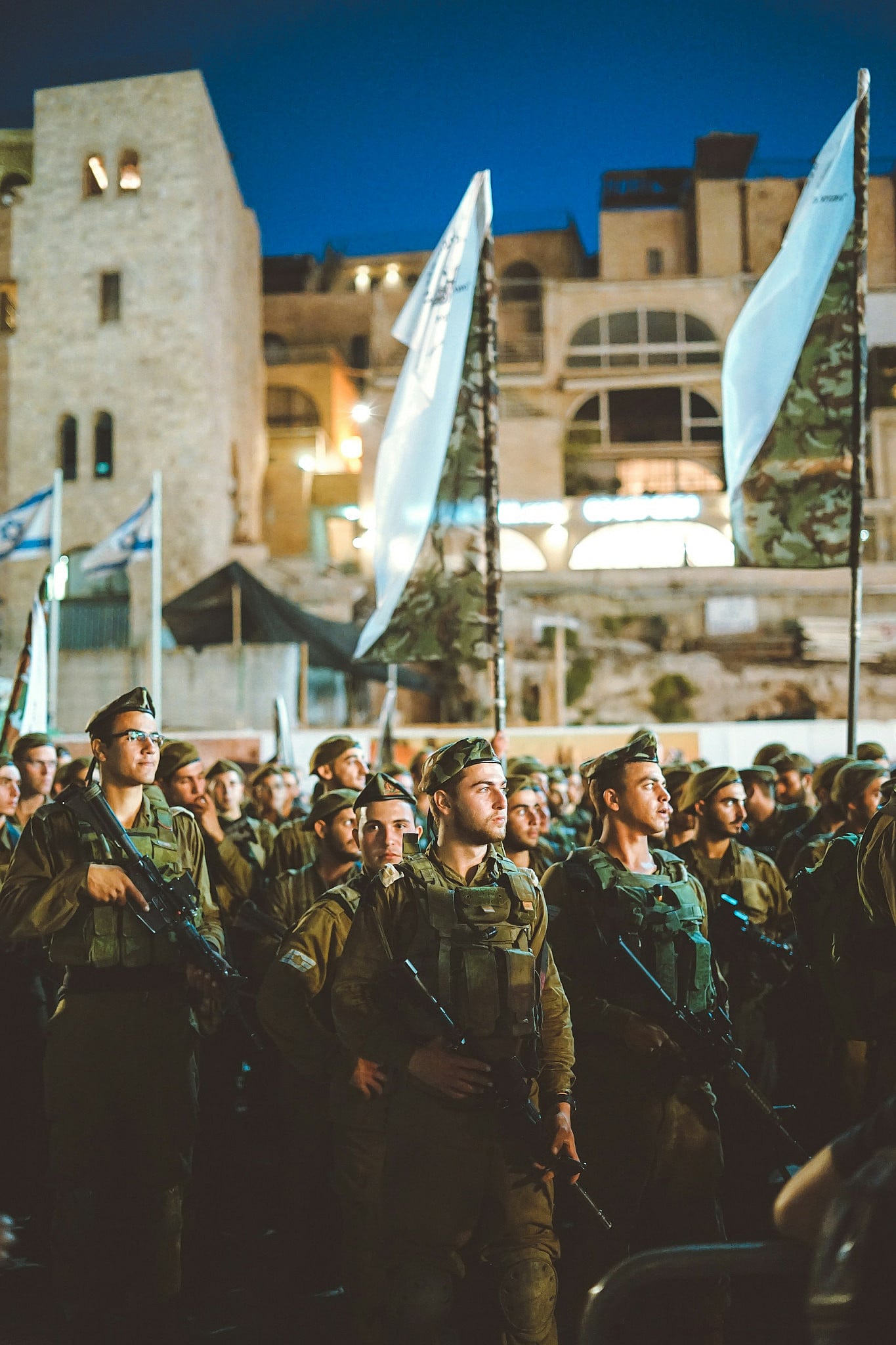
Photo by Toa Heftiba on Unsplash
Many of us still question how the October 7th massacre happened on Israeli soil. Take, for example, warnings from Mossad, Shin Bet, and Unit 8200; Israel was made alert, and yet it wasn’t prepared. For too long, security commentary has been focused on Israel, but I’m asking a different question: What did October 7th reveal about Western Intelligence? Whether it’s dangerous assumptions or an overreliance on technology, Israel didn’t recognise such a threat despite it being parked on its very doorstep. This takes me to Britain and the environment we find ourselves living in today, in an ever-increasingly dangerous world.
We tend to look at our enemies when it comes to our biggest threats, but what if the biggest threat to the West is itself? The fact that we are so easy to believe we understand our enemies. Realistically, the issue regarding Israel’s October 7th security failures wasn’t a lack of intelligence. I’d argue the problem embedded in the heart of the government was a lack of confidence.
Warning Signs:
If we take, for example, the Jericho Wall document, a 40-page file produced by Israeli military intelligence a year before the 2023 massacre, it outlined a cross-border invasion by Hamas – and yet the Netanyahu government treated Hamas in Gaza as deterred – as if they didn’t pose a substantial threat. We mustn’t solely look at this as a security failure; it was ignorance from those in power. A government unwilling to take the necessary action to defeat the threat of Islamist-inspired terror. A government too weak to confront the very people who had a desire to wreak hell on innocent Israelis. In the three years leading up to the massacre, Hamas held four joint drills, collaborating with every other Islamist terror organisation in Gaza – all of which were documented on public social media accounts. Again, this was not a lack of intelligence; it was ignorance and a lack of confidence. The ignorance is also reflected in the sheer number of terrorist fighters that invaded Israel from Gaza on that day – not a couple of thousand, but 6000 Gazans. Some of whom were ordinary ‘civilians’, and others were from a diverse makeup of Hamas, Palestinian Islamic Jihad, and a plethora of others, all motivated by the same antisemitic, religion-inspired extremist motives.
The Israeli Government had assumed that Hamas-controlled Gaza was interested in governance over war. For years, they were busy offering incentives for Gazans to work in Israel, providing workers the opportunity for a better life with much higher salaries, all while Hamas and its partners were busy prioritising tunnels over infrastructure and rockets over humanitarian support. The warning signs were there, but it seems they were dismissed.
In the months leading up to 7/10, Unit 8200 offered multiple strong warnings. July saw a veteran analyst from the unit explain how she saw a Hamas training drill that lasted an entire day – matching that of the contents in the Jericho Wall document. Yet this was essentially brushed off by her superior, who saw it as an imaginary scenario.
Then came the fresh dossier produced in September, which warned that Hamas had been practising raids in which they would capture hundreds of hostages. It was ignored. More devastating was the warning on October 6th 2023, whereby the same unit had sent a dramatic email about unusual weapon activity in Northern Gaza. No one acted. The main lesson to learn from such a situation is that intelligence agencies will fail because they only see what they want to see, what they expect to see, and essentially they begin to stop questioning assumptions. Warning signs aren’t challenged; instead, they’re left untouched. The Government of Israel was certain about its security situation on October 6th, and yet just a day later, this assumption collapsed in the most devastating way imaginable.
Technology vs Human Judgement:
In a world of innovation and technology, it’s easy to make assumptions as to the power of technology versus real human judgement. Israel is renowned for its creative inventions, and that sophistication extends to its military operations, with life-saving equipment like the Iron Dome used to counter the Iranian threat. But where was Israel’s technology on the early morning of October 7th?
Israel uses technology in ways we cannot even imagine. Take, for example, the Gaza border fence. The 20-foot multi-layered fence looks simple – it’s built from steel, iron, and concrete, features an underground anti-tunnel wall and has multiple methods of surveillance, consisting of cameras, radars, sensors, and even remote-controlled gun systems. But this didn’t stop Hamas and armed civilians from breaching that very fence on October 7th, allowing them easy access to innocent civilians across various Kibbutzim.
This technology extends far beyond defensive measures and is optimised by Israel in terms of offensive action, given that it faces multiple faces of terror on all angles of its borders. The IDF uses high-tech drones in areas like Gaza to monitor threats and surveil drills and other threatening activities, therefore enhancing its ability to protect its borders and its people. Drones, for example, use artificial intelligence in order to maximise the accuracy of targeting terrorist threats, while also assisting in defensive measures like allowing for live video feeds, tracking, and building interactive maps of difficult-to-reach territories.
Whether it’s surveillance towers, specialised sensors to detect irregularities, or cameras, Israel had some of the most sophisticated infrastructure when it comes to security, and yet the state still failed. This mirrors the attitude of the West, with Governments continuing to believe that artificial intelligence, algorithms, and monitoring via technology are sufficient to provide around-the-clock protection. I dispute this and believe the evidence is on my side. While it’s true that technology helps collect data and store information, I believe critical thinking is more important than ever, and October 7th proved this. Technology alone will not save lives; it cannot think critically for us. While artificial intelligence is becoming embedded in security planning, there lies the danger that human judgement will be left behind. This is not an Israel issue; this affects security worldwide, including states like Britain, which may have an over-reliance on such technology. There needs to be a distinction between innovation and falling into fatigue.
The Online War:
When we think of the battlefield, whether it be war and conflict or state threats, we tend to think of a tangible threat; realistically, the next major threat may not arrive across borders; it might not be soldiers or terrorists in uniform. The West should pay attention to platforms like Telegram and focus on the link between social media and extremist recruitment. In Britain, we hear lots from the Government about the effects of social media amongst young people but very little about how such platforms allow a base for individuals and terrorist groups to spread misinformation, hate, and extremist ideologies. The data shows that young people in the UK are undergoing terrorism investigations at unparalleled rates. Children under the age of 18 are responsible for 13% of all MI5 terror investigations, while 1 in 5 terrorism arrests in the UK involve children under the age of 17. So states must see that not all threats wear a uniform or arrive with tanks – real conflict is also bubbling online. MI5 Director General warned that young people are being targeted via online gaming platforms and messaging apps; an example is Telegram.
A report produced by The George Washington University shows that Telegram is used because users enjoy the option for end-to-end encrypted chats, whereby the messages will only exist between 2 devices; the chats are not accessible by Telegram, and conversations can be destroyed. The report explores how the Islamic State exploits this, using the platform to communicate with like-minded supporters worldwide and providing instructions for operations without the fear of alerting authorities. Messages and important announcements can be sent, in theory, to unlimited numbers of users, with some groups hosting up to 200,000 supporters.
Telegram is a platform that is easily accessible for young people; it lacks strict procedures for identity verification, and therefore it feeds into the growing wave of youth radicalisation. And according to intelligence from MI5, the growing trend in young people being radicalised online does not fit a particular ideology; instead, perhaps more dangerously, they seem to be obsessed with violence. In the previous British government, the then Security Minister, Dan Jarvis, talked about the seriousness of the emerging trend of youth radicalisation and highlighted that the investigations into under-18s had tripled in the last 3 years.
To counter such a rise in terrorist threats, the government is increasing counter-terror police funding by £140 million and injecting an additional £499 million into the UK intelligence community. But does throwing money at such an embedded issue solve all the issues? Will the next surprise arrive via smartphones and social media as opposed to a missile?
If we assess the role that social media played in the October 7th events, as discussed, Hamas had posted consistently on its social media channels with high-quality photos and footage of hostage taking, raiding makeshift kibbutzim, and attacking IDF soldiers. This didn’t just provide an instruction manual for its terrorist fighters, but it also likely contributed to the generational indoctrination of the Gazan people, as well as inspiring uncertain Gazans to take direct action on that day. On October 7th, Hamas weaponised social media as a primary part of its military strategy, using digital platforms to broadcast its atrocities, to spread terror and invoke fear. This allowed Hamas to successfully control the narrative globally, as the rape and murder were taking place in real time. Social media was used strategically to fulfil Hamas’ aim of engaging in intense psychological warfare.
Social media like Instagram, Facebook, and TikTok all have a challenging barrier to breach when it comes to posting extremist content online, and so Hamas, like the Islamic State, primarily used Telegram to post footage. The professionally filmed content was almost immediately stamped with the insignia of the Al-Qassam Brigades and posted in high resolution to hundreds of thousands of subscribers in real time. Hamas wore GoPros and so were easily able to capture all their atrocities on camera, but the evil didn’t end there. As gunmen filmed first-person POV videos, they uploaded unedited, raw footage of violence and hostage-taking- in a way that was planned to shock the Israeli public.
Not forgetting how such graphic content was then published onto victims’ own social media accounts, resulting in direct trauma whereby families were watching loved ones murdered in cold blood, sexually assaulted, and raped, and others seeing loved ones taken hostage into Gaza, causing alarm, distress, and panic on an unimaginable scale. The propaganda videos, spread across mainstream media, polluting feeds across the world, soon turned into results when, on the same day and at the same time as rape, murder, and massacre were taking place 3000 miles away, activists were out in the streets of London with perfect, ready-made signs and placards, celebrating Hamas’ attack and starting the widespread ‘Free Palestine’ calls.
The threat from states without uniforms:
Western security has long been focused on looking at security through a militaristic lens. Whether that is organised state armies, armed tanks, aircraft, or conventional warfare, these threats all vary from the modern aggressions the West faces. Take, for example, the UK’s 35% increase in investigations for state threat activity – with particular focus on espionage. If we take a look at Europe more widely, Hamas had planned attacks across Germany. That’s right, a terror group we in the West innocently declare as Israel’s problem targets all of us. According to an indictment filed by Germany’s federal prosecutor, Hamas had planned to coordinate terror attacks across Berlin and Vienna to mark the second anniversary of the October 7th massacre. The document highlighted a shift from how terror groups like Hamas have traditionally used Europe in terms of fundraising and propaganda – and now it turns out that Hamas’ plans across Europe actually existed before October 7th. Plans to train operational cells across the continent, while using Turkey as a base, had seen terror networks move pistols and automatic rifles, along with plenty of ammunition via Denmark, Germany, and Austria, with the sole aim of targeting jews, Israelis, and diplomats.
Turning to the fundraising element, the Muslim Brotherhood is embedded in our institutions across Europe, using countries like Britain and France to set up fake charities, often with Islamic or humanitarian fronts, to channel funds to Islamist terror groups. There are many examples of European-based charities that have been accused of working with Hamas in Gaza: Islamic Relief and Interpal in the UK, Italian-based Charity Association of Solidarity with the Palestinian People, IHH in Germany, and Soutien Humani’Terre in France.
Hamas is no different to the other Islamic terror groups that use Europe as a base to fundraise – take Hezbollah; they work alongside charities like the Lebanese-based Zayer Charity Association. A report found that students across London University campuses had held events with the primary focus of raising money for Zayer Charity/Zayir UK, which itself admits to working with the social arm of Hezbollah in Southern Lebanon. One of those universities includes my own place of study, Royal Holloway – whose Friends of Palestine Society posted on Instagram that they sent thousands of pounds to Zayer Charity. It is an unregistered charity in the UK, so how on earth are these organisations still running and receiving funding from the public and even students!?
And of course, we must not forget about the threat from the Islamic Regime in Iran. Our journalists find themselves targeted, intimidated, and sent death threats. All while the Iranian diaspora and their families back in Iran face aggression if they are spotted campaigning against the Islamic Regime. If we reflect on October 7th, one lesson we can learn is that the most dangerous threats can often be the ones we don’t expect. The ones that the state doesn’t pay enough attention to. This should be a wake-up call to Europe because the next security shock isn’t going to be a rocket or a uniform. The modern threats that Europe faces revolve around proxies and online networks – ideology seems to be more of a threat than a conventional army. One only needs to assess the plots by the Islamic Republic of Iran on British soil, and the targeting of dissidents residing in Britain, along with jews and Israelis. It’s simply no longer the case that hostile states need to cross borders to project their power. They are already here, embedded within our communities.
Britain must learn:
We often assess the events that led to October 7th to find a way forward for Israel, but I think it’s equally as important for Britain to learn from such a disastrous day in history. While there tend to be many changes we wish to see from our security services and Government, Britain at least needs to change its approach in the way it thinks and its response to hostile ideological actors.
As a state, we must pressure our politicians and those in charge to question assumptions. In the lead-up to the October 7th massacre, the Israeli Government viewed Hamas as deterred – they didn’t view them as a threat. The government turned its nose up at those who offered intelligence, and instead prioritised the more obvious military threats from the likes of the IRGC in Iran, along with Hezbollah in Lebanon. Warnings were ignored, not once, but consistently. In a time in which political commentators and the general public are arrested or ‘cancelled’ for warning us about the rise of Islamism, the (predominantly) pakistani muslim rape gangs, or the drastic changes in demographics, it is time for the state to listen and take note. When our canteens are transformed into Halal-only spaces, the Islamic call to Prayer is blasted on campuses, or women are turned away from shops for not dressing ‘modestly ’, these things tend to come in via ‘harmless’ social adaptations and then turn to something much more worrying in the future. The Iranian diaspora has repeatedly warned us that this is how things took place in Iran.
In a time in which we see technology on the rise, and tools like artificial intelligence replacing human jobs, Britain must not fall into the trap where technology replaces human judgement. Those whose jobs it is to monitor and keep track of threats must be listened to. When Governments rely on technology over human judgement, things go wrong – October 7th reflected this when those in Unit 8200 were essentially ignored. When the MI5 Chief warns us that Islamist extremism is the No. 1 threat to Britain and takes up 75% of MI5 caseload, the Government must act decisively, rather than shy away from the problem in front of us.
Threats to Britain must be dealt with before they emerge – Britain should put more resources into a proactive approach to security, as opposed to actions being introduced after the next security disaster. This means that the Westminster Government must take a serious approach to tackling online radicalisation, as well as forums for such extremist ideologies, in our universities, for example. If such hate goes untackled, these places, our treasured and some of our most prestigious institutions, will become overrun with extremism, antisemitism, and hatred against anyone who dares not to follow the status quo. State-supported operations need to be monitored extremely closely – with careful attention to Iran, China, and Russia, but without forgetting about those who don’t particularly wear a state uniform – the likes of Hamas and Hezbollah. Violent incidents, regardless of how barbaric, if they are inspired by ideology, must be declared terrorism, rather than authorities shying away from public outrage. Having a mental health condition doesn’t change the facts if an Al-Qaeda manual was found in the home of a perpetrator – the same goes for Nazi memorabilia treasured by Far Right Neo Nazis. Quite often, the warning signs are present, but it’s the fact that such signs are dismissed that causes concern for our domestic security.
Israel faced a strategic surprise on the 7th of October, not because Hamas were very careful with operations and kept them secret, but because the government was complacent – they were smug and satisfied with the way in which threats had been prioritised.
October 7th 2023 taught Israel and its moderate neighbours about security in ways previously difficult to imagine.
While it remains one of the darkest days in Israeli history and an international day of devastation for the Jewish community, those beyond Israel must learn their lessons. Governments across the world, particularly those in Europe, need to acknowledge how they may also be complacent in emerging security threats.
An October 7th-style massacre, or any such act for that matter, must not be allowed to take place anywhere in the world, and Europe must act immediately to stop such a devilish event from happening on its own soil. While it may seem that Israel and the faces of Islamist terrorism are 3000 miles away, it is still our issue.
When a terrorist group attacks the World’s only Jewish state, it is an attack on the West, on all of us.
The attacks on Israel, carried out via land, air, and sea, exposed the risk of a country being overly confident and rather arrogant in terms of technological capabilities. We in the West, and particularly Britain, must look at the new emerging security threats before they emerge; all of us need to be prepared – whether that’s digital networks operating with malicious intent or dangerous ideological actors. Britain must understand the dangers of facing a strategic surprise like the State of Israel did on that bloody day.
Britain and the West must challenge assumptions; our institutions must never be complacent and overly confident. Our security services must challenge their findings, and those in power, and the general public should always ask the difficult questions. We pride ourselves on preventing terror attacks like the 2 recently foiled in Manchester, but our intelligence is only useful when our leaders are prepared to actually listen and take decisive action. October 7th 2023, will always serve as a devastating reminder to us all that no matter how technologically privileged a country may be, or how prepared one may think they are, our security services can indeed fail when those in powerful positions put their own confidence and arrogance over judgement and the challenging of assumptions.