What should we teach our children about Israel’s election?
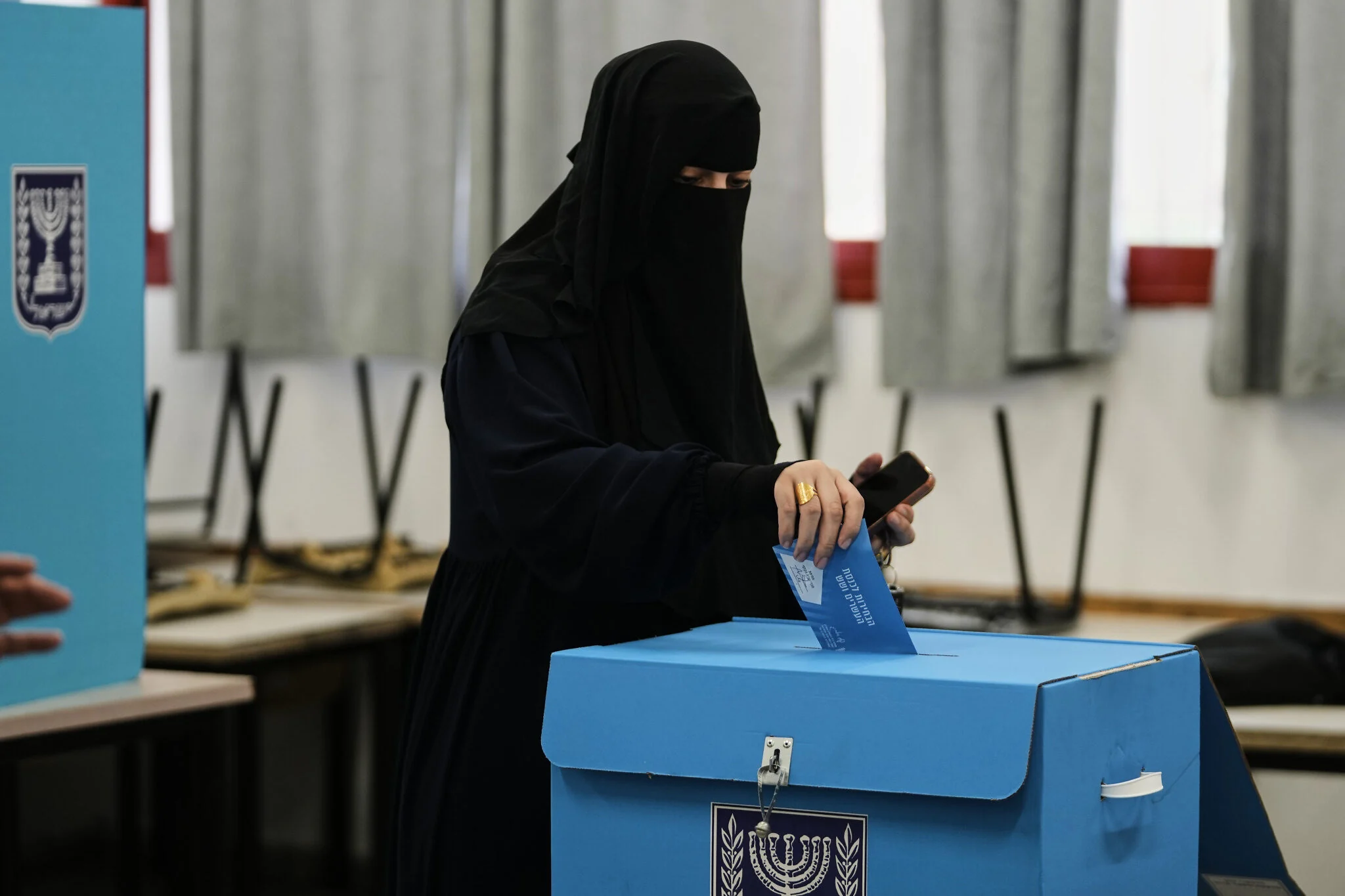
The votes are in. Coalition negotiations are underway. Israel is debating its future, and Jewish communities around the world are asking what these elections mean for Israel, for the Jewish people and for the relationship between them.
For Israel educators, the question is more immediate: What do we teach now? How do we help students make sense of an election many are calling one of the most consequential in Israel’s recent history? And how do we turn the headlines into opportunities for deeper learning, meaningful engagement and enduring connection?
The answers will vary by age, setting and educational purpose. But these elections offer a powerful opportunity to explore five essential lessons about Israel and the people who call it home.
1. Israel is a democracy, and democracy is complicated
Nearly 78% of eligible voters participated in this election, the highest turnout since 1999. The results reflect the choices of a diverse electorate, and every citizen has the right to vote. Israel’s electoral system may be unfamiliar to many, and its coalition politics can be bewildering. But the democratic process is real, consequential and deeply contested.
Israel educators should help students understand not only how the system works, but what it means to live in a democracy: competing visions, difficult compromises, political accountability and the possibility that the people will choose leaders we strongly disagree with. Israel is a democracy in the Middle East. It is also a democracy within the Middle East, with all the complexities that entails.
2. Israel is a Jewish state, and a country with a substantial non-Jewish population
Arab-led parties won 19 seats in the 120-member Knesset. That is a striking result, reflecting the political participation of Arab citizens, who make up roughly 21 percent of Israel’s population.
The election brings a fundamental tension into sharp focus: What does it mean for Israel to be both a Jewish state and a democracy in which all citizens have equal political rights? The debate over whether Arab parties should participate in a governing coalition is not simply a matter of political arithmetic. It touches on questions of identity, equality, trust, security and the meaning of citizenship.
Some argue that excluding Arab parties is discriminatory. Others point to the positions of particular Arab politicians on Israel’s identity as a Jewish state. For some Israelis, the prospect of sitting in government with political figures whose statements they view as deeply threatening is emotionally and politically difficult. These tensions are real, and they deserve more than simplistic answers.
For educators, the lesson is clear: It is impossible to understand Israel’s democracy without understanding its Arab citizens, their aspirations, their political choices and their place in Israeli society.
3. The gaps between Israelis and Jews abroad are real, and so are the connections
The issues that animated Israeli voters were not always the same as those dominating Jewish conversations abroad. For many Israelis, the election was about security, the economy, military service for the ultra-Orthodox, and perhaps above all, Benjamin Netanyahu: whether he should continue leading the country and how he should be held accountable for October 7. For many Jews outside Israel, the election was viewed through the lens of the war in Gaza, the conduct of the Israeli government and military, and the rise of settler violence.
There is considerable overlap, but these are not identical conversations. And yet, the intensity of Jewish engagement with the election tells another story. Since October 7, events in Israel have had profound consequences for Jews around the world, not only for their relationship with Israel, but for their sense of identity, safety, belonging and responsibility.
The challenge for Israel educators is not to erase these differences. It is to help students understand them, explore where they come from and build relationships that can withstand disagreement.
4. Leadership comes in many forms
This election offers a compelling opportunity to explore what leadership looks like, and what Israelis are looking for in their leaders.
Gadi Eisenkot, the former IDF chief of staff and leader of the Yashar party, is widely seen by supporters as a figure of integrity and authenticity. He lost his son, Gal Meir Eisenkot, and two nephews in the war. For many, his personal sacrifice and public service embody a particular kind of leadership.
Yair Golan, leader of The Democrats, became a symbol of courage for supporters after driving south on October 7 to help rescue civilians under attack.
Arab political leaders demonstrated the ability to mobilize voters and bring Arab citizens’ concerns to the center of national politics.
And then there is Benjamin Netanyahu, perhaps the most consequential leadership question of all. For some Israelis, he remains the strongest leader available in a dangerous region. For others, his continued political survival, despite the failures of October 7, is precisely the problem.
These competing narratives offer students an opportunity to examine leadership beyond slogans. What makes someone worthy of trust? What does accountability look like? Can personal courage compensate for political failure? And how do societies decide when it is time for change?
5. How do we engage with views we vehemently disagree with?
Some of the most difficult political conversations for Jews outside Israel involve the ultra-Orthodox parties, Shas and United Torah Judaism, and the far-right parties led by Itamar Ben Gvir and Bezalel Smotrich. For many progressive and non-Orthodox Jews, the ultra-Orthodox parties’ positions on religious pluralism, gender, military service and the role of religion in public life can feel profoundly distant from their own values.
Yet many Orthodox Jews outside Israel may recognize aspects of the religious and communal commitments these parties represent. And even for those who do not, it is important to understand that Israelis vote for these parties for reasons that extend well beyond religion. Their support is often rooted in economic concerns, social services, community solidarity, educational institutions and a sense that these parties protect communities whose needs are otherwise overlooked.
The challenge becomes even greater when considering Itamar Ben Gvir’s Otzma Yehudit and Bezalel Smotrich’s Religious Zionist Party. Their nationalist and extremist rhetoric, positions on Palestinian populations, calls for annexation and support for expanding Israeli control over Gaza and the West Bank are deeply difficult for many Jews outside Israel to reconcile with their own Jewish values.
These positions must not be sanitized or dismissed as simply another political perspective. Racism, proposed population transfer and the denial of basic rights raise serious moral questions. But dismissing these parties and their voters as fundamentalists, or writing them off entirely, does little to help us understand how they gained political influence.
What fears, aspirations, historical experiences and religious interpretations animate their supporters? How do they understand Jewish texts and traditions? What ideas about Jewish sovereignty, security, redemption and the Land of Israel shape their political vision? And where do those interpretations conflict with other Jewish values and traditions?
These are not easy conversations. They are precisely the conversations Israel educators need to be prepared to facilitate. Our responsibility is not to endorse these leaders or normalize every position they hold. It is to understand the forces that shape Israeli society, engage seriously with the people who support them, and create space for students to wrestle with the moral and political questions that follow.
This also raises a difficult question about our own educational boundaries. How do we distinguish between making room for challenging ideas and allowing rhetoric that undermines the dignity, safety or rights of others? Where does open inquiry meet our responsibility to protect students and uphold the values of our educational communities?
The bigger question
More broadly, how do we nurture meaningful relationships with Israel when our experiences and perspectives are so different? For many Israelis, October 7 is not a past event. It continues to shape fears, grief, security decisions and political choices. The country is still living with the trauma of the attacks, the consequences of the war and the uncertainty of what comes next. Jews around the world are also grappling with October 7 and its aftermath, while navigating rising antisemitism, renewed Jewish pride and growing disagreements over Israel’s conduct and future. These experiences are connected, but they are not the same.
As Israel educators, we must help young people understand both realities, build relationships across difference and remain engaged even when Israel challenges their beliefs, expectations, or sense of belonging.
Israel education cannot promise easy answers or a version of Israel that always reflects our students’ values. It can offer something more enduring: the knowledge to understand, the courage to question, the capacity to disagree and the opportunity to remain in meaningful relationship with Israel and the Jewish people.
These recent elections are an opportunity to take stock of our responsibility. Our task is not to teach young people what to think about Israel. It is to help them learn enough, care enough and think deeply enough to decide for themselves, and to remain in meaningful relationship with Israel and the Jewish people even when, and perhaps especially when, the answers are difficult.