

What Somalia Sought, It Now Condemns
Somalia’s outrage over Israel’s recognition of Somaliland is less about principle than conviction. Mogadishu is not objecting to normalization with Israel because it considers such relations inherently wrong; it is reacting because Somaliland achieved—openly—what Somalia itself had been quietly pursuing for years. Appeals to Palestine and international norms are not expressions of moral clarity but instruments of political theater, deployed to obscure the embarrassment of being overtaken by a government Somalia insists does not exist.
This contradiction is not speculative—it is documented.
Long before Israel recognized Somaliland, Somalia was discreetly lobbying Washington to explore normalization through the Abraham Accords. On May 15, 2025, a lobbyist representing the Somali Embassy in Washington emailed Brendan McNamara, Africa Director at the U.S. National Security Council, requesting a meeting “to discuss an Abraham Accords agreement.” A follow-up email on May 23 reiterated the same request. There were no public objections, no appeals to Palestine, and no invocations of international law—only quiet diplomacy conducted behind closed doors.
Nor were these efforts confined to Washington. There are credible reports that President Hassan Sheikh Mohamud dispatched emissaries to Tel Aviv to explore normalization, even as his administration publicly condemned Israel’s engagement with Somaliland. In public, Somali officials relied on heated and sometimes inflammatory rhetoric to posture as defenders of Palestine. In private, they pursued precisely the diplomatic relationship they now denounce. This is not a foreign policy guided by principle, but one shaped by expediency and image management.
This reality is no longer denied even by critics of Israel’s engagement with Somaliland. Middle East Monitor, a publication openly critical of Israel’s recognition of Somaliland, concedes that “even Somalia itself, which claims Somaliland as its sovereign territory, is so weakened that it may eventually find itself forced to join the normalization wave simply to stay relevant—regardless of Israel’s ties with Hargeisa.” That admission is telling. If normalization with Israel is framed as a betrayal, Somalia had already accepted that path as a strategic necessity.
Against this backdrop, the moral objections raised against Somaliland ring hollow.
Somaliland pursued a fundamentally different approach. Under President Abdirahman Mohamed Abdullahi (Cirro), engagement with Israel was conducted openly, transparently, and without duplicity. Somaliland made its case directly and pursued recognition through overt diplomacy. What Somalia attempted quietly and failed to secure, Somaliland pursued publicly—and achieved.
Israel’s decision to recognize Somaliland did not manufacture a new reality; it responded to an existing one. For more than three decades, Somaliland has exercised de facto sovereignty—governing itself, holding competitive elections, maintaining security, and conducting external relations independent of Mogadishu. Somalia’s insistence that Somaliland lacks standing in international diplomacy has not altered these facts. Somaliland’s engagement with Israel merely made visible what had long been true.
Somalia’s reaction, therefore, is not driven by opposition to normalization itself, but by the loss of control. A government cannot credibly condemn another for pursuing a diplomatic path it actively sought for itself. Normalization does not become illegitimate because Somaliland pursued it independently or succeeded where Somalia did not.
In international politics, intentions matter as much as actions. When a state’s own record shows it was prepared to walk the same road, condemning others for arriving there first is not a moral position—it is an admission of hypocrisy.
Somalia is free to normalize relations with Israel. It is not free to pretend that Somaliland doing the same is a transgression.
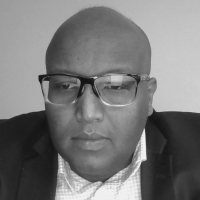
Badri Jimale is a political commentator on the Horn of Africa.