What the Red Signs of the West Bank Really Say about Peace
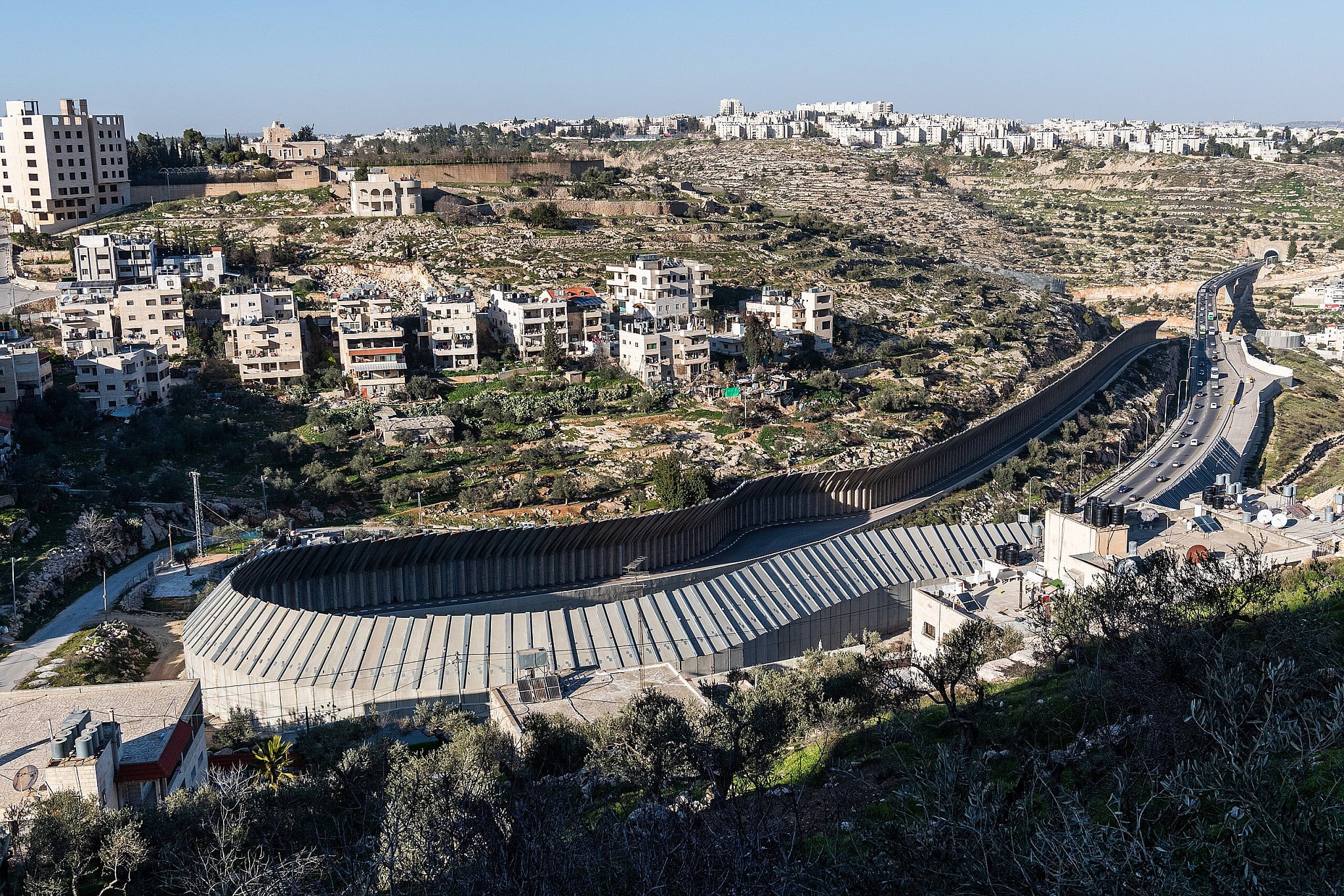
Long before any negotiating table, the landscape itself delivers a stark message about the limits of coexistence.
In the crowded landscape of “peace process” talk, it’s easy to focus on slogans and diplomatic formulas while ignoring the physical signs that tell the real story on the ground. Drive through Judea and Samaria and you’ll see them: bright red warnings at the entrance to every Palestinian Authority town warning that entering a Palestinian Authority town is “forbidden, dangerous to your lives and against Israeli law.” These signs don’t just speak to drivers — they speak volumes about the reality behind the rhetoric. They are the quiet but unmistakable proof of a worldview in which coexistence is conditional and one-sided.
Imagine, for a moment, an American community posting a sign that says, “Italians entering do so at their own risk.” The outrage would be swift and universal (except in Dearborn, Michigan.) Yet in Israel’s biblical heartland, such warnings are a routine part of the landscape.
These signs exist because they must. They reflect a reality that no peace-process slogan can obscure: Israelis who cross into PA-controlled areas risk their lives.
A Reality Written in Blood
The danger isn’t theoretical. In August 2023, a father and son from Ashdod were murdered in Huwara while waiting for their car to be serviced. Hamas proudly claimed responsibility. Just months earlier, two brothers, Hillel and Yagel Yaniv, were shot dead in the same town. Across Judea and Samaria, Israeli drivers are routinely pelted with rocks, concrete blocks, and Molotov cocktails as they travel along Route 60, the region’s main north-south artery.
These attacks aren’t random crimes. They’re part of a pattern of tolerated violence, celebrated in Palestinian social media and rewarded by the PA’s “pay-for-slay” stipends—monthly salaries to terrorists and their families. When killers are glorified and subsidized, no one should be surprised that hatred thrives.
A Policy of Exclusion
The Palestinian Authority’s leaders have said openly what many of their supporters believe: a future Palestinian state should be “free of Jews.”
In 2013, chief negotiator Saeb Erekat insisted that not a single Israeli would be permitted to live in a Palestinian state. In 2019, Mahmoud Abbas repeated that pledge, declaring “not one Israeli” would remain.
In any other context, the promise of an ethnic-cleansing policy would trigger international condemnation. In the Palestinian context, it’s shrugged off as political rhetoric. Yet it explains why those red warning signs exist—not because Israelis want segregation, but because Palestinian leadership embraces exclusion.
Meanwhile, the PA’s textbooks continue to erase Israel from maps and glorify “martyrs.” The result is a generation raised to believe that Jews are intruders to be resisted, not neighbors to be respected.
The Real Double Standard
Israel’s critics call the current system unequal. They’re right—but they’re looking in the wrong direction.
Palestinians enter Israeli cities daily—for work, medical care, and shopping—without fear. No Israeli town posts signs warning Arabs that their lives are in danger. And when extremists tried to put up such a sign in the Jewish community of Yitzhar in 2020, Israeli authorities removed it immediately, denouncing it as racist.
The contrast couldn’t be clearer: Jews who stray into Palestinian towns risk their lives. Palestinians who enter Jewish towns go home safely. That’s not a political imbalance—it’s a moral one.
A Future Without Coexistence
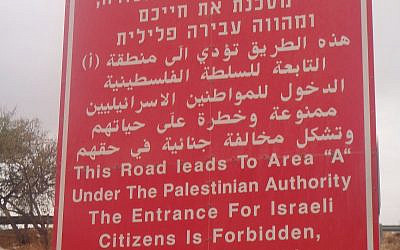
The red signs at Palestinian town entrances are more than traffic warnings; they are monuments to a worldview that still defines peace as the absence of Jews.
For decades, Israel has been told that peace will come when the Palestinians achieve statehood. But what kind of state bars Jews by law? What message does it send when “coexistence” means Jews stay out—or else?
If Palestinian leaders truly sought peace, they would prepare their people to live alongside Israelis, not without them. They would dismantle the culture of martyrdom, end the stipends to terrorists, and teach children that Jews are part of the region’s history and future.
Until then, those red signs will continue to mark more than borders. They mark a moral divide—between a society that protects its neighbors and one that glorifies their murder.