What the West misses about fundamentalism
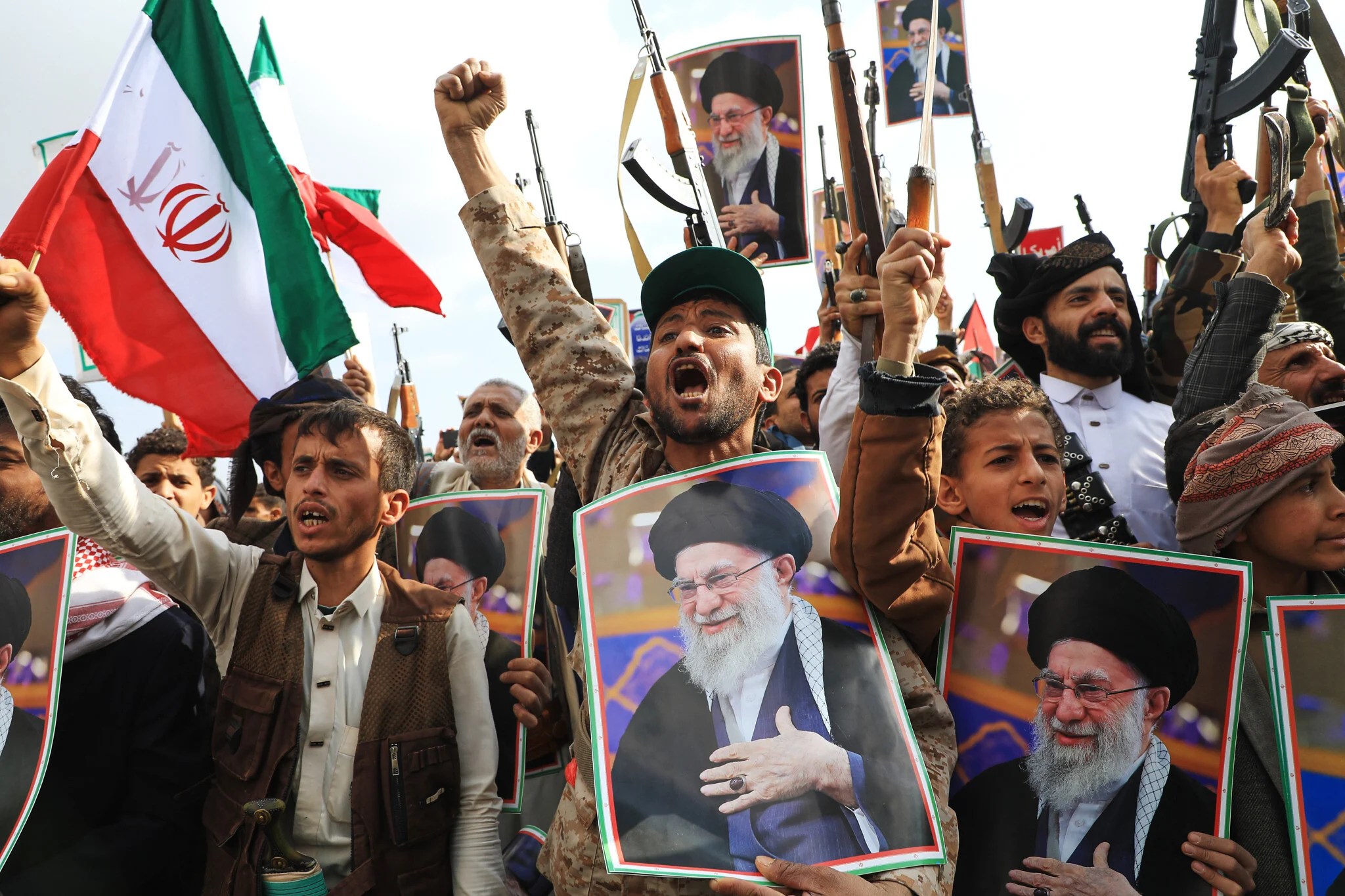
The first week of the US and Israeli war with Iran produced a strange dichotomy: Iranians dancing in the streets, exhilarated that their tyrannical “Supreme Leader” had been eliminated, even as left-wing activists and politicians expressed concern, and at times condemnation, of the strike. While there are legitimate reasons to object to the war, it seems that many Westerners are missing something important about the character of the Iranian regime.
Referring to the current crisis of the liberal order, we often hear about the dangers of right-wing populism or left-wing “woke” dogmatics. What is usually missed is that age-old adversary of equality and liberty, fundamentalist religion. The reason is clear: there simply isn’t much of it in Europe or the Americas, and correspondingly, it poses little threat.
The Middle East is different. Here, religious fundamentalism is not an abstraction but a lived reality, with some of us living under its shadow. We understand how it works, and we know well the limits of its tolerance. Whether Shi‘i revolutionary or Jewish messianic, we have learned that in the language of fundamentalism, threats are rarely metaphorical.
Not just rhetoric
For many observers in the West, slogans such as “Death to Israel, Death to America,” chanted in the Majles, Tehran’s parliament, are treated as ritualized rhetoric, a form of ideological theater meant primarily for domestic consumption. This interpretive charity, whether stemming from naiveté or meant to signal broad-mindedness, is tragically wrong.
For the religious fundamentalist, such language is not hyperbole nor merely a representation of intent. When a political theology is structured around the immanentization of the will of God, around the belief that history has a script, that God has a plan, and that one is His instrument, the gap between saying and doing collapses. The chant is not inane political rhetoric. It is a prayer, a vow, and a program.
The Islamic Republic was created not only from a revolution but around a revolutionary idea: that only clerics of the highest echelons should hold executive power. This idea, itself a fundamentalist answer to Islam’s encounter with modernity, resonated throughout the Middle East and inspired analogous movements – from Hamas to Al Qaeda to ISIS. The common thread running through these frameworks is the messianic hope of a global Islamic theocracy and a complete rejection of the liberal order and Western civilization.
Fundamentalism in Israel is a smaller phenomenon, but the current government has for the first time given Jewish fundamentalists immense political power. The Israeli minister of finance, Bezalel Smotrich, has in the past asserted that “the State of Israel will, God willing, return to be administered as it was in the days of King David and King Solomon… According to the Torah.” Along with his party members, Smotrich is currently funding and assisting another group of Jewish fundamentalists, the Jewish extremists known as the “Hilltop Youth,” which have been orchestrating an ongoing ethnic cleansing of parts of the West Bank through the violent expulsion of small Palestinian communities.
The discourse among the more extreme rabbis of the Religious Zionist public is rife with messianic interpretations of the wars Israel has experienced since October 7th, 2023. Talk of settling the Gaza Strip (after expelling its Palestinian inhabitants) has been unabashedly public, with the abovementioned Smotrich joining in, while the current conflict is seen by prominent rabbis as redemptive acceleration in the final stages of history, led by the chosen vessel of God, none other than Benjamin Netanyahu. In June last year, for example, Yosef Kelner, an influential rabbi among fundamentalist Religious Zionist circles, stated that “The State of Israel now stands at the pinnacle of humanity, and humanity looks up to it… The leader of the world is Israel, and Bibi is God’s emissary for this process.”
Hastening redemption through violence
Fundamentalism works by contraction: it strips a religious tradition down to a rigid skeleton of principles, enforced through absolute submission to Scripture, read not as interpretively layered, allowing the tradition to remain flexible and responsive, but as a transparent window onto one single truth. This dogmatic narrowing is accompanied by a flattened view of history, according to which what once was remains unchanged and eternally binding, so that present reality is treated as essentially identical to that of centuries or even millennia ago.
When these two convictions inform a messianic vision of universal scope, the result is volatile. A group that believes it holds the final truth about God and time, and that the End can be hastened, does not remain within its own borders; it reaches outward, often violently, to bend the social and political world into the shape its theology demands.
This does not mean that the fundamentalist does not understand the confines of realpolitik nor act according to strategic rationality. But it does mean that the apocalyptic goal is held seriously in mind, and that power is built in order to achieve it. It also means that there will come a crucial moment in which their comprehension of history will be hastened, the End of Days will be perceived as near, and the fundamentalist will be invited, in their understanding by God, to administer the final, irrational push towards complete redemption.
Statements by Islamic fundamentalists about the destruction of “the Zionist Entity” should therefore be taken seriously, as also statements by Jewish fundamentalists about the expulsion of Palestinians or the rebuilding of the Third Temple where the Al Aqsa mosque now stands. Those who assert that the Iranian regime must never be allowed to obtain nuclear weapons are absolutely right, as are those fearful of Jewish fundamentalists gaining access to Israel’s arsenal.
The struggle for human dignity
The liberal order was created to prevent this fusion of absolutist theology and political power. Its core intuition – that every human being possesses equal dignity – echoes the ancient idea that all are created in the image of God. Fundamentalism rejects that intuition. It divides humanity between the elect and the expendable, between those who advance redemption and those who stand in its way. The struggle against fundamentalism, in Iran or in Israel, is therefore not merely a geopolitical contest. It is a struggle over whether politics will serve the dignity of human beings – or sacrifice them to serve someone’s vision of the end of history.