
What They Stole From Us: Torahs, Art, and Memory
WHAT THEY STOLE FROM US: TORAH SCROLLS, ARTWORK, AND JEWISH MEMORY
In 1944, while hundreds of thousands of Hungarian Jews were forcibly deported to Auschwitz, officials in Budapest were quietly preparing meticulous lists—not lists of the condemned, but lists of the treasures they planned to keep:
-
More than 90 Torah scrolls seized directly from Jewish homes and synagogues.
-
Detailed inventories of Judaica and religious texts, meticulously cataloged alongside the names of families who would never return.
-
Paintings, sculptures, and cherished art collections, methodically documented and transferred into Hungarian state museums.
These were not mere wartime rumors or ambiguous tales. They were official state actions, carried out under governmental authority, recorded with chilling bureaucratic precision in documents hidden away in archives—documents that have only recently been uncovered through painstaking research.
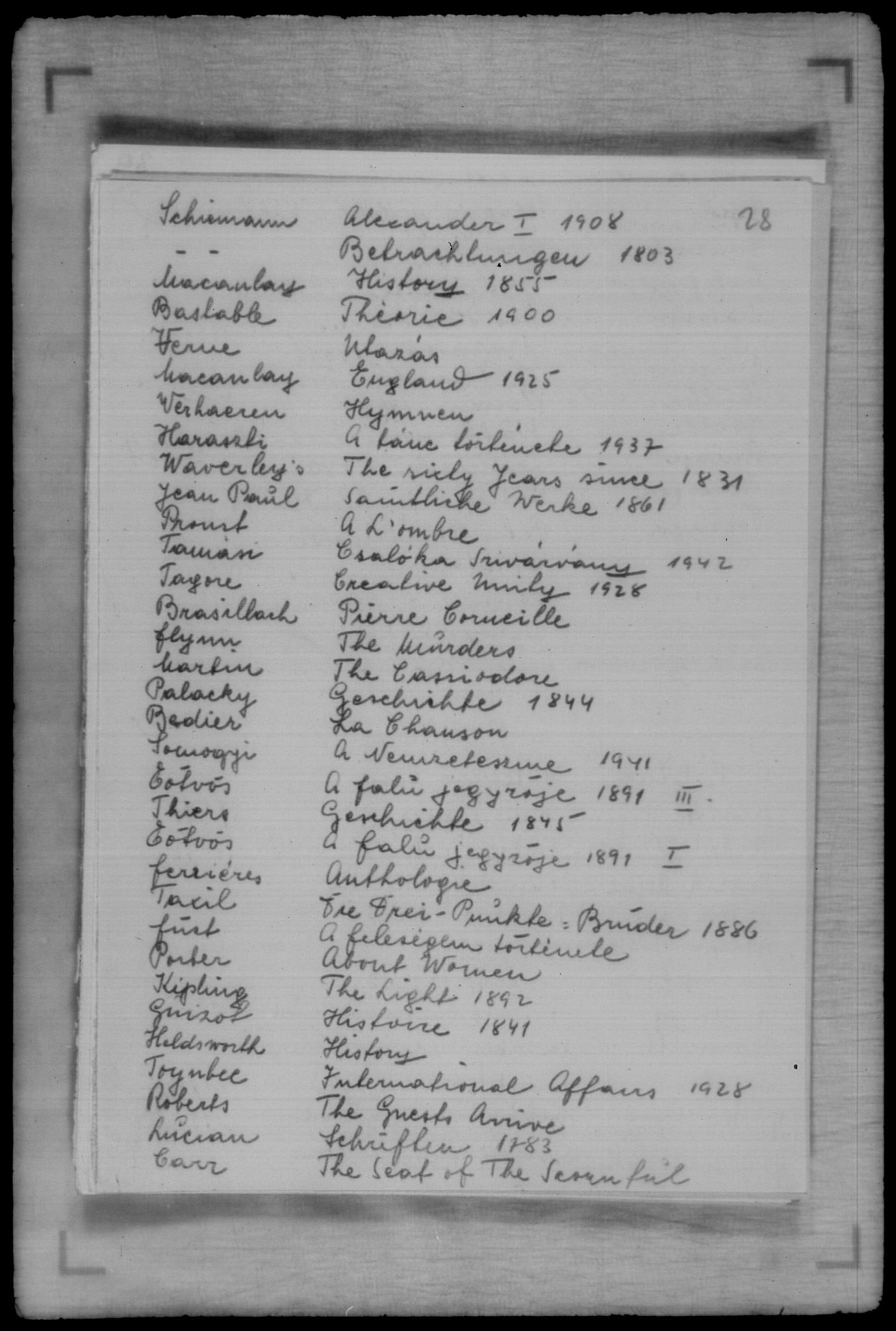
 Working alongside Hungarian Holocaust survivor and archivist Clara Garbon-Radnoti, our team analyzed over 180 reels of Hungarian government microfilm from 1944. Digitized by the Zekelman Holocaust Center and the United States Holocaust Memorial Museum, these archival reels were translated, reviewed, and cross-referenced using advanced AI tools and historical expertise.
The evidence is irrefutable: Hungary not only executed the rapid deportation of its Jewish citizens, but simultaneously conducted a deliberate, systematic campaign to catalog, confiscate, and absorb their most sacred belongings into state institutions. Many of these items remain hidden to this day, unrestituted, quietly tucked away in Hungarian museum collections or buried deep in storage facilities.
We have seen the documents firsthand:
-
A Hungarian government record from 1944 explicitly lists “90 Torah scrolls” seized and delivered to a state museum (Reel 144, Slide 469). It is a stark reminder of bureaucratic spiritual theft.
-
Another official memorandum meticulously itemizes items taken from “synagogue storage,” including Torah covers, embroidered mantles, and ritual objects (Reel 145, Slide 440).
-
Correspondence from the Hungarian Museum of Fine Arts referencing the confiscation of Hebrew religious texts from Rabbi Strauss Pál’s library (Reel 144, Slide 355).
-
Letters discussing the institutional absorption of looted “Judaica and ritual objects of uncertain artistic value,” exposing the callous treatment of sacred objects (Reel 143, Slide 437).
-
Ministry of Religion documents detailing “foreign language religious manuscripts” (understood clearly as Hebrew-script materials) intended for state custody (Reel 145, Slide 429).
These archival revelations carry implications far beyond historical curiosity or financial valuations. These Torah scrolls are not merely religious artifacts—they embody Jewish memory, communal heritage, and generational legacy. And though many of the stolen paintings and artworks are indeed worth millions, the real crime was not measured in financial terms, but in the intentional erasure of Jewish cultural identity.
Today, Israel has a unique and urgent role to play. It carries the moral duty to speak clearly and boldly, not only demanding the return of sacred objects, but also helping families reclaim looted artworks that embody familial history and collective Jewish memory. The global community must never again be permitted to view Jewish cultural heritage as abandoned artifacts, mere curiosities, or state-owned spoils of war.
This moment is an opportunity for Israel to lead by example—to clearly and forcefully call on Hungary and other nations to acknowledge their historical accountability, actively support restitution, and facilitate healing. Jewish communities around the world, alongside cultural institutions and governments, must collectively recognize their responsibility to restore what was stolen and honor the families from whom it was taken.
We have uncovered the hard truth. We have brought the evidence into the open. Now, let us act together to ensure that these Torah scrolls—and the artworks confiscated alongside them—are restored to their rightful heirs and communities. Let us finally begin to repair a fraction of the immeasurable damage inflicted nearly eighty years ago.
History demands nothing less.
Jonathan H. Schwartz is an attorney at Taft–Detroit, co-founder of the Jewish Bar Association of Michigan, and leader of the Holocaust Art Recovery Initiative. He has worked closely with Hungarian Holocaust survivor and researcher Clara Garbon-Radnoti to uncover and analyze Holocaust-era records of looted Jewish cultural property, advocating tirelessly for restitution and justice.
Citations in Hungarian Archival Documents:
-
“90 Torah Scrolls” Inventory
-
Reel: 144, Slide: 469
-
Official Hungarian government inventory lists the seizure of “90 Torah scrolls” from Jewish religious institutions—documented proof of state-run spiritual looting.
-
-
Looted Synagogue Storage Contents
-
Reel: 145, Slide: 440
-
Government memorandum summarizing religious property confiscated from synagogues, detailing Torah covers, embroidered mantles, and ritual objects.
-
-
Seizure of Rabbinic Religious Library
-
Reel: 144, Slide: 355
-
Inventory and museum correspondence referencing Hebrew manuscripts confiscated from Rabbi Strauss Pál, showing involvement of the Hungarian Museum of Fine Arts.
-
-
“Judaica of Uncertain Value” Offered to Museum
-
Reel: 143, Slide: 437
-
Correspondence from museum official offering to absorb looted Jewish religious items labeled as “Judaica and ritual objects of uncertain artistic value.”
-
-
“Foreign Language Religious Manuscripts”
-
Reel: 145, Slide: 429
-
Ministry of Religion correspondence explicitly describing confiscated Hebrew-script religious manuscripts offered to state storage.
-