


What Trees Know – Rosh Hashanah I 5787
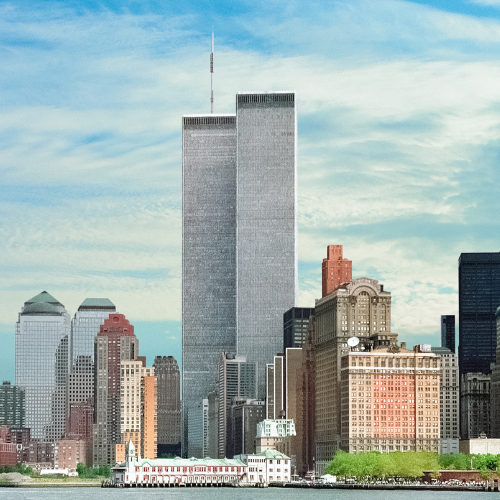
I grew up in the shadow of the Twin Towers.
Literally.
Growing up in that part of Manhattan, you could see them from so many places. They were simply there, these two enormous structures rising above everything else.
And when I was a kid, I had a special opportunity.
One of the chief engineers of the World Trade Center was a member of my father’s synagogue, and he gave me a private tour.
I remember going up to the top.
But strangely, that is not my most vivid memory.
What I remember is standing at the bottom and looking straight up.
The repeating pattern of the outside of the building seemed to continue forever.
Up and up and up.
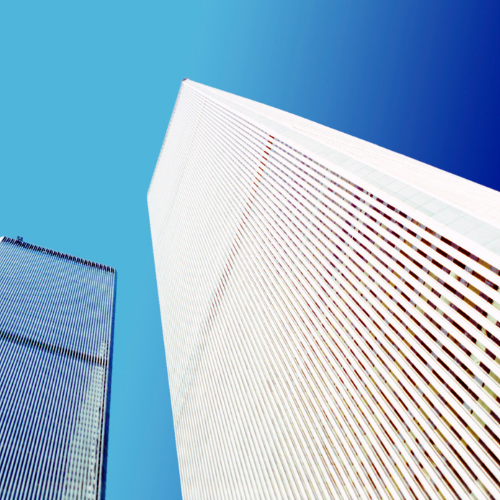
And then, almost impossibly, there was another one; there were two!
Infinity times two.
For a child, the scale was simply beyond anything I could comprehend. Maybe for an adult too.
They seemed greater than anything.
Stronger than anything.
Mightier than anything.
And although I probably would not have used the word when I was five, they seemed as permanent as permanent can be.
***
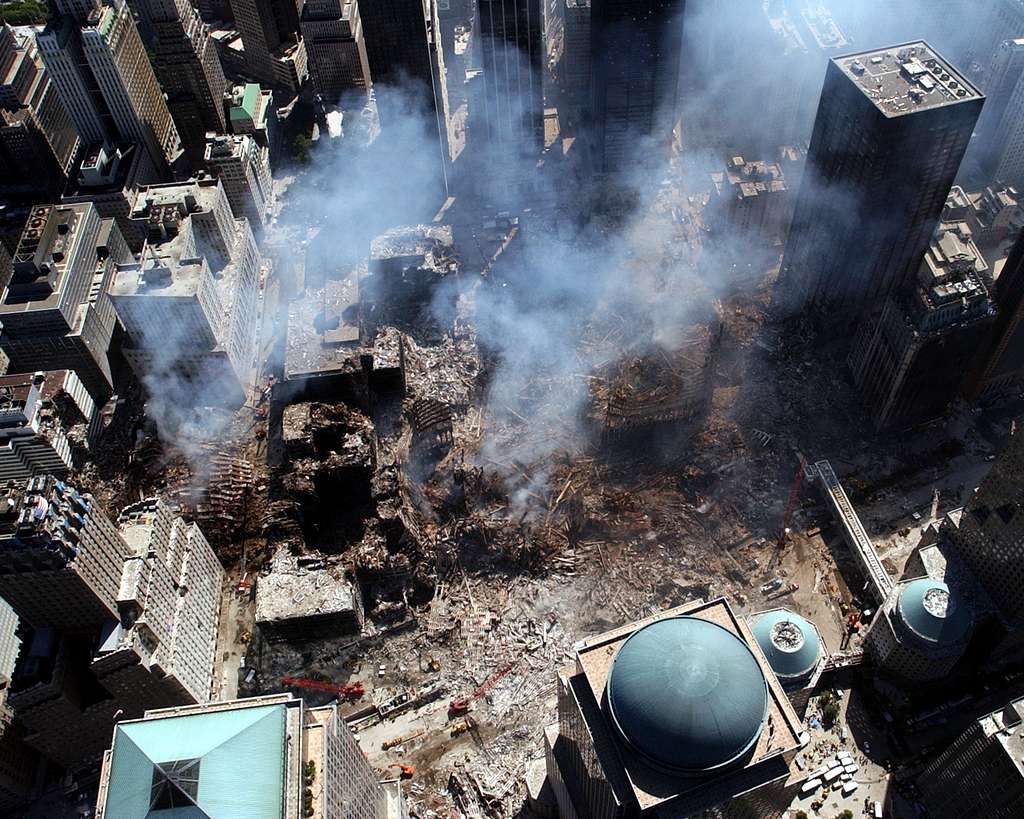
As Rosh Hashanah began this year, we marked 25 years since September 11, 2001.
Twenty-five years.
And perhaps one of the lessons of that terrible morning was something we already knew intellectually, but didn’t really know in a visceral way:
Nothing, nothing is indestructible.
Not buildings.
Not nations.
Not our sense of security as Americans or as Jews.
Not our bodies.
Not our lives.
***
And in these last 25 years, it’s become almost impossible to look away from how fragile the world is.
Because now we kind of carry the whole world around with us — all the time.
In our pockets.
All of human knowledge.
You wake up in the morning.
You reach for your phone.
And before you have even gotten out of bed, you know about an earthquake on the other side of the world, an antisemitic incident somewhere, another war, another mass shooting, and three other things you were apparently supposed to be worried about that you did not even know existed before you went to sleep.
It’s a lot.
And I understand why so many people have said to me:
“Rabbi, I just stopped watching.”
“I don’t read the news anymore.”
“I’m totally off social media.”
“It’s just too much.”
I get it.
Because I feel it too.
I wish I could now tell you that I have discovered some great spiritual answer to all of this.
I haven’t.
Actually, what I have been doing is much more mundane.
Recently, someone sent me one of those articles: The Ten Things You Can Do to Live Longer.
You know these articles.
Get at least 7-9 hours of quality sleep to reset your nervous system.
Keep a consistent bedtime schedule to support your body’s natural circadian rhythm. (That one has really not been working for me.)
Expose yourself to at least 10 minutes of sunlight within the first 30 minutes of waking up.
Eat .8 to 1.6 grams of protein per kilogram of body weight. (That’s a bit of a range which can add even more stress.)
Eat balanced meals every 4 hours to prevent blood sugar crashes that trigger cortisol spikes.
Lift weights.
Reduce stress.
By about item six, I was starting to worry that the stress of not accomplishing all these things was actually going to be the thing that would shorten my life.
But one suggestion stayed with me:
Take a walk in the morning.
So I’ve been trying to do that more.
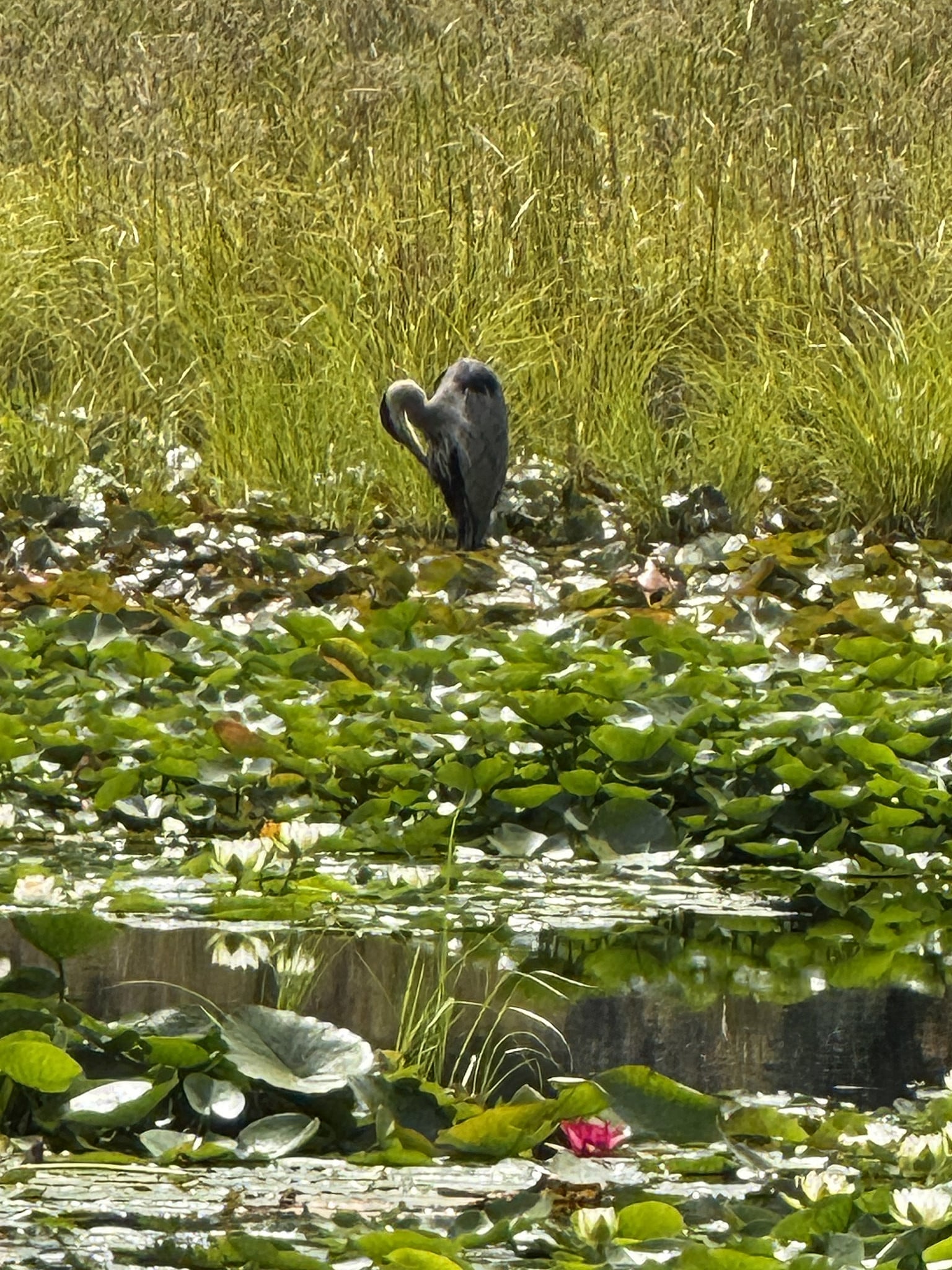
And we are fortunate. We live in a beautiful area. There is conservation land filled with trees.
On Shabbat, I can often take a longer walk in the woods after shul.
And I have begun to pay attention to how I feel.
And I do feel differently.
I don’t get any deep insight into the craziness of the world.
I don’t solve anything.
But the woods kind of speak to me.
I hear it. I feel it.
My body changes a bit.
My breathing slows down.
My mind calms.
I notice the sky.
I notice the light coming through the trees.
I hear birds that were apparently there all along.
***
There is actually a name for spending intentional time among trees.
The Japanese call it shinrin-yoku, usually translated as forest bathing.
I know it may sound a little out there, but it really just means immersing yourself in the forest.
Over the last several decades, researchers have tried to measure what happens when we do that.
Studies have associated time spent in forests with lower cortisol levels, lower blood pressure, and lower heart rates.
Other studies have found improvements in anxiety and mood. Studies on heart-rate variability suggest increased activity in the parasympathetic nervous system, the calmer, restorative side of our nervous system.
So something many of us experience intuitively seems also to be happening physiologically.
The body settles.
And I do feel it.
The world hasn’t changed. The things I was worried about when I entered the woods are still there when I come out.
Yet something in me has changed.
****
But I still often ask:
What can I get from this?
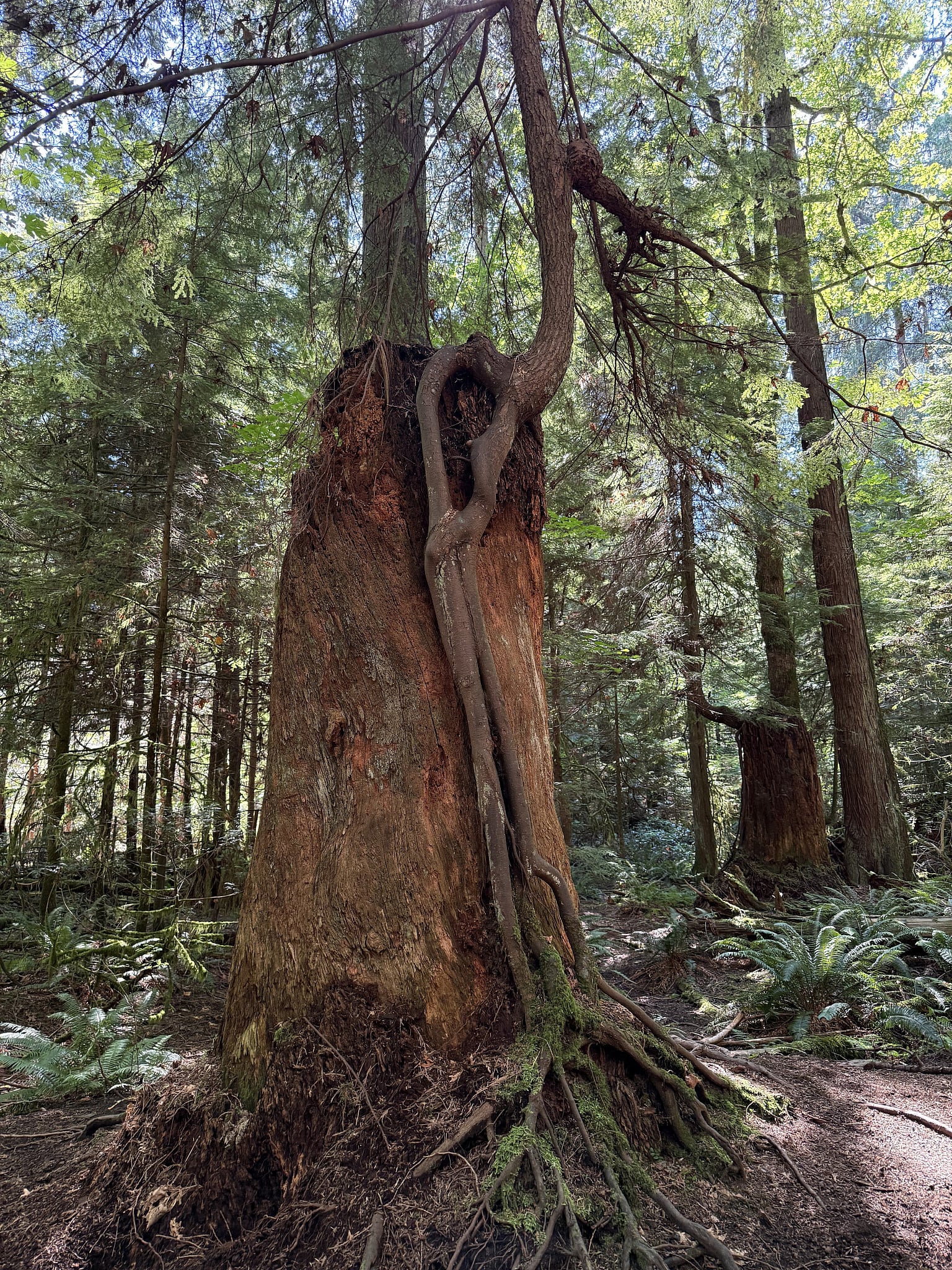
This past summer Sharon and I celebrated our friend’s son’s wedding in Vancouver.
We went on a guided walk through Stanley Park called the Talking Trees Tour, led by a Coast Salish guide from a local Indigenous community.
We walked through this massive, old-growth rainforest, stopping at various points along the way.
A cedar whose bark had been used for clothing.
Plants used for medicine.
Our guide handed us a sprig of Western redcedar and invited us to rub the leaves between our fingers and breathe in the sweet scent.
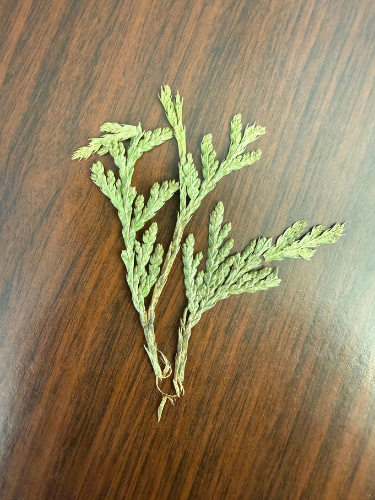
According to their tradition, the tree brings calm and relaxation. I took some more of it, as I could really use it — actually, a lot more… please don’t tell.
Trees provided food, shelter, tools, and canoes for them.
But what stayed with me most was not all the information.
It was our guide’s relationship to the trees.
The way she spoke about them: they weren’t simply resources.
They were relatives.
Teachers. Elders.
And she kept returning to this idea of reciprocity.
You don’t simply take from the forest.
When you receive something, there is something asked of you in return.
I have been thinking about that ever since.
Because even on my nice, stress-reducing walks in the woods, I was still asking:
What is this doing for me?
But then I realized that there was another question.
It’s not just about me; what does being in a relationship ask of me?
*****
And maybe that is one reason all of this has been on my mind as I have been approaching Rosh Hashanah.
We spend so much of these days looking inward, thinking about our own lives, the year that has passed and the year ahead.
But Rosh Hashanah also does something else.
It widens the lens.
Our tradition imagines this day as the world’s birthday, the anniversary of Creation.
Before I set the goals I want for myself this year, Rosh Hashanah reminds me that I am part of something much larger.
I am part of Creation too. We all are.
We don’t stand outside the world, observing nature from a distance.
We are woven into the very tapestry of our physical environment.
And once I started thinking that way, I began noticing that connection everywhere.
Even in something as simple as breathing.
***
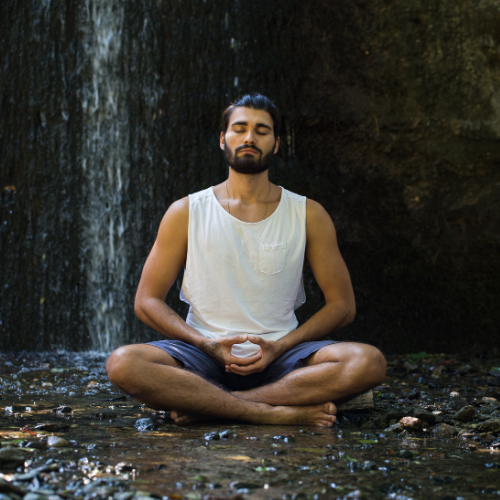
Christopher Ives, a professor of religious studies who writes about Buddhism and nature, suggests a simple meditation when walking among trees.
Pay attention to your breathing.
You breathe in oxygen.
You breathe out carbon dioxide.
Trees and other plants take in carbon dioxide and, through photosynthesis, release oxygen.
So while you are standing there, become conscious of the much larger cycle in which your breath participates.
You breathe in.
You breathe out.
The trees breathe in their way.
It’s a back and forth between us and the trees.
We are participating in the same atmosphere, the same carbon and oxygen cycles, the same living system.
Even inside our bodies, there is this remarkable visual echo.
The airways in our lungs divide and divide again into smaller branches.
Anatomists actually call it the bronchial tree.
Branches outside of us.
Branches inside of us.
Ives uses a wonderful word for this.
We are embedded.
As he puts it, “Feel yourself embedded in nature.”
Our embodiedness can help us remember our embeddedness.
We are not observers of the ecosystem.
We are in it.
A profound teaching.
Nothing lives entirely by itself.
Life circulates.
Life depends.
Life is relationship.
*****
Our relationship with nature begins at the beginning of the Torah.
In Genesis chapter one, God creates human beings b’tzelem Elohim, in the Divine image, and says:
P’ru ur’vu, u’milu et ha’aretz v’khivshuha, ur’du…
Be fruitful and multiply. Fill the earth and subdue it, and rule over [the creatures of the earth].
Subdue. Rule.
Strong words.
And human beings do have extraordinary power.
We build.
We create. We can heal. We can love.
We reshape the earth.
We build great towers.
And with that same power, we can destroy it all.
And we have. And we do.
Perhaps nowhere is that more evident than in the damage we have done to the earth itself.
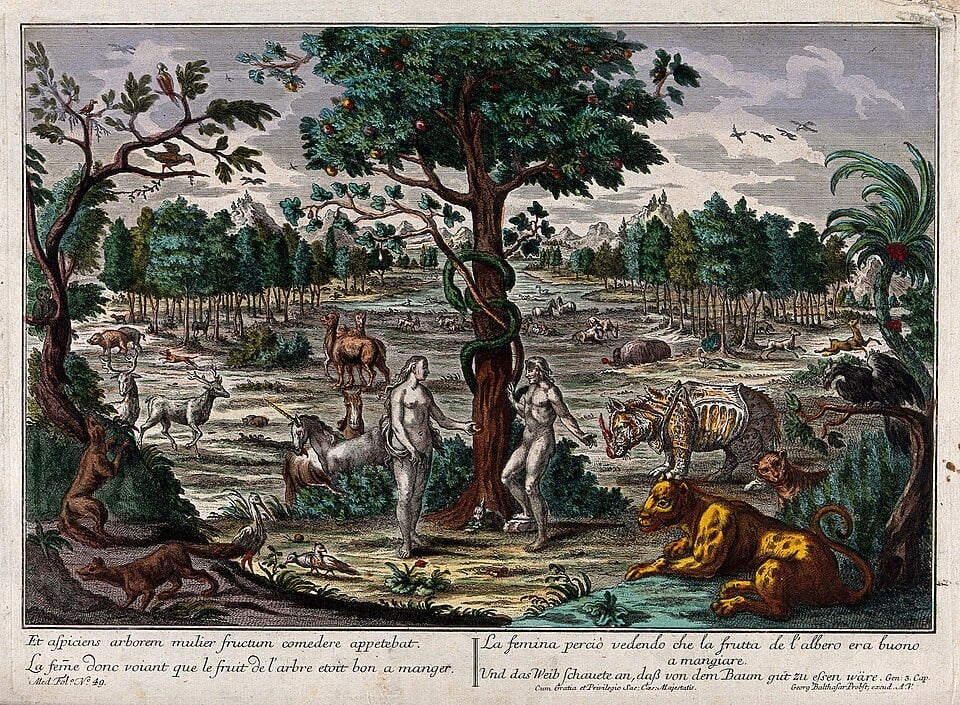
But then, one chapter later, God places the human being in the Garden of Eden with a different goal:
https://commons.wikimedia.org/wiki/File:In_the_Garden_of_Eden,_while_the_serpent_curls_around_the_tr_Wellcome_V0034184.jpg
L’ovdah ul’shomrah.
To work it and guard it.
Or perhaps, to serve it and protect it.
I like that the Torah gives us both.
We do have power over the world.
But we are also responsible for it.
That walk in Vancouver made me hear those words a little differently.
And so have my own walks in the woods.
*******
One of my favorite teachers is Rebbe Naḥman of Bratslav, the great Ḥasidic master who lived in Ukraine a little more than two centuries ago.
One of his central spiritual practices was hitbodedut.
It’s a simple, but not so simple practice.
Go off somewhere by yourself and talk to God.
Not from the siddur; there’s no prayer book required.
You don’t need to speak in Hebrew.
Just talk.
Say out loud what is actually in your heart.
Naḥman taught that you could do this anywhere. But he especially loved doing it out in the fields and forests.
And his closest disciple, Reb Noson of Nemirov, took many of Rebbe Naḥman’s teachings and fashioned them into prayers.
There is one that I keep returning to:
Grant me the ability to be alone; may it be my custom to go outdoors each day among the trees and grass, among all growing things, and there may I be alone, and enter into prayer, to talk with the One to whom I belong.
May I express there, everything in my heart, and may all the foliage of the field, all grasses, trees and plants, awake at my coming, to send the powers of their life into the words of my prayer.
I love that image.
You go into the woods thinking you are going there alone.
But in Naḥman’s imagination, you are not alone at all.
The grasses are part of your prayer.
The trees are part of your prayer.
The living world around you somehow helps you open your heart.
And I think that describes a little of what happens to me.
I go into the woods, at least partly, because I want to get away.
Away from the phone, the news, the endless stream of things that demand my attention.
And somehow I discover that I haven’t gotten away as much as I’ve stepped more deeply into something else.
I come back a little more present, a little more connected, maybe a little more myself.
And maybe there is a little teshuvah in that.
Coming back.
****
And this idea is actually built right into the liturgy of Rosh Hashanah.
In a few moments, during Musaf, we will say:
Hayom harat olam.
Usually translated:
Today the world is born.
But the Hebrew is even more evocative.
Harat is the language of pregnancy, of gestation.
The world is not simply born today.
The world is pregnant today.
Before a child ever takes a breath on its own, it lives through another body.
It is distinct, already itself, and yet part of the mother.
Nourishment, oxygen, protection, life itself all come through the interconnectedness of relationship.
For months, there is no clear boundary between the mother’s life and the fetus’s life.
There are two lives, and at the same time, one living system.
And then birth comes, and the cord is cut.
We become separate.
Or at least we begin to imagine that we are.
Because none of us begins self-contained.
And really, none of us ever becomes self-contained.
That is just an illusion.
We are part of a community of all living things, one living system.
Maybe Rosh Hashanah, Yom Hazikaron, the Day of Remembrance, as the Torah calls it, is a chance to remember that.
We were born connected.
And we still are.
*****
I want to close with one particular tree that I want to remember today.
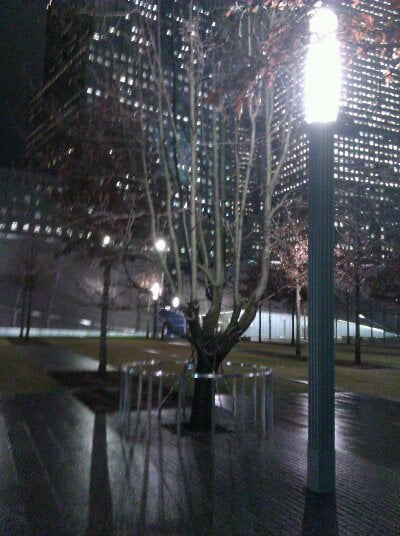
After the World Trade Center collapsed on September 11, workers searching through the rubble found a badly damaged Callery pear tree.
Its roots had been snapped.
Its branches were burned and broken.
They removed it from the site and brought it to a New York City Parks Department nursery.
https://commons.wikimedia.org/wiki/File:The_Survivor_Tree_at_the_National_September_11_Memorial.jpg
And they took care of it.
They pruned it. They watered it.
They gave it time.
And slowly, it recovered.
In 2010, they brought it back to the World Trade Center site.
It is still there today.
The Survivor Tree.
Somebody saw this terribly damaged living thing in the middle of unimaginable destruction and decided:
This is worth saving.
L’ovdah ul’shomrah.
To tend it and to protect it.
May we commit ourselves this year to tending and protecting: ourselves, one another, our sacred community, our people, all humanity, and the entire world.