


What Washington expects from Israel’s next government
What Washington expects from Israel’s next government
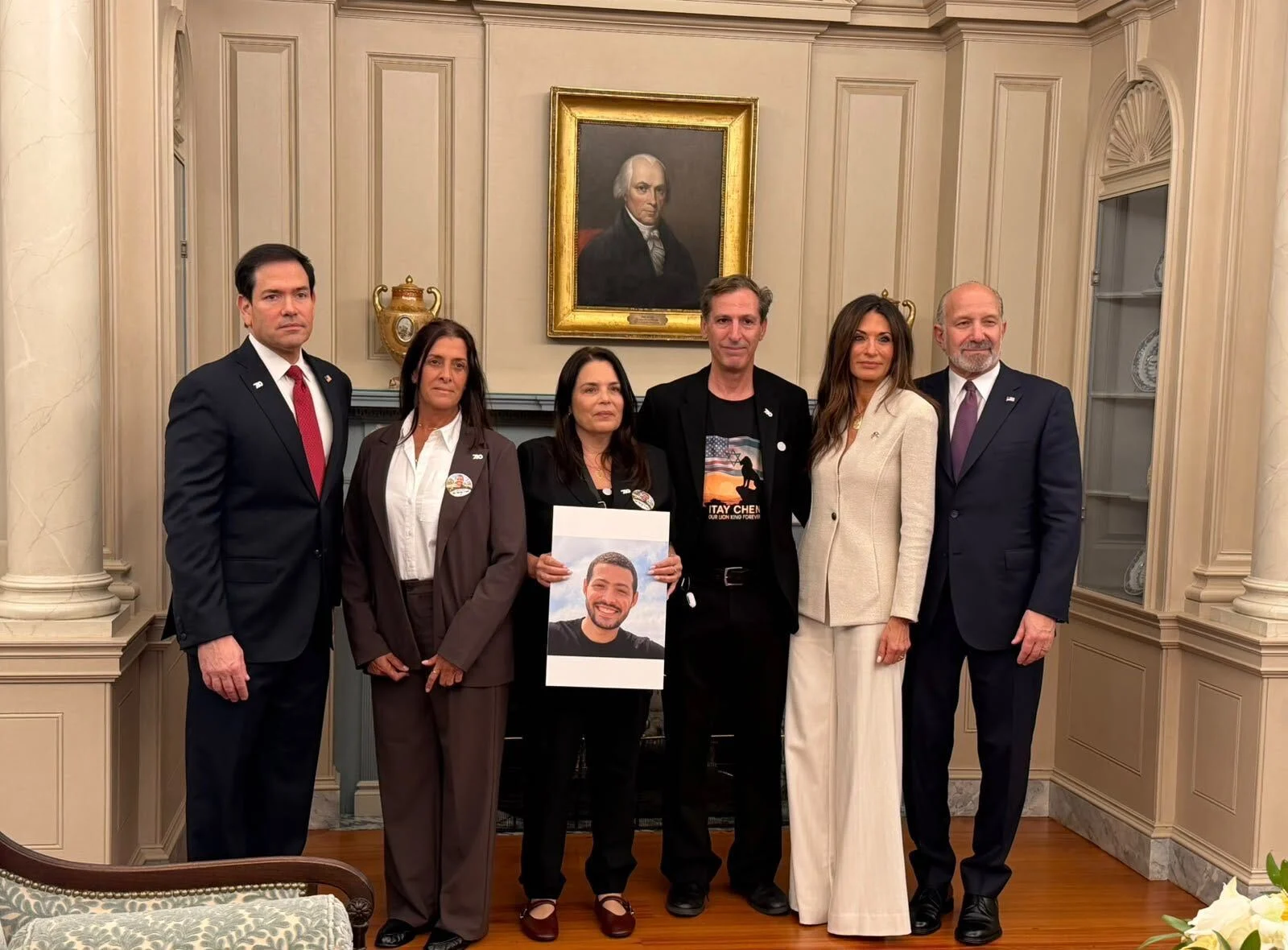
My rabbi once told me that healing from the loss of a child is a never-ending process, built from small moments of comfort scattered over decades. Last week my family had one of those moments. At the invitation of Secretary of State Marco Rubio, we stood in Washington alongside the families of close to 50 American citizens murdered on October 7. I had initiated the event, but I stood there first and foremost as Itay’s father, and as I looked at the faces around me, I knew something important had happened. We were seen.
Our families live between two worlds. Our loved ones carried an American passport alongside an Israeli one, and they were murdered, or fell fighting heroically, in Israel. In America, the fact that dozens of American citizens were murdered that day was little known. Last week in Washington, we were acknowledged. The names were read aloud, and senior administration officials listened and embraced us. The Secretary of State was photographed with every family, holding the picture of the one they lost. Admiral Brad Cooper, Commander of CENTCOM, spoke and saluted the families.
The importance of this cannot be overstated. We, the families, hope this memorial becomes an annual tradition, and that next year a monument bearing our loved ones’ names in eternal stone will be unveiled in the capital.
For 760 days we fought to bring Itay home from captivity. Even after we laid him to rest, I have continued to maintain warm relationships in the White House and across Congress. In my meetings last week, one question came up again and again: what will the Israeli election bring? I asked a question of my own in return: what do you expect from Israel’s new government? What I heard can be summed up in three points.
First: what is happening in the West Bank and in Gaza is not good at all, and Washington makes no secret of it. There is an expectation of a policy change that brings calm and reopens the door to expanding the Abraham Accords. In this administration’s eyes, the Accords are President Trump’s legacy project, all the more so if the midterm elections hand Democrats control of Congress and limits his room to maneuver at home. On a personal level, I believe the Abraham Accords should also be the legacy of the 2,200 loved ones who were murdered or fell in battle during the War. The way to ensure that the ultimate sacrifice of my son, and of so many others, was not in vain is to make sure, through economic and diplomatic agreements, that a war like this never happens again.
Second: Israel’s public diplomacy is failing badly. The message, delivered more and less politely, was the same: there is a feeling that Netanyahu simply does not care what the world thinks of Israel, and even less what young Americans think. An entire generation of Americans knows Israel through thirty-second videos. Israel’s story is not told in their language, on their platforms, or through the stories that move them. The families of the American victims could be a bridge to this audience, but as far as I know, there is no structured plan to tackle this failure.
Third: with his endorsement of Netanyahu, President Trump is betting that Netanyahu will win the elections and can overcome the deep mistrust that the region’s Arab leaders feel toward him. President Trump holds political capital in the Middle East that no president has had in recent memory. The question is whether that trust can be rebuilt before the window of opportunity closes in mid-2027. Immediately after the Israeli elections, President Trump will expect a bold plan to break the current stalemate, starting with quick wins that build momentum.
The overall picture is troubling. Israel’s standing with the current administration may be reasonable, but its standing with the American public is deteriorating dangerously. When most Americans, especially young Americans, think of Israel today, the first word that comes to mind is “genocide.” One can be angry about that and call it a distortion. As a bereaved father, I know very well who started this war and what was done to our loved ones that morning. But anger is not a strategy.
What Israel’s new government needs is strategic thinking. In January 2029, a new administration will enter the White House. What will Israel’s relationship with it be based on? Above all, Israel must once again become an issue that does not divide Republicans and Democrats. For decades, Israel was one of the few things a divided America agreed on. If we become the symbol of one side, we will wake up one day to find the other side in power and against us.
Last week in Washington, this administration saw us and embraced us. The families who stood there, mine included, received a priceless gift. Our duty now is to make sure that years from now, when a young American hears Itay’s name and the names of the other Israeli-Americans killed during the October 7 war, they will feel that this is their story too.