
What we must be asking about the war with Iran
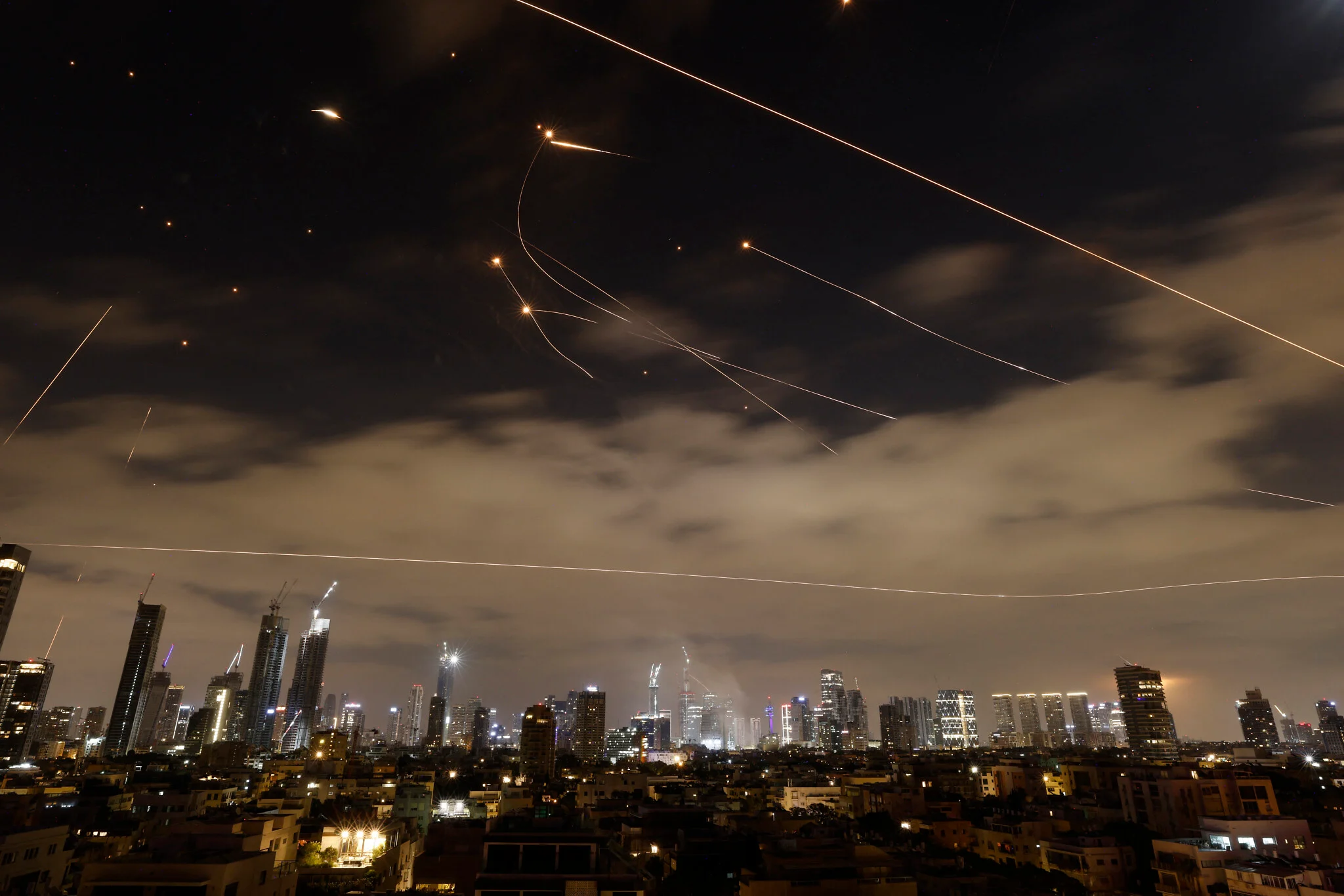
Israel’s strike last week on hundreds of Iranian targets was stunning in its scale, precision, and clarity of message. Nuclear enrichment sites, missile factories, IRGC headquarters, and senior military scientists were all hit in a single coordinated wave. The Islamic Republic, a regime that has openly pledged to destroy Israel, was confronted not with rhetoric and warnings, but with the full force of Israeli resolve.
Few Israelis, and few honest observers, question the legitimacy of that message. Iran’s pursuit of nuclear weapons is not speculative. It is the declared policy of a regime that funds terrorism across the region, surrounds us with armed proxies, and cultivates capabilities meant not for deterrence, but for annihilation. That threat is real. It is deadly serious. And it would be unconscionable to ignore it.
But even a justified war can become a strategic disaster if it is waged without direction. And even a necessary strike can unravel into something far more dangerous if those leading it are unprepared for what comes next.
That is the lesson of the past 20 months. And we cannot afford to ignore it now.
It has now been 618 days since the war in Gaza began. Six hundred and eighteen days since October 7, the worst massacre in our nation’s history. And we are still there. The IDF is still fighting. Soldiers are still dying. The hostages are still not home. Hamas, in parts, is still operating. And the government still has no clear answer to the most basic question: how does it end?
Despite immense military effort, incalculable suffering, and a devastating diplomatic cost, there is still no defined strategy, no plan for the day after, and no consistent articulation of what “victory,” let alone “total victory,” even means. Gaza is a war that began with moral clarity and descended into strategic fog. And now, even as attention turns toward Iran, we are still in Gaza, still fighting, still searching for direction. That is what happens when even a justified war is led without vision.
And so we must now ask, with urgency and honesty: what is our strategy with Iran?
Israel has carried out successful preemptive strikes on enemy nuclear infrastructure before. The 1981 bombing of Iraq’s Osirak reactor and the 2007 destruction of Syria’s nuclear facility were both narrow, targeted, and deliberately quiet. They achieved their goal of destroying nuclear capability while avoiding regional escalation. Last week’s operation, by contrast, was broad, public, and high-risk. It reached far beyond nuclear infrastructure. It struck deep into the heart of Iran’s military-industrial complex and removed key personnel.
Four days later, the campaign is still expanding. Israel continues to strike a wide range of targets, including oil refineries, cyber facilities, government infrastructure, and leadership compounds. Iran is responding with nightly missile and drone attacks. Dozens of Israeli civilians have already been killed. The entire country is sheltering in fear. And the situation is intensifying by the hour.
With the stakes this high, we must ask what our objective truly is: Are we aiming to destroy Iran’s nuclear program beyond any chance of recovery? To force it to agree to end all enrichment and never again renew it? To degrade its regional reach? To pressure the regime internally? Or are we entering a protracted campaign with no defined endpoint and no clear framework for escalation or de-escalation?
We need answers. Because a war with Iran will not be like Gaza. It is larger, more dangerous, and vastly more volatile. It could open multiple fronts. It could entangle American forces. It could redefine Israel’s security reality for a generation. These are not remote hypotheticals. They are foreseeable consequences. And they demand more than resolve. They demand strategy, discipline, and leadership.
Which brings us to the most uncomfortable question of all: can this government be trusted to lead us through such a war?
This is, by every measure, the most reckless, inept, and corrupt government in Israel’s history. That fact alone does not delegitimize the strike on Iran. The threat from Tehran would require a response from any responsible government, of any political persuasion. But we cannot ignore the identity and character of those now steering the ship. This is a government that presided over the October 7 failure. A government that has evaded responsibility, undermined state institutions, and governed with self-preservation as its highest priority.
This is therefore not the time for blind unity. It is the time for public scrutiny and national responsibility. When a government with this record asks for our trust in a war of this scale and consequence, it is essential to demand answers.
The concern is not just Netanyahu’s personal motives, though they are difficult to dismiss. The deeper vulnerability is structural. This is a coalition built on fear and fragility, not on competence or cohesion. It has not earned the authority to manage a regional war that could reshape the future of this country and of the entire Middle East.
And so we must ask, and keep asking: what is the goal? What are the limits? What risks are being taken, and what risks are being concealed? What happens if this spirals further? What happens the day after?
We did not ask these questions in time when it came to Gaza. And we are paying the price. We cannot afford that silence again.