
Educator, Mother, Learner, Wife — Guided by Torah
What Worn Ballet Slippers Reveal About Jewish Women
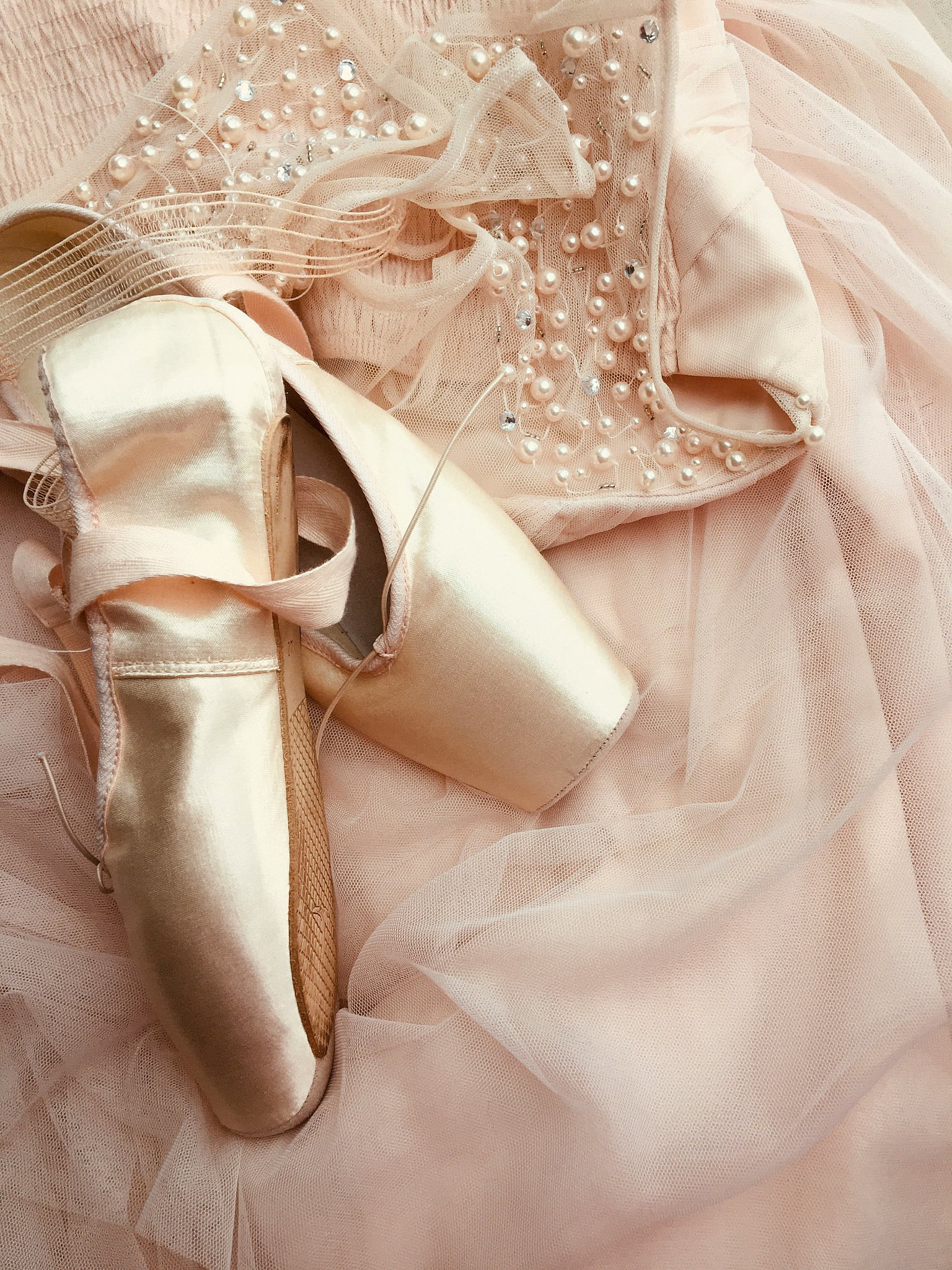
This is where discipline and gentleness meet (Merve Sehirli Nasir, Unsplash).
In thinking about ballet shoes, I realise how Judaism has always privileged faithful doing over visible brilliance and extravagant might.
Worn ballet shoes are not beautiful in the way costumes are. Their beauty is quieter: softened satin, frayed edges, and soles pressed flat by years of repetition. They are shaped unmistakably by the dancer’s foot, moulded slowly until they remember her movements better than she does herself. They carry the faint traces of rosin and sweat, of long hours spent rehearsing the same phrases again and again. No one applauds them. No one notices them. And yet, without them, there is no dance.
Ballet shoes are not meant to be admired or praised. They are not display objects. They are tools — made for discipline, repetition, and support. They exist not for spectacle, but for work. The audience sees the movement, the grace, and the line of the body held just so. The shoes remain mostly unseen, absorbing strain so that something beautiful can emerge without visible effort. There is something deeply familiar about this.
Judaism has always privileged ma‘aseh — doing — over appearance. “Not study is the essence, but action,” teaches Pirkei Avos. Much of Jewish life is built not on what looks impressive, but on what is done faithfully — again and again — often without notice. Much of that work, historically and still today, has been carried by women. New ballet shoes are stiff and unyielding. They resist the foot. They have not yet learned the body they are meant to serve. Anyone who has danced knows that they can be uncomfortable, even painful, at first. Only with time — with pressure, with friction, with wear — do they become supple and trustworthy. Grace is not born of novelty. It is shaped slowly, through repetition and patience.
So, too, with lived faith. There is a difference between an idealised Judaism and a practised one. The Torah’s ways, we are told, are darchei noam — paths of gentleness — but that gentleness is not immediate. It emerges over years of repetition, compromise, devotion, and return. A good name, Koheles reminds us, is better than fine oil — earned, not applied. What lasts is not what dazzles at first glance, but what holds up over time.
Ballet knowledge does not live primarily in the mind. It lives in muscle memory. The body learns what no amount of explanation can replace. Balance, alignment, and restraint — these are acquired not through theory, but through the quiet accumulation of practice. The shoes themselves bear witness to this learning. They crease where the foot bends, soften where weight has been borne, and thin where pressure has been constant. They remember.
Judaism, too, is carried in the body. Torah is transmitted not only through texts and lessons, but through acts: lighting candles at the right moment, kneading dough, preparing a home for Shabbos, and knowing how to move through sacred time. Much of what sustains Jewish life is not written down. It is absorbed, repeated, and internalised. Chazal speak of avodah shebalev — service of the heart — an inner, embodied devotion that cannot be measured from the outside. And like ballet shoes, these acts often go unnoticed.
The choreography of a frum woman’s life is not written down anywhere. Those of us who live it rarely think of it as choreography at all. We experience it simply as what must be done. It is learned slowly, through repetition, through necessity, and through love. She rises before she is praised for anything. She measures out breakfasts and time alike, keeping one eye on the clock and another on the emotional weather of her household. She knows which child cannot bear the seam in a sock, which one needs their toast cut diagonally, and which one will forget a sweater unless it is placed directly into their hands. None of this appears in any curriculum. None of it is acknowledged as skill. Yet, it is the invisible architecture of a functioning Jewish home.
Her body — like the ballet shoe — carries memory. It remembers how to move through a Friday afternoon without panic. It remembers how much oil to use so the kugel does not dry out by shalosh seudos. It remembers the precise moment when the sky turns a certain colour and the candles must be lit. No one taught her this formally. She absorbed it, repetition by repetition, like muscle memory. She learned by doing, by failing, by adjusting, by returning to the same acts until they became second nature. The Torah she lives is not only in books. It is in her hands, in her timing, in her capacity to hold many small obligations at once without naming them as burdens.
There is no applause when she keeps going while tired. No one marks the nights she stayed up sewing a hem before a simcha, or the mornings she swallowed her own irritation so the house could remain calm. Her labour is assumed, relied upon, and even invisible — until something fails. Until she is ill, or until she cannot carry it for a day — only then is it heard. Only then does anyone notice what she has been holding up. Only then does her absence reveal the shape of her presence.
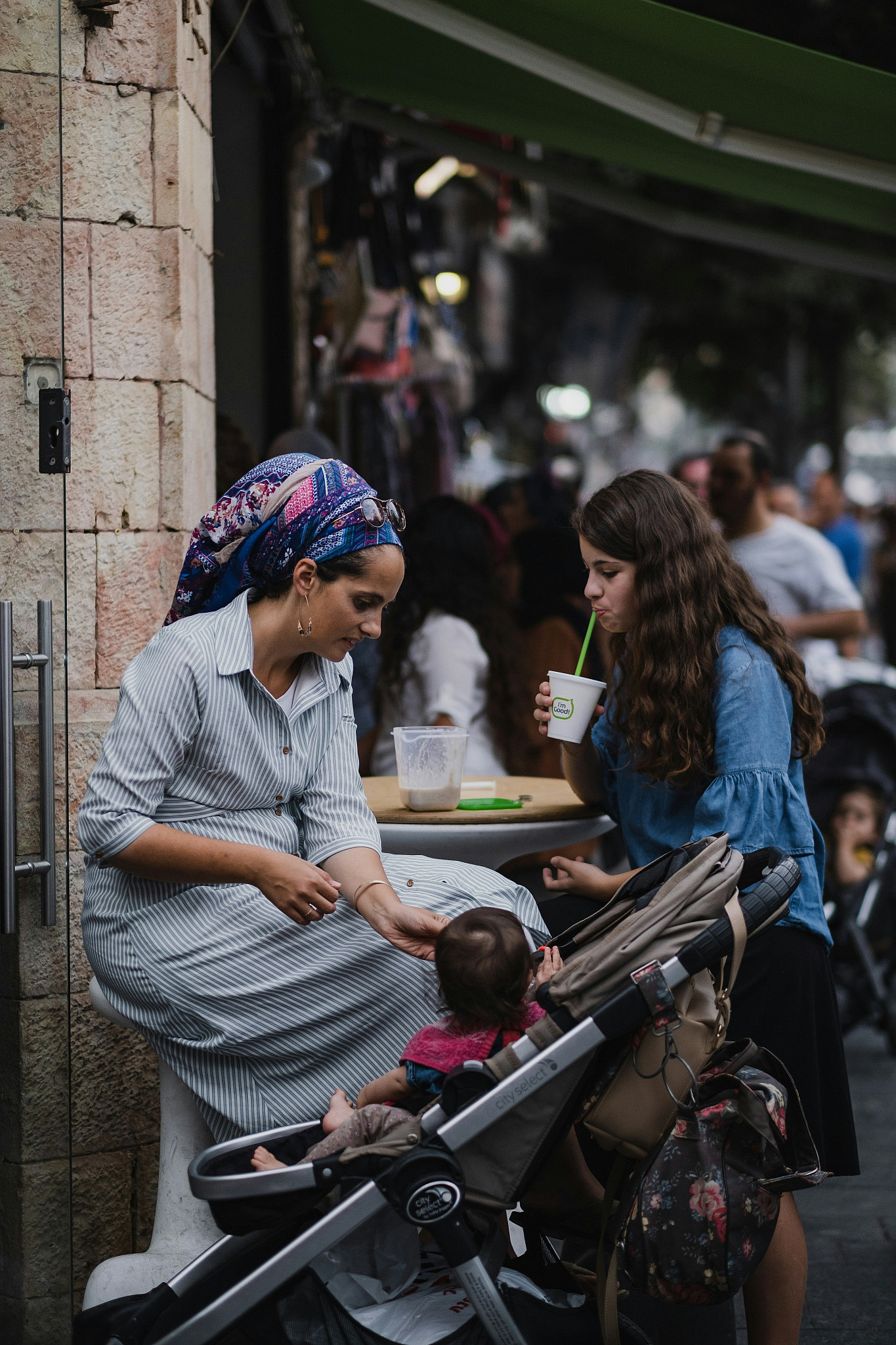
For some of us, this way of life was not given in childhood, but chosen later, and cherished precisely for its calm beauty. She does not experience her life as heroic. She experiences it as necessary — as the quiet, ordinary faithfulness of showing up again and again to tasks that do not announce themselves as spiritual. She does not speak in slogans about tznius or humility. She lives them through the restraint of her tone and the economy of her movements. In this way, she gives more emotional labour than she receives without keeping score. Her wear is not theatrical. It is domestic. It is cumulative. It is the soft thinning of the self that comes from years of responsibility quietly carried.
Like the ballet shoe, she is rarely admired for what she absorbs. Her strength is expressed not in spectacle, but in endurance. She bears strain so that others can move gracefully. She flattens herself, just slightly, so that others can rise. She shapes herself around the needs of those entrusted to her, not because she lacks a self, but because her self has been trained into service. This is not weakness. It is discipline. It is avodas HaShem. It is a kind of embodied wisdom that cannot be replaced by theory or sentiment.
No one comments on the shoes unless they fail. Only when something breaks does it suddenly become visible. When the sole wears through or the stitching gives way, the work is exposed — and then, quietly, the shoes are replaced. There is no ceremony. No applause. No lingering attention. So too with much of women’s labour in Jewish life. It is assumed, relied upon, and rarely named. Chochmas nashim ban’sah veisah — the wisdom of women builds the home, teaches Mishlei — yet that wisdom is often exercised away from the public eye. “Kol kevudah bas melech penimah,” sings Tehillim — all the dignity of the king’s daughter is inward — not as erasure, but as a different orientation towards value. What is most essential is not always what is most visible.
It is important to say this plainly: worn does not mean broken. Wear is not weakness. It is evidence of use. Evidence of devotion. Ballet shoes do not apologise for their marks. The marks are the point. They testify to constancy, to showing up again and again even when no one is watching. The righteous fall and rise again, says Mishlei — not because falling is failure, but because endurance is the measure of faithfulness. Teshuvah itself is a return, not a reset. It carries memory. It carries wear. One does not emerge unchanged from a life lived attentively and with care.
There is a kind of holiness that announces itself loudly. Moreso, there is another that endures quietly. Jewish women have long known the second form. It is not dramatic. It does not seek recognition. It holds the centre amidst ordinary days and unseen effort, thus allowing others to flourish. Perhaps it is time, now and then, to look not only at the dance, but at what has made the dance possible. To notice the softened leather, the flattened sole, and the quiet evidence of constancy. To honour what has absorbed the strain so that beauty could remain.
Holiness, after all, often leaves traces.
Related Topics
Related Posts