What Would Rambam Say about the Haredi Matter
This is an internal Jewish argument, not a secular attack
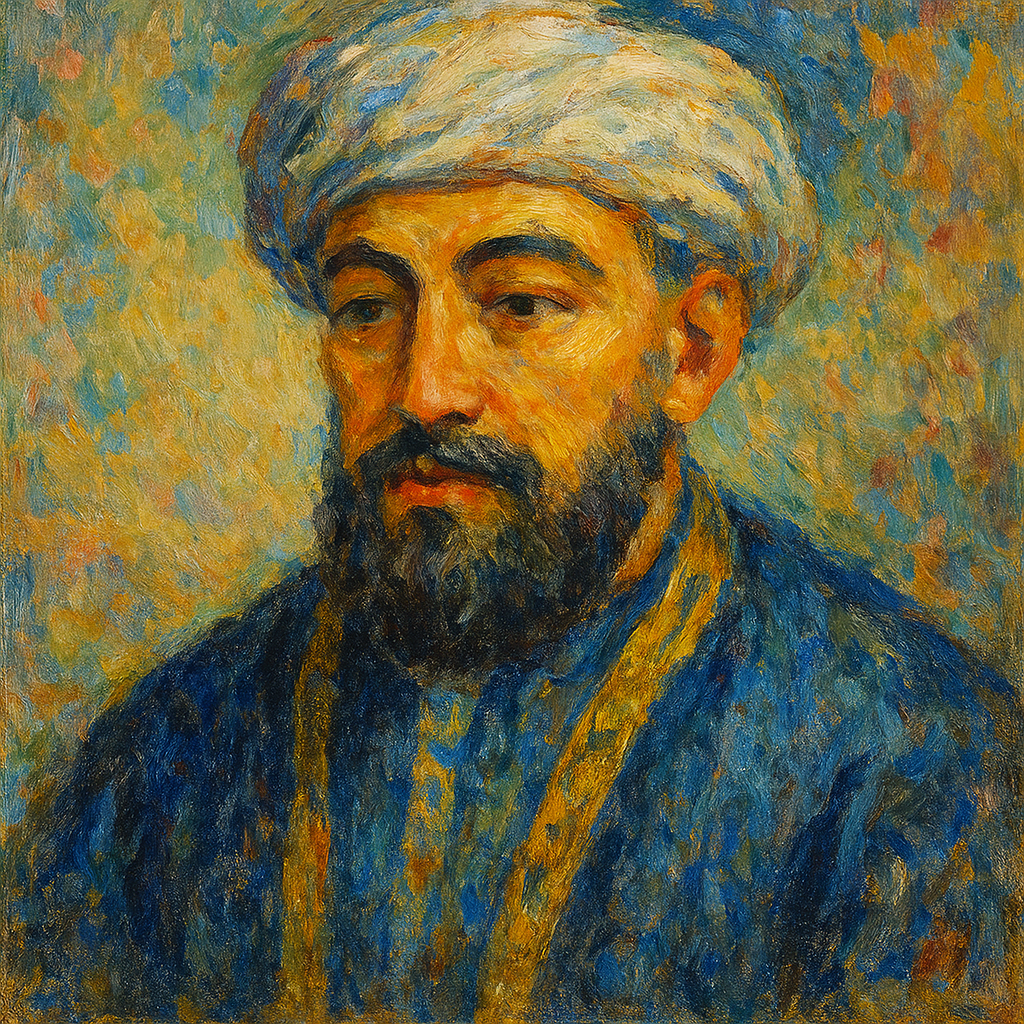
Maimonides addressed many of the matters associated with the path being taken by Israeli Haredim, and his views are fully integral to the Orthodox halachic tradition. This is not a secular broadside against a religious community, nor an attack on the Haredi lifestyle by non-observant Jews. It is an attempt to ask, honestly and respectfully: if we take Rambam seriously as a posek and thinker, how well does the current “Torah-only, publicly funded, high-fertility” model line up with his teachings?
On three core issues, the gap looks uncomfortably wide.
1. Learning for the Sake of Learning
No one loved Torah learning more than Rambam. He devotes long chapters to its centrality and insists that every Jew carve out fixed times for study. But he is absolutely explicit about one point: turning learning into an economic escape from responsibility is forbidden.
In Hilchot Talmud Torah 3:10, Maimonides writes that anyone who decides to occupy himself only with Torah and rely on others for support:
Desecrates God’s name, disgraces the Torah, extinguishes the light of religion, brings evil upon himself, and forfeits his share in the World to Come.
It’s hard to imagine stronger language.
For Rambam, the ideal is not “Torah instead of work” but Torah with work. The sages of the Talmud, he reminds us, combined learning with occupations – trades, commerce, craft. Earning a living is not a spiritual compromise; it is part of avodat Hashem.
He also insists, like the Talmud, that study is “greater because it leads to action.” Learning is the head of a pipeline that must end in behavior: mitzvot, justice, character, communal responsibility. When study becomes a self-contained life project for large numbers of people who remain outside the economy and outside shared civic burdens, it has been severed from the very purpose that made it great in the first place.
It is difficult to square that Maimonidean vision with a social ideal in which tens of thousands of men are encouraged to remain in full-time yeshiva or kollel for decades, with no profession and no intention of integrating into the workforce, and where “working for a living” is often treated as a spiritual demotion.
2. Reliance on Public Funding
Rambam is not naïve about poverty. In Hilchot Matanot Aniyim he describes the mitzvah of tzedakah in detail and famously ranks eight levels of charity, from the lowest (reluctant giving) to the highest: enabling a person to become self-supporting.
The greatest form of tzedakah, he writes, is to give a gift, loan, partnership, or job:
…to strengthen his hand until he does not need to be dependent upon others.
The entire ladder assumes that long-term dependence is a problem to be solved, not a lifestyle to be institutionalized.
In the same spirit, his tirade in Hilchot Talmud Torah is not just about the individual learner’s intentions; it’s about what happens when Torah becomes a profession financed by others. He is deeply uncomfortable with turning Torah into a paid career unless the person is performing a clear communal function (a judge, a teacher, someone whose time belongs to the community).
What, then, would he make of a system in which:
- Large numbers of able-bodied men choose not to acquire marketable skills,
- Intend to remain in study frameworks indefinitely, and
- Expect their basic livelihood to come from state stipends, welfare payments, and the general taxpayer – justified by the fact that they are “learning”?
Even if we grant that some small spiritual elite may legitimately live like a “Shevet Levi,” supported by the community because they serve it, Rambam gives no basis for imagining an entire sector of society living this way by design.
From his perspective, this looks very much like “making the Torah a crown with which to aggrandize oneself or a spade with which to dig.” It is the precise behavior he warns will disgrace the Torah and desecrate God’s name.
3. The High-Fertility Model
Here, at first glance, Haredi norms seem closest to Rambam.
In Hilchot Ishut, Maimonides strongly encourages men to continue having children even after fulfilling the basic mitzvah of “be fruitful and multiply,” teaching that whoever adds a soul to the Jewish people builds an entire world. A community that celebrates large families is, on that axis, very much in line with his thinking.
But Rambam couples that enthusiasm with expectations of responsibility and seichel. The Talmudic ideal order – which he endorses – is: first secure a livelihood, then a house, then marry. Only a fool, says the Gemara, does the reverse.
In other words:
- Have children, yes –
- But do so in a way that does not knowingly doom them to chronic poverty and normalized dependence on others.
The contemporary Haredi model, in its most ideological form, combines:
- Very high fertility,
- Very low male labor-force participation and earning power, and
- A structural expectation that the broader public will cover the gap through taxes, benefits, and subsidies.
Rambam might praise the desire to “add souls to Israel,” but he would almost certainly question the ethic of building that demographic strategy on an economic foundation he explicitly condemns: planned non-productivity and long-term reliance on tzedakah.
What Changes Might Rambam Prescribe?
If we take his writings seriously and translate them into today’s Israeli context, what course corrections would Maimonides likely call for? A plausible Maimonidean “prescription” might include:
1. Re-embedding Torah study in a life of work
- Reframe long-term full-time learning as the path of a small elite truly suited to it, not the mass ideal for every Haredi man.
- Restore the norm that the overwhelming majority should combine Torah with a profession, seeing honest work as part of avodat Hashem, not a betrayal of it.
- Explicitly teach, from within Haredi institutions, the Rambam’s own warning: that choosing not to work and relying on others in the name of Torah disgraces the Torah rather than honoring it.
2. Shifting from permanent support to empowerment
- Tie communal and public support to pathways toward self-sufficiency – education, training, and jobs – rather than to lifelong kollel as a default.
- Reserve long-term stipends and full support for those performing clear communal functions: serious rabbinic leadership, teaching, judging, and other roles where the community directly receives a service.
- Embrace Rambam’s hierarchy of tzedakah as public policy: prioritize helping families become independent over subsidizing permanent non-participation.
3. Aligning fertility with responsibility
- Continue to value large families as a blessing, but in a framework where parents are equipped and expected to support those children through their own efforts.
- Encourage educational models for boys that include core secular skills, enabling them to sustain large families without long-term dependence on welfare and stipends.
- Present the mitzvah of procreation together with the mitzvah of derech eretz – proper worldly order – so that expanding the Jewish people strengthens, rather than strains, the community that must sustain it.
An Internal Critique, Not an External War
None of this requires abandoning Orthodoxy, halakha, or reverence for Torah. On the contrary: it comes straight out of one of the greatest halachic authorities in Jewish history, whose works are studied daily in Haredi yeshivot.
To say, “What we are doing in the name of Torah may contradict the Torah’s own priorities,” is not anti-Haredi. It is profoundly Jewish.
Rambam would not ask Israeli Haredim to love Torah less. He would ask them to trust Torah more – enough to let it guide not only how long they sit in the beit midrash, but how they work, how they support their families, how they relate to the rest of the Jewish people, and how they share the burdens of building and defending a state.
Israel’s Haredi matter is not fundamentally a fight between religious and secular Jews. It is, at its core, a question every believing Jew must face:
Does our way of life honor the Torah as Rambam understood it – as a wisdom that must lead to action, responsibility, and dignity – or have we built, in its name, a structure he would have recognized as a distortion?
That is a hard question. But it is one we can no longer afford not to ask.