


What’s important now? Remembering who we are
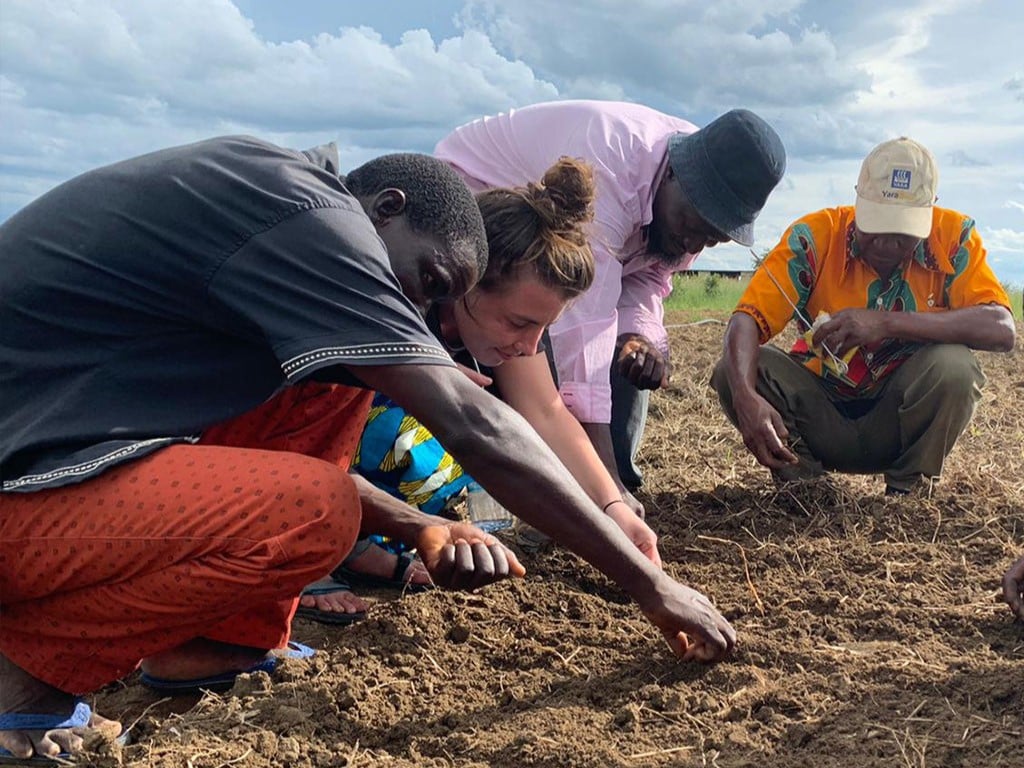
In the impoverished and isolated villages of the Mphande region of Zambia, water was so scarce that there were times when people had to drink from muddy puddles. Most of the tall trees in two out of the three villages of the area have already been cut down and burned to produce charcoal. The only school for miles around only reaches grade seven, and the nearest clinic is 15 to 25 kilometers away, depending on where in the village you live.
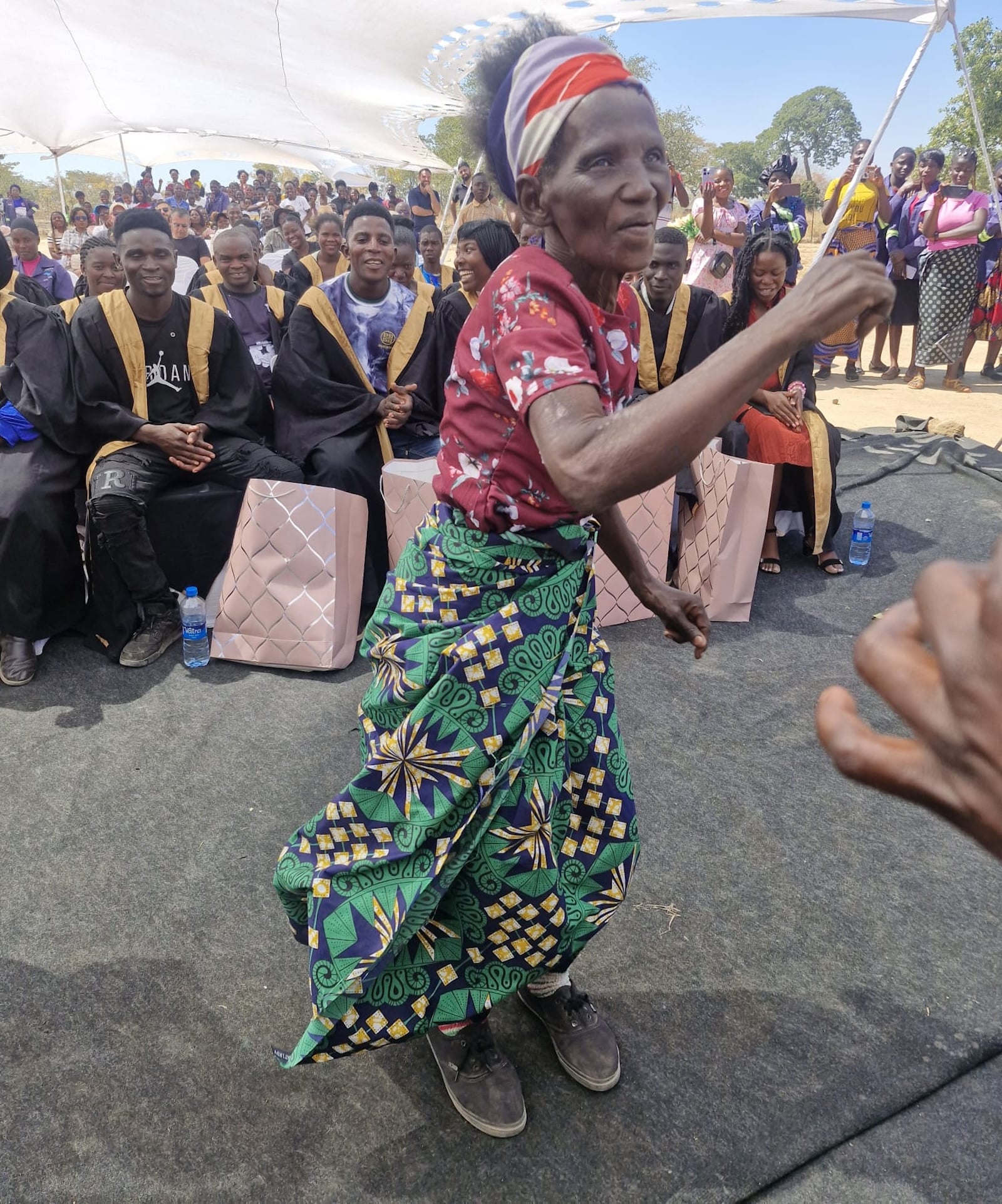
Yet over the past two years, a lot has changed in Mphande, for the better. Nothing represents this change more than the 26 young men and women from all parts of the villages, in cap and gown, who danced in unison to their graduation ceremony last Friday. These graduates had completed a full-time two-year Youth Service Program for village youth, many of whom never graduated from elementary school. Parents and siblings wept with joy as the Zambian and Israeli flags waved behind an improvised dais, in front of an open-air classroom made of brick and tin, where the guest of honor, the newly minted resident Ambassador from Israel, Ofra Farhi, was seated.
What was the ambassador doing in a remote village, in her very first event as resident ambassador (Farhi served as roving ambassador to four Southern African countries, including Zambia, over the past three years)? The answer is that the organization catalyzing change in Mphande is an Israeli NGO called Tevel b’Tzedek –Tevel for short. Tevel has identified the crisis of the small farming villages in Sub-Saharan Africa and South Asia as the source of the majority of extreme poverty today. With villages haunted by food insecurity and unable to provide for health and educational services, more and more of the population is forced to migrate to crowded and dangerous urban slums. Drawing on the resources of the community itself, and inspired by Israel’s history and Judaism’s deep resources, Tevel has developed a model for transforming village economies by addressing their challenges in a comprehensive way. And, significantly, with a special kind of devotion and attention to building relationships of trust and mutual respect.
In the midst of this most terrible moment in Israel’s recent history — no need to spell out the perfect storm of destructions, hatreds, and dilemmas that we face — it is crucial to remember who we have been and who we still could be. The Israeli contribution to the world in terms of food security and water resources, including drip irrigation and desalination, is well known. Israeli breakthroughs have also revolutionized communications and other high-tech fields. But at a time when, as Adam Louis Klein and others have pointed out, the Jewish right to exist as a people is under attack by the global left and also, and increasingly, by the right, it’s worth remembering Israel’s history in Sub-Saharan Africa and the Global South, not just in terms of technology, but also in terms of intention, conception, motivation, and heart.
In her remarks last week at the dedication of the renewed Embassy in Zambia (like almost every other African nation, Zambia cut relations with Israel in 1973 under pressure from the oil-producing nations), Ambassador Farhi recalled an earlier era of Israeli involvement in Africa. She grew up hearing stories about Zambia from her uncle, who was sent to Zambia by Israel’s Agency for International Development Cooperation (Mashav), and her aunt, who served as a nurse in a Zambian hospital. These were the years of Golda Meir, when Israel, though much poorer, spent a relatively high percentage of its budget on helping newly decolonized African nations such as Zambia. Golda, in fact, was an honored presence at the inauguration of Zambia’s first President, Kenneth Kuanda. Israel’s reputation in Africa as a powerhouse of agricultural and medical knowledge survived the break in relations: In a trip to Ethiopia to explore cooperation on a project with an American Jewish organization some years ago, the NGOs we met with were far more interested in us because we were an Israeli organization than they were in our prospective American partners.
I would like to argue that it is exactly the gifts of peoplehood that made and can make the difference in partnering with African communities to spur desperately needed change. In “The Genius of Israel,” Dan Senor and Saul Singer have noted that Israelis have a unique gift for community and collaboration. I witnessed this during earlier phases of Tevel, when a major part of its focus was on its service-learning programs for Israeli and Diaspora Jewish young adults. Israelis created community at the drop of a hat. Within minutes of meeting, some would be cooking, others setting up camp; a third group would break out guitars and sing. Early on in Tevel’s sojourn in Nepal, young Israelis inspired by their own youth movements that span the political spectrum teamed with Nepali youth workers to create a Nepali youth movement that stretched across urban slums and into remote villages. Like their Israeli forbearers, creating community was a core principle of their activity.
A young German woman I met in Kathmandu who had travelled across India with a group of Israelis told me that the difference between Israelis and Europeans was that if a group of Europeans — French, say, or German — met each other in the pathways of India, they treated each other as strangers, but with Israelis, every meeting was an instantaneous party, an excited inquiry aimed at discovering mutual acquaintances or experiences, a spontaneous regrouping and union.
In the United States or Europe, I have often felt, each person is a planet orbiting around their own sun. In Israel, despite the deep divisions, people feel connected in a subterranean and unarticulated way. This feeling of connection, whether in the kibbutzim or the maabarot, is what fueled Israel’s development as a state. It’s rooted deep in Jewish bones, the legacy of our shared cultural traditions and the solidarity that grew out of our difficult histories. This struck a chord in new, post-colonial nations, united by shared or overlapping traditions and ongoing hardships. The feeling that the experience of Israel’s determined reconstitution of the Jewish nation had something to contribute to new nations is what moved people like Golda to push for a policy of Israeli aid to the Global South.
Some of the latest and most celebrated writing on international development, for example, the book “Poor Economics,” analyzes the calculations and responses of impoverished populations only on an individual level, with not a word about community. Yet as someone with extensive experience in partnering with impoverished communities, I can tell you that the power of community can change everything; it has a multiplier effect that reinforces and supports individual achievement. Tevel’s comprehensive approach to healing rural poverty means that we try to address all the factors that make it impossible for impoverished small farming villages to escape poverty. This means access to water, to seeds and fertilizer, to agricultural knowledge. It means a way to store harvests and bring them to market together. It means having community-based savings and loans to seed micro-enterprises.
At the beating heart of all this are the change agents: young men and women turned on by a powerful brew of knowledge mixed with idealism and seasoned with hope. Youth is something that Israel and Africa have in common. In Zambia, as in many African nations, 70 percent of the population is 30 years old or younger. While Europe, the United States, China and Japan are aging, Israel, alone among “developed” nations, has a birthrate guaranteed to keep it young.
Just as Ambassador Farhi admired her uncle and aunt as she dreamed about Zambia, now her nieces and nephews look to her, and to her determination to bring the best of Israel to where it’s needed most. In the midst of the most terrible time in Israel’s history, let’s hold on to our ancient youthful hope, to true Jewish messianism, to the dream of a world unified and dedicated to the common good.