What’s In Your Basket?
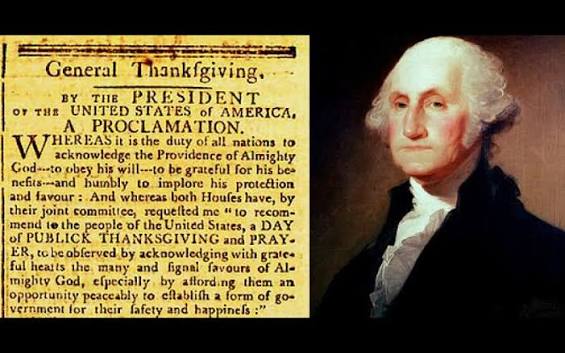
In November 1789, with the Revolutionary War behind them and a new government taking shape, Americans had reason to take stock. President George Washington called for a day of public thanksgiving. Among the blessings he named were “civil and religious liberty and the means to acquire and spread useful knowledge.” I’m struck by that pairing. A young republic had reason to give thanks for its freedoms. It also needed people who understood those freedoms and knew how to put them to use.
Earlier this week, I spoke at Loyola School’s Multifaith Thanksgiving Prayer Service in New York City. I asked the hundreds of high school students there to consider a much older act of thanksgiving. In Deuteronomy, a farmer brings a basket of first fruits as an offering. After months of planting, tending, and waiting, the farmer has something to show for all that work. Yet the words the Torah puts in the farmer’s mouth begin generations earlier. “My father was a wandering Aramean.”
The farmer recounts how his ancestors went down to Egypt, endured slavery, cried out, were freed, and led to the Promised Land. Only then does the farmer turn to the present. “And so I now bring the first fruits of the soil that You, O Lord, have given me” (Deuteronomy 26:5-10).
Why tell that story with a basket of fruit in your hands? The farmer has every reason to take pride in the harvest. Reciting this shared origin story puts that work in perspective. We return to these words each year at the Passover Seder, when we are reminded of where we came from and how much of what is in our proverbial basket we owe to those who came before us.
But remembering the story ultimately changes what happens to the fruit and to us. The Torah pivots immediately from history to the immediacy of community. The farmer is directed to celebrate with the Levite and the stranger, and, going one step further, to set aside part of the harvest for the orphan and the widow, “that they may eat their fill” (Deuteronomy 26:11-12). The farmer who remembers that their ancestors once arrived as a stranger now has a responsibility to the stranger.
Judaism values gratitude. We begin each morning with Modeh Ani Lefanecha, a prayer of thanks. We practice hakarat hatov, recognizing the good we have received. And yet, gratitude is not enough. It’s only the beginning.
The Torah teaches us that gratitude is intended to become generosity. The Latin roots of this word include nobleness and kinship. Generosity is also connected to genesis, the act of creation. Admiring what’s in our basket, we are invited to ask what can this bounty create? How can it benefit my community, especially those in need. A community grows stronger when more people have a hand in shaping its common life.
That brings me back to Washington’s proclamation. A shared day of thanksgiving gave Americans an occasion to reflect on what they had received and what it would take to pass it on. That is also a task of civic education. When students learn how their government works, whose sacrifices helped secure and expand their freedoms, and how they can take part in public life, they begin to see themselves as people who can shape the country they have inherited. By listening to one another, asking questions about other viewpoints, and having – what my friend Billy Planer calls – “conversations that matter“, the students of today can become trusted stewards of tomorrow.
I read Washington’s proclamation as an invitation to build that sense of responsibility and belonging. Gratitude for the blessings we’ve inherited can help sustain the ongoing work of building “a more perfect Union.”
At our Thanksgiving table, we often ask what we are grateful for. It’s a question worth answering thoughtfully, with names and stories.
Once we’ve named what we’ve received, I think of what my father, of blessed memory, always said: “Leave the world better than the way we found it.” Like the words of Deuteronomy and Washington, his aphorism reminds us that gratitude is only the beginning.
This weekend let’s can carry that conversation one step further: What will we do with the blessings in our baskets?
In memory of my father z”l, Yosef ben Avraham Halevy.