
99.6% Ashkenazi + .4% Viking = 100% Zionist
What’s So Special About 1967?
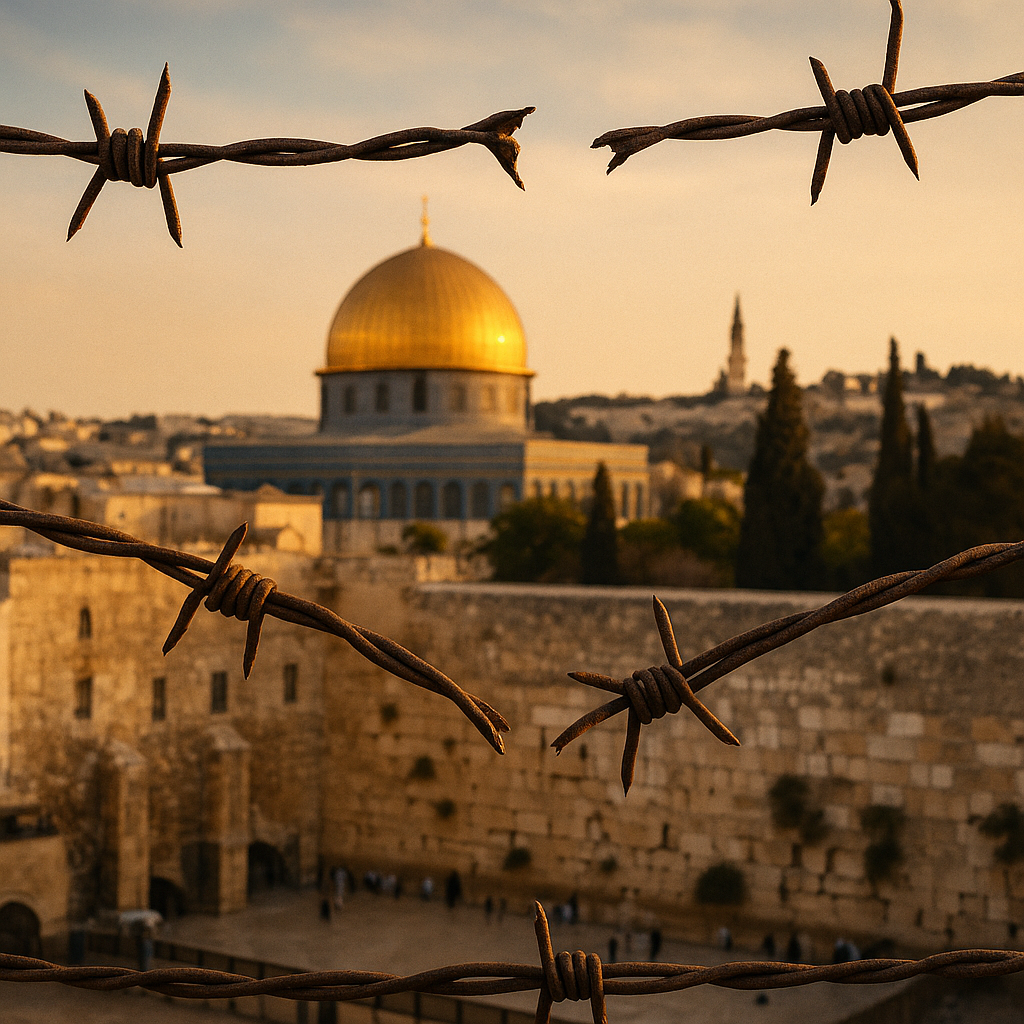
The Western Wall is liberated!
For decades, diplomats, pundits, and policymakers have fixated on one year when it comes to the Israeli-Arab conflict: 1967. To hear them tell it, the key to peace is a return to the so-called “1967 borders,” a phrase that conjures images of stability, fairness, and legitimacy. But what’s so special about 1967?
It wasn’t the year Israel grabbed foreign land. It was the year Israel reclaimed its own. It was the year Jordan’s illegal 19-year occupation of Judea and Samaria—what many now call the West Bank—finally ended. And it was the year Jerusalem, the eternal capital of the Jewish people, was at last made whole again.
The Green Line That Was Never a Border
Let’s start with a basic misunderstanding: the Green Line was never a recognized border. It was a ceasefire line drawn in 1949 after Israel’s War of Independence, marking the spot where fighting between Israel and Jordan stopped. The Armistice Agreement made it explicitly clear that this line “is not to be construed in any sense as a political or territorial boundary.”
Yet over time, the Green Line took on mythical status—as if it were the internationally sanctioned dividing line between two sovereign states. It wasn’t. And calling it the “1967 border” doesn’t make it any more legitimate. If anything, 1967 was the year Israel restored sovereignty to lands that were under foreign occupation.
Jordan’s Seizure Wasn’t Legal—And Everyone Knew It
In 1948, Jordan invaded the newly declared State of Israel, seized East Jerusalem, and took control of Judea and Samaria—territories that had never been part of its kingdom. In 1950, Jordan formally annexed these areas in a move recognized by almost no one. The Arab League opposed it. The United Nations ignored it. Only Britain and Pakistan gave a nod to the annexation—and even then, Britain didn’t extend recognition to East Jerusalem.
During this occupation, Jordan ethnically cleansed Jews from the Old City of Jerusalem, demolished synagogues, desecrated Jewish cemeteries, and banned Jewish access to holy sites. No one called it illegal or illegitimate. No one cried for the Jewish refugees expelled from their ancient neighborhoods. No one cried for the Jewish “Nakba”. The world was silent.
A Proposal, Not a Mandate: The 1947 Partition Plan
Some point to the 1947 UN Partition Plan as the solution that might have avoided it all. But the plan was just that—a plan. It was never enforced or enacted. It was a proposal that the Jewish leadership accepted and the Arab world rejected. Every Arab state declared war rather than accept a Jewish state alongside an Arab one.
The Jews didn’t reject a two-state solution; they were the ones who agreed to it. It was Arab refusal that sealed the fate of that proposal and set the region on a path of perpetual conflict.
Who Were the Palestinians in 1967?
Let’s speak plainly: there was no sovereign Palestinian state before 1967. In fact, there was no movement to establish one during the years that Jordan controlled the West Bank and Egypt controlled Gaza. The people living there were not governed by Palestinians but by foreign Arab regimes. The idea of Palestinian nationhood only gained serious international attention after Israel won the Six-Day War.
Before that, the term “Palestinian” applied equally to Jews and Arabs living in the region. The British issued “Palestine” passports to Jewish residents. The Jerusalem Post was originally the Palestine Post. “Palestinian” was a geographic label, not a national identity. There were no Palestinian people. To claim that 1967 marked the beginning of “Palestinian occupation” is to ignore history entirely.
The Liberation of Jerusalem
Perhaps nothing better illustrates the meaning of 1967 than the moment Israeli paratroopers stood at the Western Wall and declared, “The Temple Mount is in our hands.” For the first time in nearly 2,000 years, Jews could pray freely at their holiest site.
Israel did not seek war in 1967. It pleaded with Jordan to stay out of the conflict. But Jordan attacked anyway—and lost land it had no rightful claim to. That land didn’t become Israeli because of aggression. It became Israeli because of self-defense. And the reunification of Jerusalem wasn’t colonization. It was homecoming.
The British Mandate and the Forgotten Promise
To truly understand 1967, we have to go back to 1922. That’s when the League of Nations entrusted Britain with the Mandate for Palestine, with the explicit goal of establishing a “national home for the Jewish people.” That territory included Judea and Samaria—the very land now labeled as “occupied.”
Instead, Britain and the international community carved up the region to appease Arab demands. Lebanon gained independence in 1942. Syria in 1944. Jordan in 1946. Israel in 1948. The Jewish state received only a fraction of its promised territory, of its ancient borders, and even then, its legitimacy was constantly questioned.
The land wasn’t stolen from an existing Palestinian state. It was chipped away from the Jewish homeland piece by piece. And when Israel finally secured Jerusalem, Judea, and Samaria in 1967, it wasn’t conquering new land—it was reclaiming what history, archaeology, and international mandates had already acknowledged was theirs.
A House on the Wicked Witch?
No wonder there’s anger and confusion. For generations, Arabs have been told that this land—all of it—was always theirs. They were never taught about Jewish history, Jewish indigeneity, or the Jewish connection to Jerusalem. In that vacuum, a new narrative took hold: that the Jews were foreign invaders, dropped into “their” land like Dorothy’s house onto the Wicked Witch in the land of Oz.
To them, the Jews came out of nowhere, backed by Western guilt and sympathy over the Holocaust. That version of history is easier to understand, easier to be angry about. But it’s wrong. And unless we’re willing to challenge that story, there will be no peace—only resentment based on a myth.
So… What’s So Special About 1967?
It was the year the Jewish people regained access to their holiest sites.
It was the year Jordan’s illegal annexation of Judea and Samaria came to an end.
It was the year Israel stopped apologizing for existing—and started securing its future.
1967 was not the start of Israel’s occupation. It was the end of someone else’s.
And that, not some arbitrary ceasefire line, is the real legacy of 1967.
Related Topics
Related Posts