

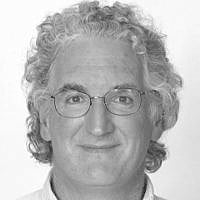
When a Genocide Scholar Goes Unchallenged
No accusation against Israel carries more moral weight than genocide. Omer Bartov has done as much as any American academic to give that charge scholarly legitimacy.
That makes his arguments worthy of thorough scrutiny. Yet when Bartov spoke recently, the questions that most needed asking were largely absent.
Bartov is no fringe activist. He is an Israeli-American historian at Brown University whose scholarship on the Holocaust and Nazi Germany gives his pronouncements unusual authority. That is precisely why his claims about Gaza deserve to be tested rather than merely repeated.
The term “genocide” was coined in 1944 by Raphael Lemkin, a Polish-Jewish lawyer who sought a name for the deliberate destruction of national, ethnic, racial and religious groups. Four years later, the United Nations adopted the Genocide Convention, which made genocide an international crime and required proof of a specific intent to destroy a protected group, in whole or in part.
Nearly eight decades later, that demanding legal standard is at the center of one of the most contentious debates arising from the Gaza war – and of Omer Bartov’s transformation from respected Holocaust historian to prominent accuser of Israel.
That debate came to Connecticut College when Bartov appeared at the first installment of this year’s “Understanding Israel/Palestine” series. I have called this the “hate series,” as all previous speakers have used the platform to demonize Israel and the Jewish people, and have invoked antisemitic and anti-Zionist rhetoric.
Bartov continued the series’ overwhelmingly critical treatment of Israel.
Bartov emerged as one of the most prominent academic proponents of the genocide argument when he published an op-ed, What I Believe as a Historian of Genocide, in the New York Times on November 10, 2023. That was a little more than a month after Hamas’ Oct. 7 attack and just two weeks after Israel began its ground invasion. He warned that Gaza was at risk of ethnic cleansing and that evidence of genocidal intent could develop into genocidal action.
By July 2025, Bartov’s warning had become a conclusion. He wrote a second New York Times op-ed, I’m a Genocide Scholar. I Know It When I See It, in which he asserted that a genocide in Gaza was underway.
He followed in April 2026 with a book, Israel: What Went Wrong?, reasserting his claims.
Jeffrey Herf, a distinguished university professor emeritus of history at the University of Maryland, has offered one of the most comprehensive critiques of Bartov’s case. In “From Historian to Polemicist: What Went Wrong with Omer Bartov,” Herf argued that Bartov has failed to establish the evidence and causal chain necessary to support such an extraordinary accusation.
Virtually no credible scholars claim a genocide occurred in Gaza. More than 500 experts in the fields of law, history, politics, and genocide and Holocaust studies signed a letter asserting that Bartov and others have distorted the definition of genocide, Israel has not committed genocide in Gaza, and Hamas is the party responsible for genocide.
There is little point in repeating Herf’s rebuttal here. A more revealing exercise is to ask what happened when Bartov brought these claims to Connecticut College: Were they subjected to serious scrutiny?
A moderator willing and able to challenge the key assertions made by Bartov would have asked the following questions:
- The Genocide Convention requires specific intent to destroy a protected group, in whole or in part. What evidence demonstrates that Israel’s objective was the destruction of Palestinians as a group rather than the defeat of Hamas, even if Israeli operations caused extensive civilian deaths?
- The ratio of civilian-to-terrorist deaths in Gaza is between 1-to-1 and 2-to-1, which is far less than in any war. How can there be a genocide when relatively few civilians were killed?
- How much responsibility do you assign Hamas for civilian suffering in Gaza, given its operation from densely populated areas and civilian structures, its extensive tunnel network, its failure to distinguish fighters from civilians, and allegations that it diverted humanitarian supplies? How does that responsibility affect your assessment of Israeli intent?
- Hamas’s 1988 charter contains explicitly antisemitic language and calls for Israel’s destruction. Given the mass killing of civilians on Oct. 7, what legal analysis leads you to reject – or accept – the proposition that Hamas itself demonstrated genocidal intent?
- You have cited statements by Israeli officials as evidence of genocidal intent. What evidence demonstrates that those statements became operational orders governing IDF conduct? And how do you reconcile that alleged intent with contrary evidence, including Israeli efforts to evacuate civilians, warnings before some attacks, humanitarian aid and the establishment of humanitarian zones?
- Large-scale civilian deaths and destruction do not by themselves establish genocide. Allied bombing killed hundreds of thousands of German and Japanese civilians during World War II, while other modern wars have devastated cities without being classified as genocide. What evidence distinguishes Gaza from those conflicts by demonstrating the specific intent required for genocide?
- You have said Hamas is a threat that must be destroyed. Given Hamas’s extensive tunnel network beneath densely populated Gaza and its practice of embedding forces among civilians, what military strategy could Israel lawfully have used to accomplish that objective? And what specific conduct distinguishes such a permissible military campaign from genocide?
- You describe roughly 750,000 Palestinians as having been “expelled” in 1948. Historian Benny Morris’s research describes multiple causes of the Palestinian exodus, including expulsions, flight from fighting and fear, voluntary departures and, in some instances, evacuation orders from local Arab authorities. What evidence supports attributing the displacement of the entire refugee population to expulsion by Israeli forces?
- During your talk, you described Hamas’s killing of roughly 800 Israeli civilians on Oct. 7 as war crimes. Hamas fighters also killed hundreds of Israeli soldiers, police officers and security personnel while operating among civilians and, in many cases, without distinguishing themselves as combatants. How do you characterize Hamas’s conduct toward those individuals under international humanitarian law, and which aspects of that conduct constituted war crimes?
- Your book makes sweeping historical and factual claims yet contains no footnotes. Why should readers accept conclusions as consequential as an accusation of genocide without the documentary sourcing normally expected of historical scholarship?
- You cited a phone call that Netanyahu was reported to have received from the UAE warning of the Oct. 7 attacks. The only evidence of this call is a report in Haaretz. But Netanyahu has denied receiving that phone call, and there is no independent verification that the call took place. Why do you nevertheless assert the call happened?
- What evidence would falsify your genocide thesis? If evidence of Israeli efforts to evacuate civilians, facilitate humanitarian aid or reduce civilian casualties does not count against genocidal intent, what evidence would?
Bartov is a controversial figure. More than any other person, he has legitimized the claim of genocide in Gaza.
Bartov’s stature makes rigorous questioning more important, not less. An accusation of genocide should be subjected to the highest evidentiary standard, particularly when it comes from a scholar whose academic credentials give that accusation unusual authority.
Connecticut College calls its program “Understanding Israel/Palestine.” Understanding requires more than giving distinguished speakers a platform. It requires testing their evidence, challenging their assumptions and exposing students to the strongest arguments on the other side. Bartov came prepared to make his case. The moderator, representing Connecticut College as an institution, should have come prepared to challenge it.