


When climate becomes a national security blind spot
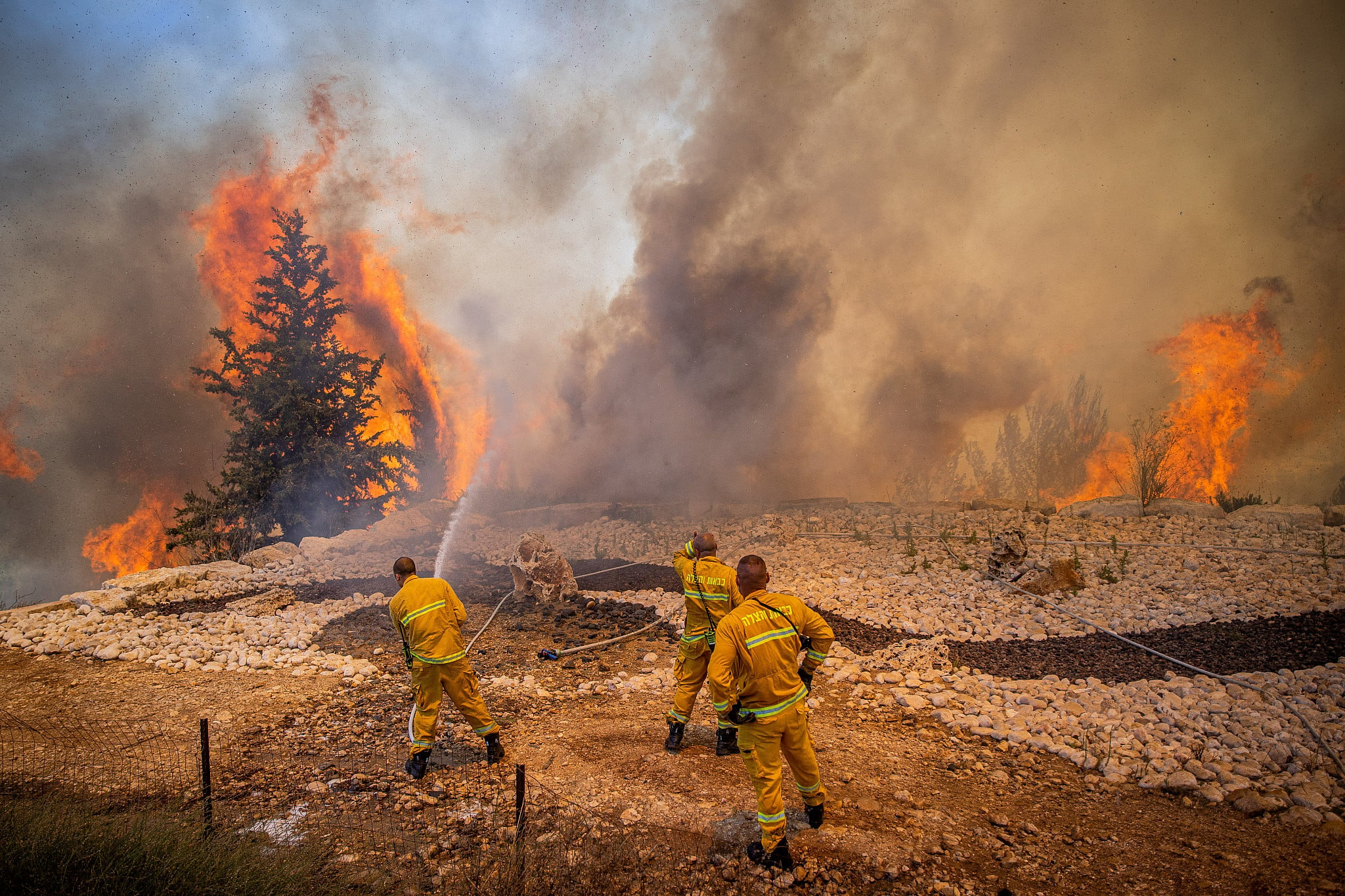
At the very moment when climate risks are accelerating across the world and the Middle East, Israel’s National Security Council is stepping back from addressing climate change as a national security issue.
This is a strategic mistake.
Climate change is no longer only an environmental challenge. In a growing number of countries, it is being addressed as a matter of national resilience, economic stability, military readiness, infrastructure security, and regional stability.
Israel cannot afford to ignore this reality.
According to Israel’s Meteorological Service, Israel has warmed by approximately 0.6°C per decade over the past 30 years, compared to a global average warming rate of approximately 0.22°C per decade during the same period. By the end of the century, average temperatures across most of Israel are expected to rise by approximately 3.5°C. The same report warns of far more frequent extreme heat events and significant declines in rainfall and rainy days.
These are not abstract environmental projections. They are strategic warnings. And it’s worth saying plainly: scientists are generally conservative in their predictions. The risks are more likely to exceed these forecasts than fall below them.
Extreme heat threatens electricity systems, public health, transportation infrastructure, military readiness, and labor productivity. Wildfires threaten roads, communities, power infrastructure, and military facilities. Flooding damages drainage systems, communications networks, and emergency access routes. Water stress increases dependence on energy-intensive desalination systems.
Climate risks also extend beyond Israel’s borders. Across the Middle East, worsening drought, water scarcity, food insecurity, and extreme heat may contribute to instability, migration pressures, and regional tensions. Syria suffered severe multi-year droughts from 2006 to 2011, leading to crop failures in 2007 and 2008, and major livestock losses in 2009 and 2010. These crises contributed to the social unrest that preceded the Syrian civil war.
Against this backdrop, and given these forecasts, it is vital that Israel take climate security seriously.
Other countries are certainly doing so. Today – May 25 th – is the hottest May day ever in the UK . This comes just five days after a government-mandated report made clear that significant change is needed to prepare Britain for future extreme heat.
Yet tragically, Israel appears to be moving in the opposite direction.
The National Security Council is the body responsible for examining and integrating Israel’s most significant national threats and ensuring they are reflected in national preparedness, strategic planning, and threat assessments.
Climate change clearly belongs in that category.
The role of the NSC is not to manage climate policy itself, but to ensure that climate risks are recognized as core strategic challenges and incorporated into the country’s national threat scenarios and preparedness frameworks.
Ignoring climate risks will not make them disappear. It will only increase Israel’s vulnerability.
There is a conceptual challenge, not only a practical one. We have learned, at great cost, that the conceptzia – the frameworks that underpin our thinking – can lead decision-makers dangerously astray. Traditional security thinking often focuses on the “most likely” scenario. But climate preparedness requires planning for high-impact extreme scenarios as well because the consequences of systemic failure could be catastrophic.
Israel already paid a terrible price for flawed thinking leading to failed planning on October 7. That lesson must not be forgotten.
So the question is not whether climate change belongs on the national security agenda. The real question is whether Israel can afford to ignore it.
Climate security must become a central national priority because climate change is a long-term strategic threat to Israel. Unlike shorter-term crises that may come and go, this threat will almost certainly intensify in the coming decades. The costs of failing to prepare today will be far higher tomorrow, both in shekels and in human suffering.
Both civil society and the private sector have important roles to play in this. At Jewish Climate Trust, we’re midway through a research process that has already made clear to us how critical these issues are, and how dangerously neglected they have been in planning for the future. We’re determined to play our part in helping this country to better prepare.
But as Galit Cohen, JCT’s Israel director – formerly director-general of the Ministry of Environmental Protection, and head of Climate Security at INSS) – put it to me, “there is no substitute for government action. The government needs to embed climate security at the heart of national strategic planning. It needs to ensure that climate risks are integrated into Israel’s national threat assessments. It needs to strengthen preparedness across all critical systems. And by doing so, it will prepare Israel not only for the threats of yesterday, but for the escalating strategic threats of the future.”