The Third Story
Featured Post
When hands speak louder than politics
The Knesset's recognition of Israeli Sign Language is a historic victory for human dignity – and for leaders who can transcend partisan battles
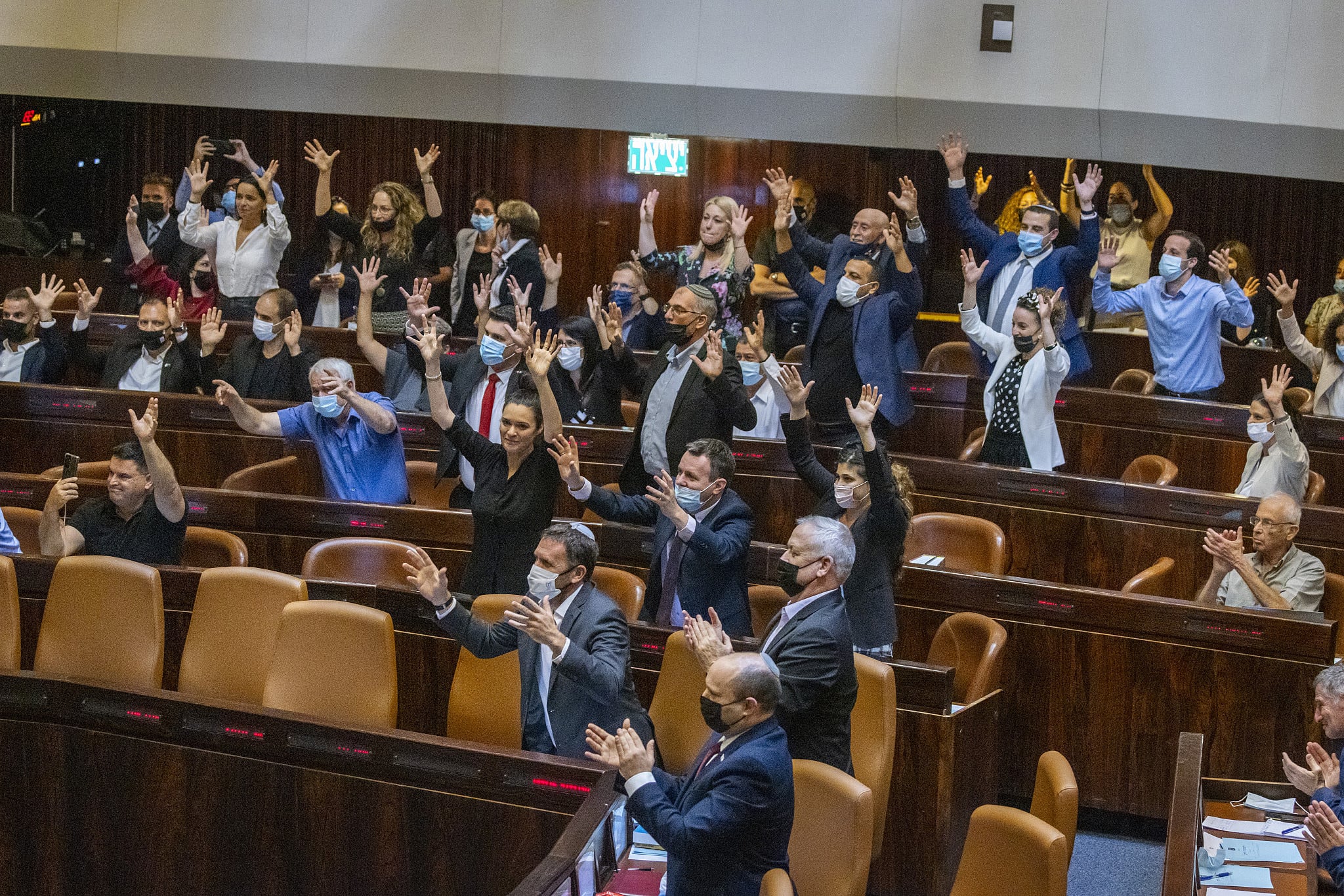
Shirley Pinto is applauded in sign language by members of parliament during a plenum session in the assembly hall of the Israeli parliament, on July 12, 2021. (Photo by Olivier Fitoussi/Flash90)
We live in an era dominated by the spirit of Korach.
Open any Israeli news site, scroll through social media, or sit in the Knesset gallery during a standard session, and you are bound to witness the same toxic phenomenon: arguments driven by self-aggrandizement, political posturing, and the systematic delegitimization of the opposing side. Especially now as we lead up to elections, our public square has increasingly become a zero-sum arena where shouting down the “other” is mistaken for leadership.
But just as this week’s Torah portion, Parashat Korach, reminds us of the destructive power of toxic conflict, a rare, beautiful moment of grace occurred in the Knesset plenum that demonstrates what happens when we choose a different path.
On Monday, the Knesset passed a historic bill giving Israeli Sign Language (ISL) official state recognition as a “natural language.” The law is a monumental victory for justice, equality, and human dignity, validating the culture and identity of over 50,000 deaf and hard-of-hearing Israelis.
Yet, the magic of this moment lay not just in the content of the law, but in the context of its passing. Sponsored jointly by MK Avichai Boaron of the Likud coalition and MK Chili Tropper of the opposition’s National Unity party, the bill passed its final readings with cross-factional support and absolutely zero opposition. In a political landscape fractured by profound disagreement, the passage of the ISL bill stands as a towering counter-narrative to the rebellion of Korach.
To understand why this is so profound, we have to look at the classic commentary in Pirkei Avot (5:17), which contrasts two types of conflict:
“Every argument that is for the sake of Heaven (Machloket she’lo le’shem shamayim) is destined to endure; but one that is not for the sake of Heaven is not destined to endure. Which is an argument for the sake of Heaven? The argument between Hillel and Shammai. And which is not for the sake of Heaven? The argument of Korach and his entire company.”
The rabbis of the Mishnah notice an asymmetry in the text. When defining a constructive argument, they name both sides: Hillel and Shammai. But when defining a destructive argument, they only name one side and his followers: Korach and his company. Why? Where is Moshe?
The answer cuts to the very heart of communication. In an argument for the sake of Heaven, like those between the houses of Hillel and Shammai, both sides genuinely see each other. They listen, they debate the core of the issue, and they respect the other’s right to exist and hold space. Their ultimate goal is the pursuit of truth and the elevation of the community. Therefore, the relationship endures.
Korach’s argument was entirely different. He didn’t want a dialectic; he wanted a monopoly on power. He cloaked his ambition in populist rhetoric —“For the entire assembly, all of them are holy!” — but his true goal was to erase Moshe and Aharon entirely. In a Machloket she’lo le’shem shamayim, there is no room for another voice. There is only “me and those who agree with me.” Because it is built on the destruction of the other, it cannot endure. It ultimately swallows itself up.
For too long, modern Israeli political discourse has mirrored Korach and his company. It has been a series of monologues masquerading as dialogues, designed to score political points rather than build a cohesive society. The unanimous passage of the ISL bill represents the antidote to this blight.
When MKs Tropper and Boaron crossed the aisle, they did not erase their deep ideological differences. Rather, they recognized that some issues transcend the partisan battlefield. They demonstrated that when we approach a challenge le’shem shamayim, for the genuine sake of human dignity, justice, and community accessibility, we can create a space where everyone belongs.
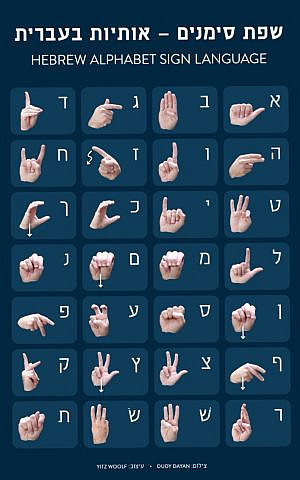
By elevating ISL to an official, “natural language,” Israel has shifted the paradigm of disability entirely. For decades, deafness has often been viewed through a medicalized lens—as a personal trauma or biological deficit to be cured or managed. This law reframes ISL not as a mere accommodation for the disabled, but as a rich, vibrant language and a national cultural asset.
As activist and former MK Shirly Pinto noted, this is an act of historical redress. Legally and practically, being recognized alongside Hebrew means the state is now legally obligated to preserve, develop, and promote ISL nationwide. The Academy of the Hebrew Language will now oversee its development, ensuring its vocabulary expands into fields like technology, research, and medicine, while Culture and Sports Minister Miki Zohar has been tasked with its implementation.
For the deaf community of Israel, this means moving from invisibility to full citizenship. It establishes that their mode of expression is a legitimate, sophisticated linguistic system capable of conveying the entire spectrum of human thought and emotion.
When introducing the bill in its earlier stages, MK Tropper famously concluded his speech by using Israeli Sign Language to sign the words: “In our society, there is equal room for everyone.”
By elevating ISL to a language of state, Israel did more than pass a piece of accessibility legislation. It redefined what it means to have a voice in the Jewish state. It proved that a voice doesn’t have to be loud, aggressive, or spoken through a microphone to be powerful. Sometimes, the most profound expressions of human dignity and national unity are articulated in the quiet, expressive movements of the hands.
At the Florence Melton School, we have been seeking to make Jewish learning accessible to the deaf community through our work with the Jewish Deaf Resource Center, where our courses are taught online using A.S.L. Through this partnership, we seek to be more accessible to all Jewish adult learners.
Related Topics