
Writer covering Israel–Africa, Jewish affairs, and Israel worldwide
When Israel Vetoes Its Own Security: The Gaza Peacekeeping Paradox
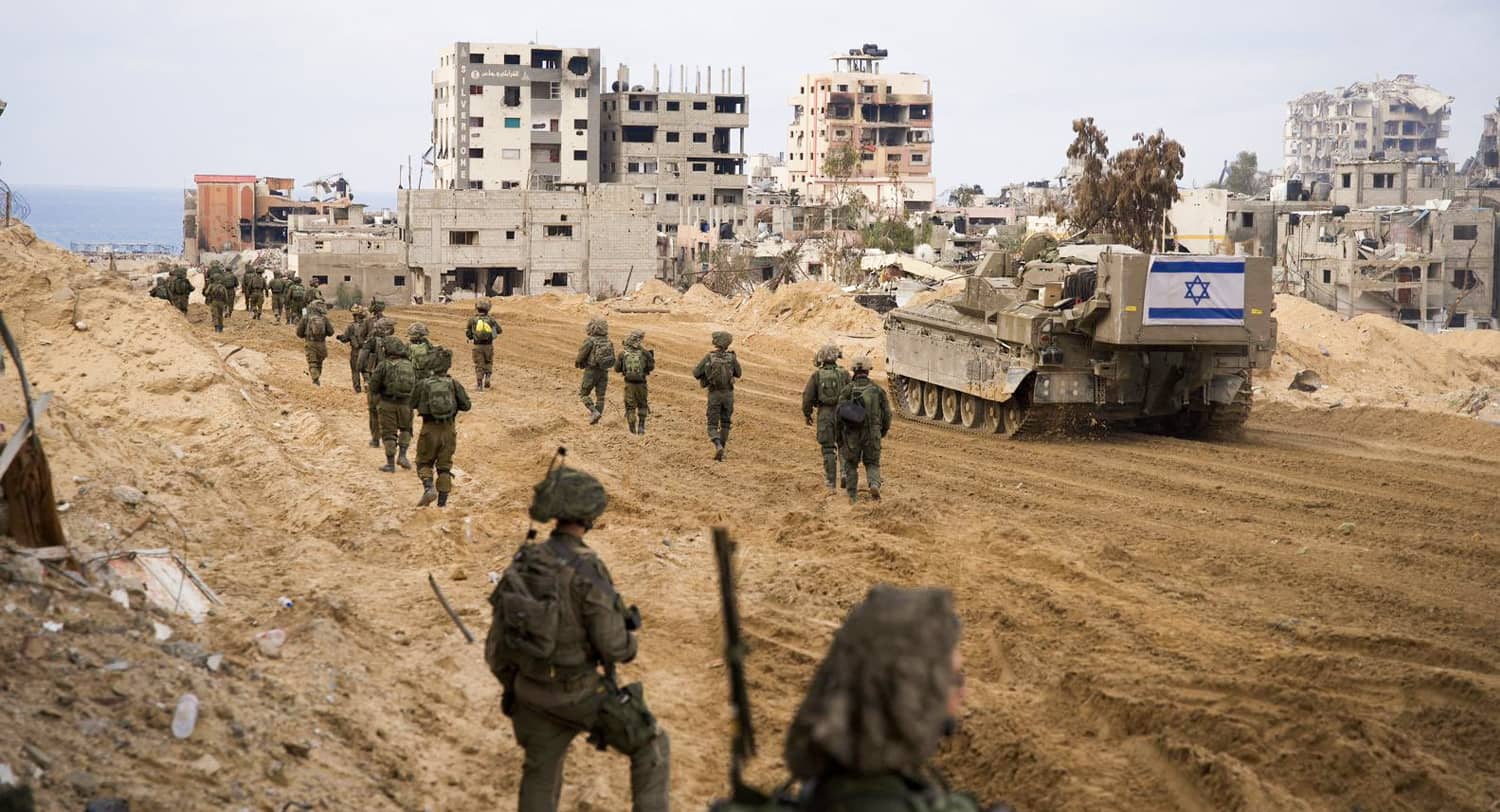
Israeli soldiers in the Gaza Strip. Photo credit: Israel Defense Forces/Handout via REUTERS.
After fighting Hamas, Israel now considers letting its critics “keep the peace” in Gaza a plan seemingly so ironic it could qualify for UN funding.
The International Force in Gaza – Who’s Bringing the Boots?
So here’s the scenario: Gaza is to get an international “stabilization” or peace-keeping force. According to diplomats, the proposed force will be led by Egypt, expected to recruit troops from, among others including Indonesia, Azerbaijan and Turkey. Meanwhile, the European Union is being urged to play a bigger governance-role in Gaza’s post-war recovery, moving beyond simply humanitarian aid.
But wait: before embracing the idea of “international guardianship,” pause for the irony.
-
Many of these countries have not exactly been Israel’s best buddies. Egypt has a chilly, complicated relations with Israel; Indonesia doesn’t formally recognize Israel; Turkey has repeatedly slammed Israel’s Gaza policy.
-
The EU and its member-states have been major funders of the United Nations Relief and Works Agency for Palestine Refugees in the Near East (UNRWA) and the Palestinian Authority (PA) — despite serious allegations over pay-for-slay, terrorism links and dysfunctional governance. For example, the PA’s “martyrs & prisoners fund” dubbed “pay-to-slay”) remains a thorny issue. The EU promised a €1.6 billion package for the PA in 2025-27 even though many details around reform remain un-resolved.
So what we have is: years of Israeli efforts, countless shekels spent fighting Hamas, only now to apparently welcome countries that have been critical (or worse) of Israel to come in and “babysit” Gaza. More of like spending a decade evicting the lodgers, only to ask your ex-neighbours (who used to help the lodgers) to move in and manage the house. Strange.
And yes some of these “good guys” will be from the Organization of Islamic Cooperation (OIC) countries, which have recognized the Palestine Liberation Organization (PLO) and the PA, and where many in Israel view the PA as just “Hamas lite.” The paradox is clear: Israel rejects Hamas rule in Gaza but now may accept an OIC-country led international force plus a reformed PA “under supervision” to govern Gaza.
Israel’s Relations with These Countries and the Contradictions
Egypt
Despite the 1979 peace treaty, Israel and Egypt have walked a fractious path. Cairo has repeatedly criticized Israel’s war in Gaza, accused it of “systematic genocide,” and warned against mass displacement of Gaza’s population toward Sinai. The New Arab analysis notes that Israel’s strikes and displacement plans have strained relations with Cairo to the point where Egypt’s top leadership used the word “enemy” in reference to Israel. And yet, now Egypt steps up as the expected lead of a global stabilization force in Gaza. If Egypt was at odds with Jerusalem over Gaza’s direction, why is it now being asked to take the reins? That Egypt, which couldn’t prevent weapons smuggling through Rafah for two decades, is now being asked to “secure” Gaza is an irony so rich it could fund another peace summit.
Indonesia
The most populous Muslim-majority country has no formal diplomatic ties with Israel, has condemned Israeli bombing repeatedly, and has stated categorically that recognition of Israel remains “conditional.” And yet, at the UN General Assembly, Indonesia offered to send peacekeepers to Gaza under a UN mandate. From “we don’t recognize you” to “we’ll send our troops to your backyard” that’s quite the pivot.
Turkey
Turkey has long been a thorn in Israel’s side. President Recep Tayyip Erdogan compared Israel’s Prime Minister to Hitler, accused Israel of “genocide” in Gaza, and closed trade/airspace ties in protest. And yet Turkey’s name keeps popping up among potential contributors to the Gaza stabilization force. Turkey cutting ties with Israel and now possibly policing Gaza is akin to asking Iran to oversee Hezbollah disarmament in the Lebanon border region you’d raise an eyebrow.
The Funding and Aid Paradox
Meanwhile, European countries and the EU itself continue to fund UNRWA and the PA — despite reports of UNRWA staff participation in the October 7 attacks and concerns that PA payments (via the “martyrs & prisoners fund”) incentivize terror.
So you have: Israel at war with Hamas, Israel rejecting Hamas rule; yet the international community is backing the PA (which many Israelis deem unfit) and prepping an international force led by countries largely unsympathetic to Israel. In short: it’s more of the same at least in terms of unsatisfactory governance for Israel’s security calculus but wrapped in a new institutional structure.
Political Positions in Israel: Left, Right and the Ironies of False Hopes
Left-wing / Center
Here lies perhaps the more consistent camp: parties on Israel’s left tend to welcome the idea of an international force seeing it as a way to finally move toward a two-state solution, relieve Israel’s burden in Gaza, and internationalize the governance so that Israel doesn’t have to shoulder all the responsibility.
For example, former Prime Minister Yair Lapid reportedly viewed the idea of Egypt assuming Gaza leadership as “not comprehendible” from Israel’s vantage, but still open to external frameworks of governance. In other words: left-wing Israelis may think at last, someone else will manage Gaza so Israel can focus on Israel.
Government / Security Camp
On the other side, the right (and the current government) remain skeptical:
-
Will Israel allow foreign troops (especially from countries not aligned with its interests) to operate near its border?
-
Will the PA (even reformed) actually deliver security and not act as an extension of Hamas?
-
Will the international force truly care about Israeli hostages and ceasefire conditions, or will they prioritize Palestinian return and reconstruction at Israel’s expense?
Also, the idea that Israel is finally acknowledging the PA (via this international arrangement) is itself ironic: for years the government declared that the PA was a failed partner, “Hamas in disguise,” incapable of governance and yet now is part of the plan. The same “rejecting the PA” rhetoric is now subtly replaced by “PA-under-international-supervision”. So we have: the Israeli left welcoming internationalization; the government reluctantly letting it be discussed; but probably many Israelis are left wondering if this is just a surrogate way of giving legitimacy to the PA (and countries hostile to Israel) to manage Gaza something Israel has fought against.
The Ironies
-
Israel spends decades fighting Hamas → now invites countries that supported the PA/Hamas axis into Gaza under “peace-keeping” pretext.
-
The PA is treated as the future governance mechanism of Gaza, yet Israel perceives it as “Hamas step-child.”
-
Countries that previously condemned Israel now line up to administer or stabilize Gaza under UN/US frameworks.
Will It Work?
That’s the cliff-hanger. The devil is in details: mandate, rules of engagement, who controls Gaza’s border with Israel, how/arms/humanitarian flows are managed, how the PA reforms are enforced, and whether Israel retains meaningful control over its immediate security environs. As one diplomatic source put it: Israel insisted on retaining a buffer zone. For many Israelis, the fear is that this becomes “a foreign force + PA governance + reduced Israeli influence” i.e., a governance model Israel hasn’t signed up for but is being nudged into.
Epilogue – A Paradox That Can’t Be Ignored
Here’s the paradox: years of wars, billions of shekels spent, thousands of lives lost fighting Hamas finally the international community steps in, but seemingly not on Israel’s terms. The countries asked to help govern Gaza are those who previously criticized or opposed Israel. The PA, once deemed unfit by Israel’s right wing, is back in the frame albeit under “supervision.” And the EU continues to fund institutions many Israelis view as hostile or dysfunctional.
I invite you, where do you stand? on foreign troops from countries that once condemned (or still condemn) Israel operating in Gaza? Do you trust the PA to govern and reform after years of failures and accusations of supporting terror? Or do you see this as another version of “same old” giving legitimacy to the PA and external actors while Israel loses direct leverage?
It’s time for an Israeli public debate. whether to sign up to this new formula of “international force + PA governance” because of no better option or demanding a model in which Israel retains the key security control, even while allowing international help? Because the alternative is: Fighting Hamas for years, depose them, rebuild the territory, and then let others take over the show.
And yes — it’s weird spending years battling Hamas only to now politely ask OIC countries, EU members and assorted international forces to kindly come in and “stabilize” Gaza.
Related Topics
Related Posts