
Writing on Jewish life, relationships, trauma, and resilience
When Journalism Becomes Blood Libel: The New York Times Must Be Held Accountable
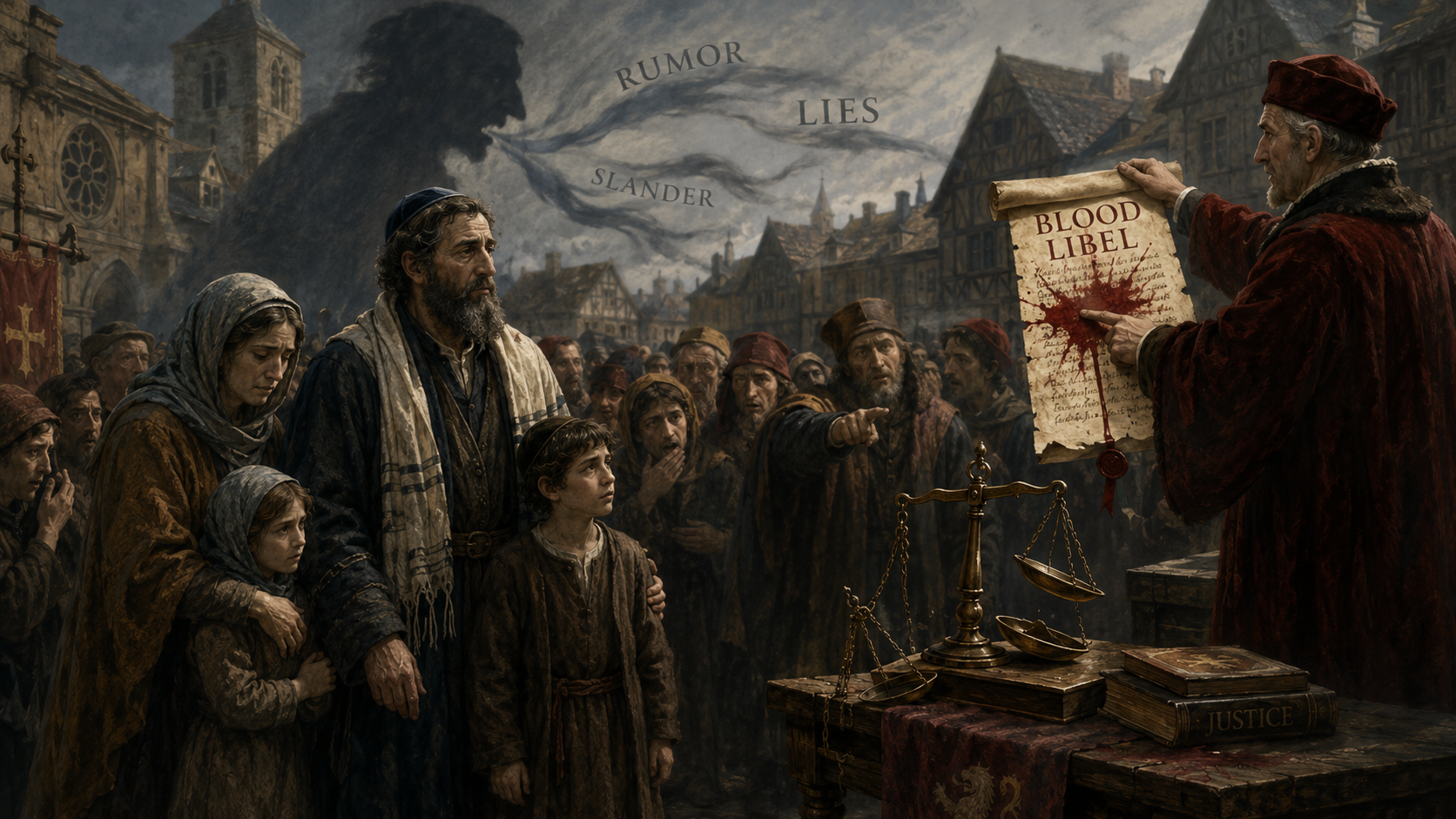
Illustrative: AI image created by the author.
Nicholas Kristof and The New York Times have crossed a line that responsible journalism should never approach, much less leap over with a running start.
In a column alleging widespread rape of Palestinian prisoners by Israeli guards, soldiers, settlers and interrogators, Kristof asks readers to accept sweeping accusations against Israel while relying heavily on anonymous accounts, advocacy reports, and sources whose credibility is deeply contested. Israeli authorities have rightly called the column a “blood libel,” and the Israel Prison Service has rejected the allegations as “false and entirely unfounded.”
Let’s be clear: every credible allegation of sexual violence deserves serious investigation. No victim should be silenced. No perpetrator should be protected. That standard must apply equally to Israelis, Palestinians, Jews, Muslims, Christians, and every human being created in the image of God.
But that is not what Kristof’s column does.
Instead, it presents Israel — the Jewish state still grieving the rape, torture, murder and kidnapping of its citizens on October 7 — as a society whose security forces have normalized sexual violence. It does so while acknowledging, even in the original essay, that there is no evidence Israeli leaders ordered rape. That caveat should have led to restraint. Instead, it becomes a fig leaf for one of the most inflammatory accusations imaginable.
The Times of Israel reported that Kristof relied in part on Euro-Med Monitor, an organization Israeli Ambassador to the United States Yechiel Leiter challenged as compromised by links between its leaders and Hamas figures. The article notes that Leiter highlighted photographs of Euro-Med figures Ramy Abdu and Mazen Kahel with senior Hamas official Ismail Haniyeh, and that Euro-Med has promoted claims minimizing or distorting the October 7 attacks.
That matters. Sources matter. Corroboration matters. Context matters. When the accusation is that the Jewish state is systematically raping prisoners, the evidentiary burden must be extraordinarily high. “Trust me” is not enough. “I asked around” is not enough. Advocacy reports are not enough. Anonymous testimony filtered through organizations hostile to Israel is not enough.
Especially not now.
This column was published the same day The Times of Israel reported on a 300-page study by the Civil Commission on October 7 Crimes by Hamas against Women and Children, based on hundreds of interviews and more than 10,000 photographs and video segments, documenting rape, gang rape, sexual torture, mutilation, and sexual violence used as a weapon of terror by Hamas-led attackers.
That is the moral inversion here. Hamas used sexual violence as part of a genocidal assault against civilians. Hostages have endured unimaginable brutality. Yet Kristof’s framing shifts the global spotlight from documented atrocities committed against Israelis to unproven, sweeping allegations against Israel.
There must be consequences.
Israel, Israeli institutions, and any individuals defamed by this reporting should immediately consider legal action in every appropriate jurisdiction. That should include demands for preservation of all notes, recordings, communications, source materials, editorial correspondence, fact-checking records, and internal review documents connected to the column. Counsel should examine whether the article crossed the line from protected opinion into defamatory factual assertion, reckless disregard, or publication of claims without adequate verification.
At minimum, The New York Times should be pressed to answer basic questions:
- What independent evidence supports the most explosive allegations?
- Which claims were verified by medical records, prison records, video, forensic evidence, or sworn testimony?
- What steps were taken to assess the credibility of sources connected to anti-Israel advocacy groups?
- Were Israeli authorities given meaningful opportunity to review and respond to specific allegations before publication?
- Why were readers not given fuller information about the political background and credibility concerns surrounding key sources?
This is not a call to suppress journalism. It is a call to defend journalism from becoming propaganda with better typography.
The Jewish people know too well what happens when grotesque accusations are laundered through respectable institutions. Blood libels have always depended on the same formula: take the most horrifying imaginable crime, attribute it to Jews, insist that denial proves guilt, and then watch the mob do the rest.
In 2026, the mob has Wi-Fi, hashtags, and editors.
The New York Times owes Israel, the Jewish people, and its own readers far more than innuendo wrapped in moral certainty. It owes evidence. It owes transparency. It owes accountability.
And if it will not provide those voluntarily, then courts may be the only place left where facts still have to answer questions under oath.
Related Topics
Related Posts