
When Joy Gets In: From Fenway to Yom Kippur – Yom Kippur Kol Nidrei 5787
“You can go through.
But you, please step over here.”
[I whispered to myself] “This isn’t good.”
The woman at the metal detector had stopped Ben, Talya’s brand-new husband.
It had been only 24 hours since I even had a son-in-law, and now I was already getting him in trouble.
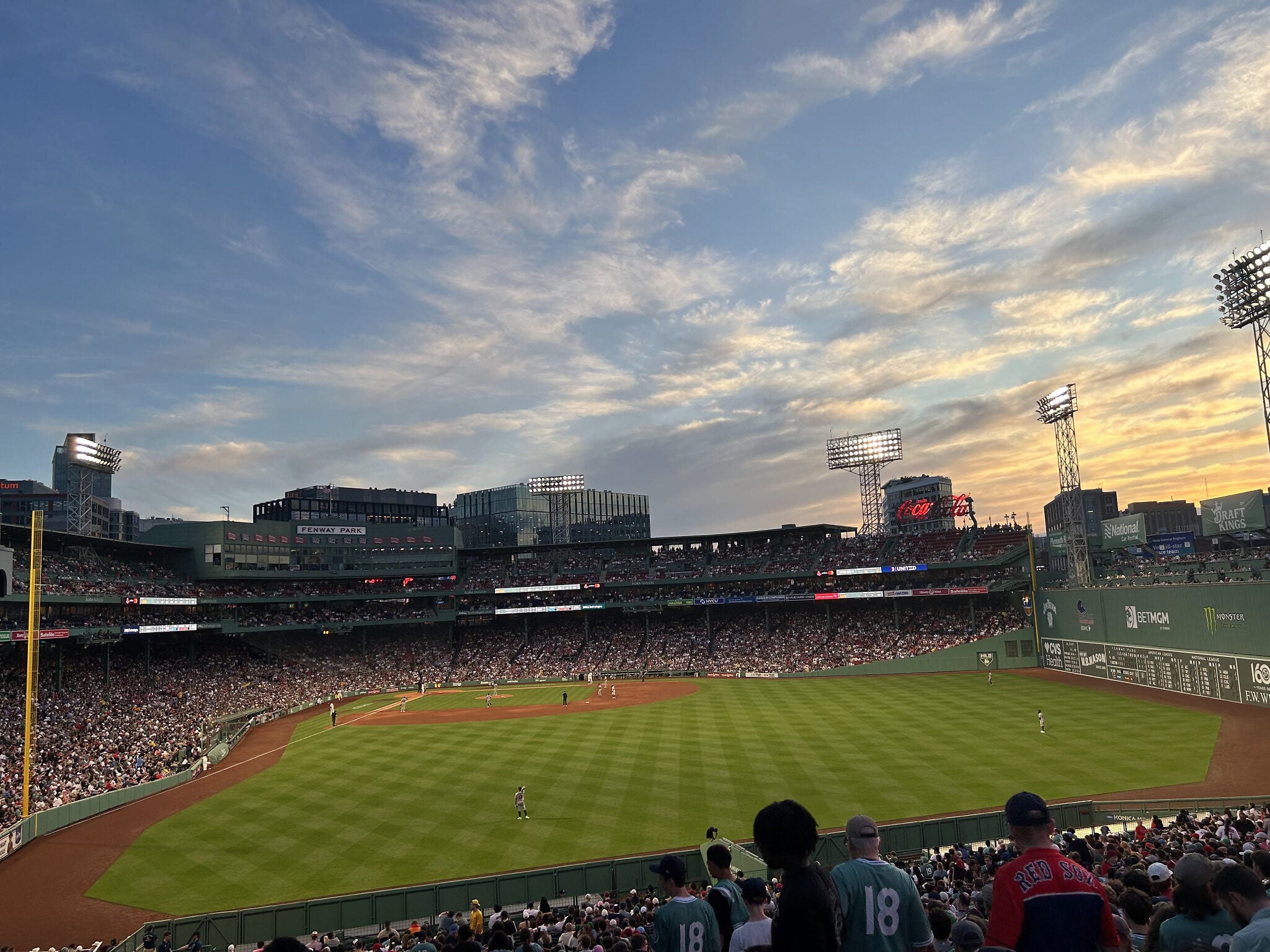
We were at the security check at Fenway Park.
We brought 30 members of Ben’s family from LA and Israel, along with some of our family from Boston and Israel for the game.
We thought Fenway was the perfect place to bring our families together and celebrate with sheva b’rakhot.
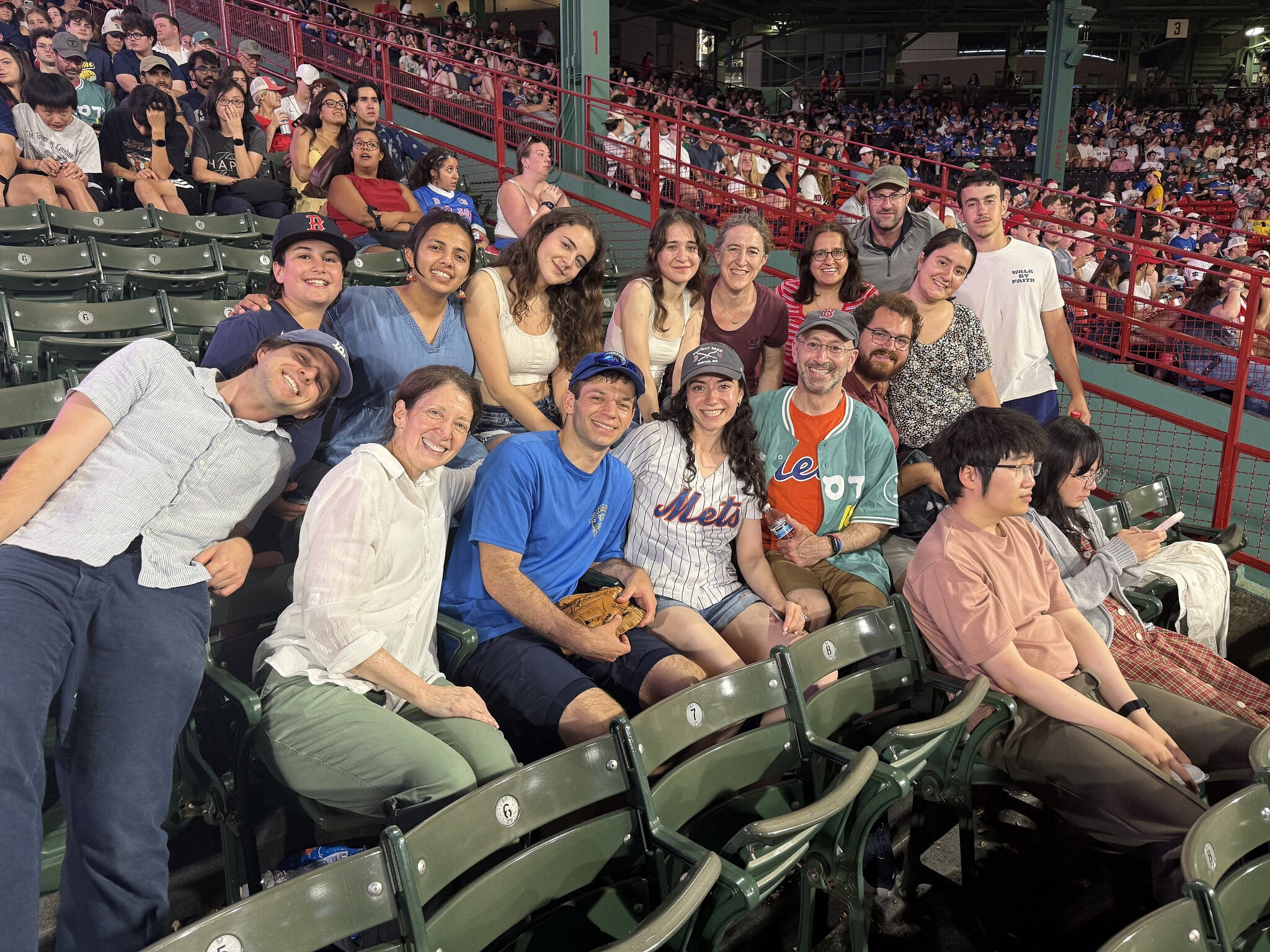
Sheva b’rakhot is a really cool custom, though it’s not observed that much outside the Orthodox world.
The idea is that after you get married, you celebrate for seven days, seven festive meals. The first is the wedding reception, and then there are six more meals, one on each of the following days.
At each one, you need a minyan, so you can recite the same seven blessings from the wedding.
And there is one other requirement: panim hadashot, literally, “a new face,” someone who was not at any one of the previous celebrations.
But now the whole thing was falling apart because we couldn’t get the groom into Fenway.
Ben opened his plastic bag. Inside was a small bottle of Kedem grape juice.
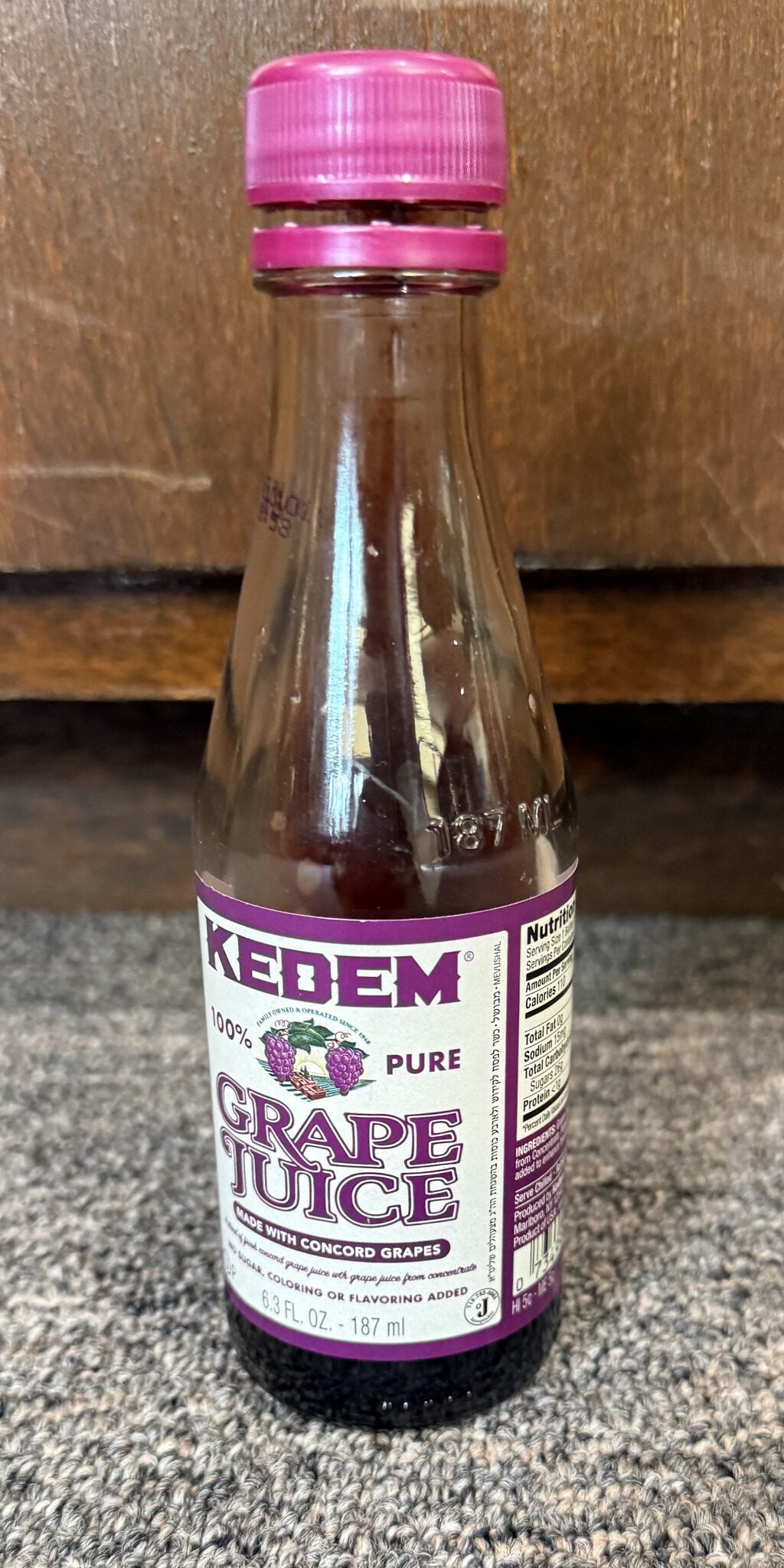
Not only was it not a clear water bottle, but it was also already open. Two big Fenway no-nos.
The woman said he had to throw it out.
But we needed the grape juice for the blessings, we were heading toward a no-sheva-b’rakhot moment.
I tried to play the rabbi card.
No dice.
But Ben explained that he had just gotten married and needed a little grape juice for a religious ceremony that we were going to have during the game…
I thought it must have sounded a little weird, and there was no way we were getting the grape juice in.
But she said, “Ok….. I’ll, I’ll let it slide.”
We and the grape juice were in.
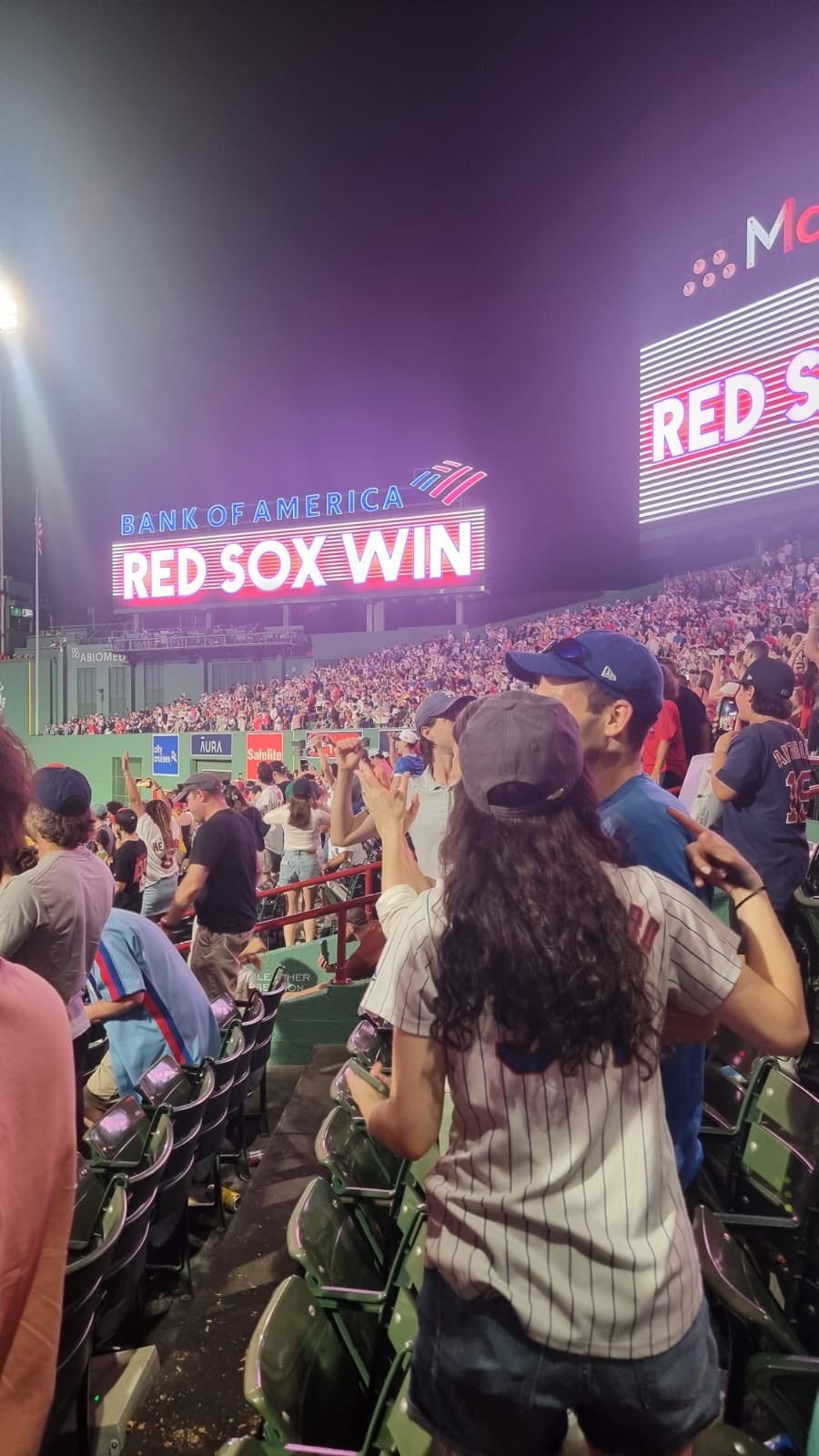
The game was great. Lots of offense.
The Red Sox were winning as they finally started coming out of their early-season slumps. And I had a blast explaining baseball to the Israelis.
And then it was the seventh inning stretch, time for sheva b’rakhot.
But we needed panim hadashot. A Jew who had not been with us the previous night.
Fenway was packed, so the odds were that there were Jews there. But how do you actually get one?
Luckily, I brought my Jewish Heritage Red Sox jersey and put it on.
And about thirty rows behind us, I spotted someone wearing the same jersey.
He was way down the row, so I wasn’t exactly sure what to yell. I didn’t think “Hey Jew!” was the right call.
“Member of the Tribe?”
“Yeah.”
“Want to do a mitzvah?”
“Heck yeah!”
He came down, a guy from Somerville I had never met before.
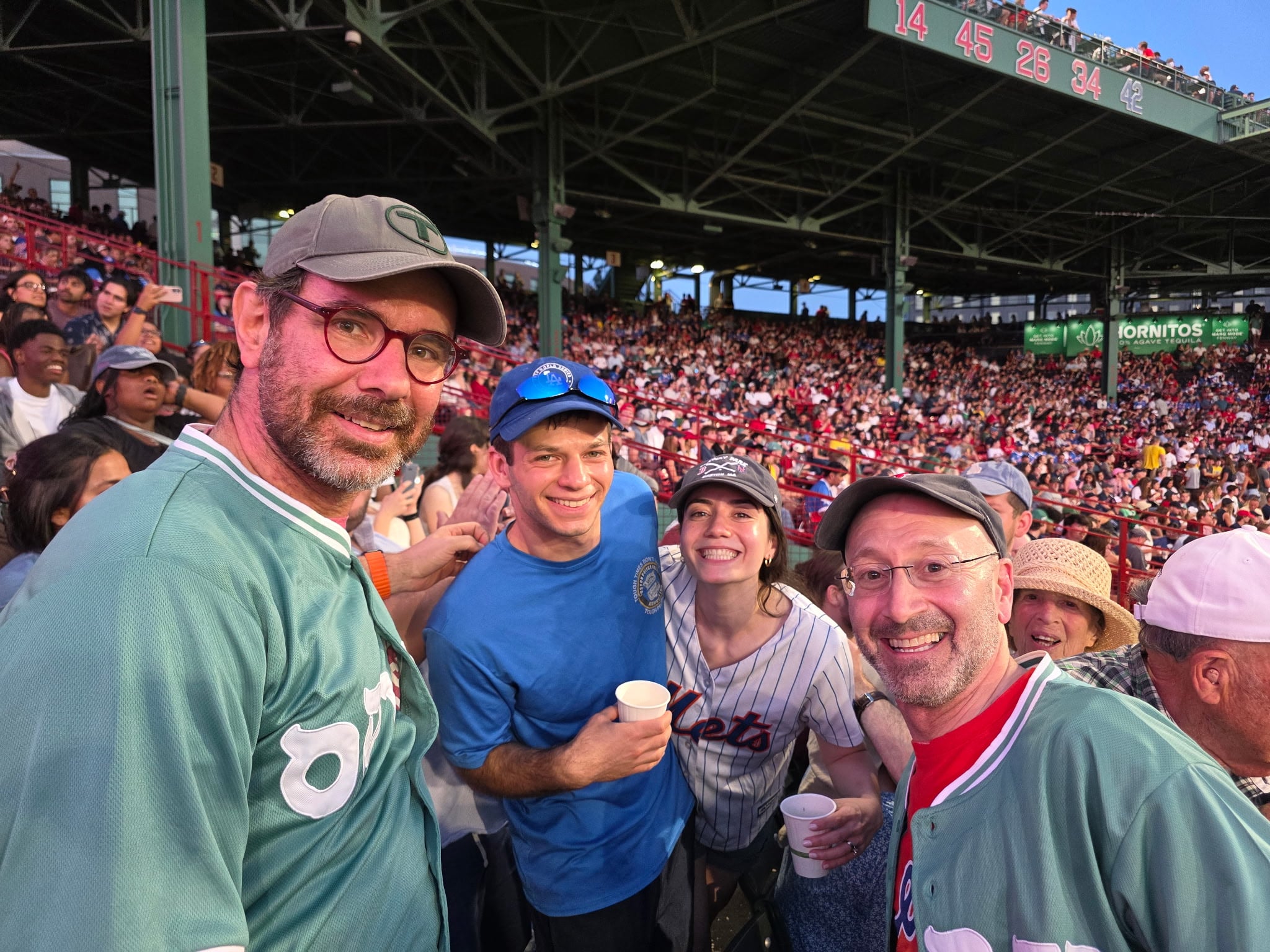
We washed our hands with a water bottle, made the motzi, and ate our festive meal, which was mostly chocolate babka.
We shared the food with a group of young people sitting in the two rows behind us, part of a Black Christian group from North Carolina.
Then we benched and sang the seven blessings.
And this group got up and sang and danced with us.
It was a moment of pure joy.
There was something about it: performing this Jewish ritual in Fenway Park, with our families, with a random Jewish guy from Somerville, and with this group from North Carolina.
It was simply unexpected and amazing.
Spontaneous joy.
There is nothing like it. …
*****

Many of us connect Yom Kippur with its solemnity. And that’s, of course, a big part of it.
But there is another side to this day.
The Mishnah teaches: לֹא הָיוּ יָמִים טוֹבִים לְיִשְׂרָאֵל כַּחֲמִשָּׁה עָשָׂר בְּאָב וּכְיוֹם הַכִּפּוּרִים
“There were no days as joyous for Israel as the fifteenth of Av and Yom Kippur.”
The Gemara asks why Yom Kippur. Because it is the day of forgiveness, the Gemara answers, and the day when the second tablets were given.
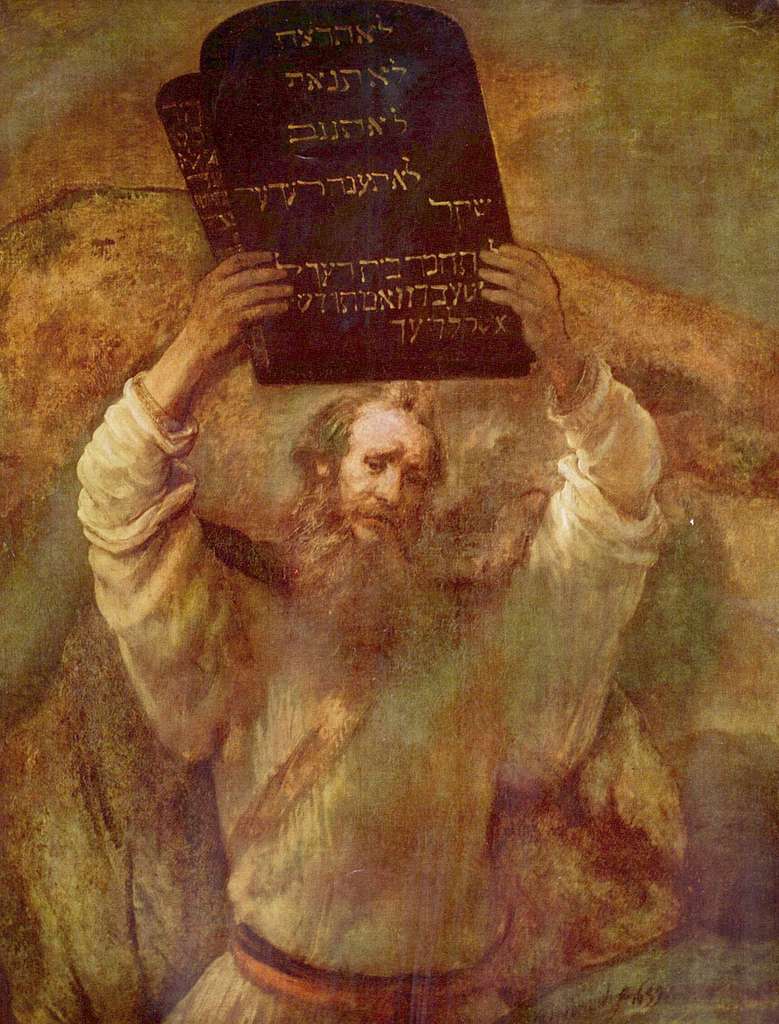
The first tablets were broken.
Something had gone terribly wrong.
And yet there was forgiveness. There was another set of tablets. The relationship with God continued.
So the joy of Yom Kippur is not simple joy.
It is joy that knows brokenness.
*********
And sometimes we feel that brokenness ourselves.
Sometimes the sadness comes from the world around us.
And sometimes it gets in.
And then there is our own pain…
The truth is, I have experienced deep sadness, deep despair…
There were times during COVID when I felt that very deeply. There was so much death. So many funerals.

Funerals on Zoom.
Funerals with only a handful of people present. Sometimes not even a spouse could be present.
Loneliness. Loss…
And then my dad died.
I couldn’t visit him while he was still aware in the hospital. And when the time came to take him off the ventilator, I was filled with grief and guilt.
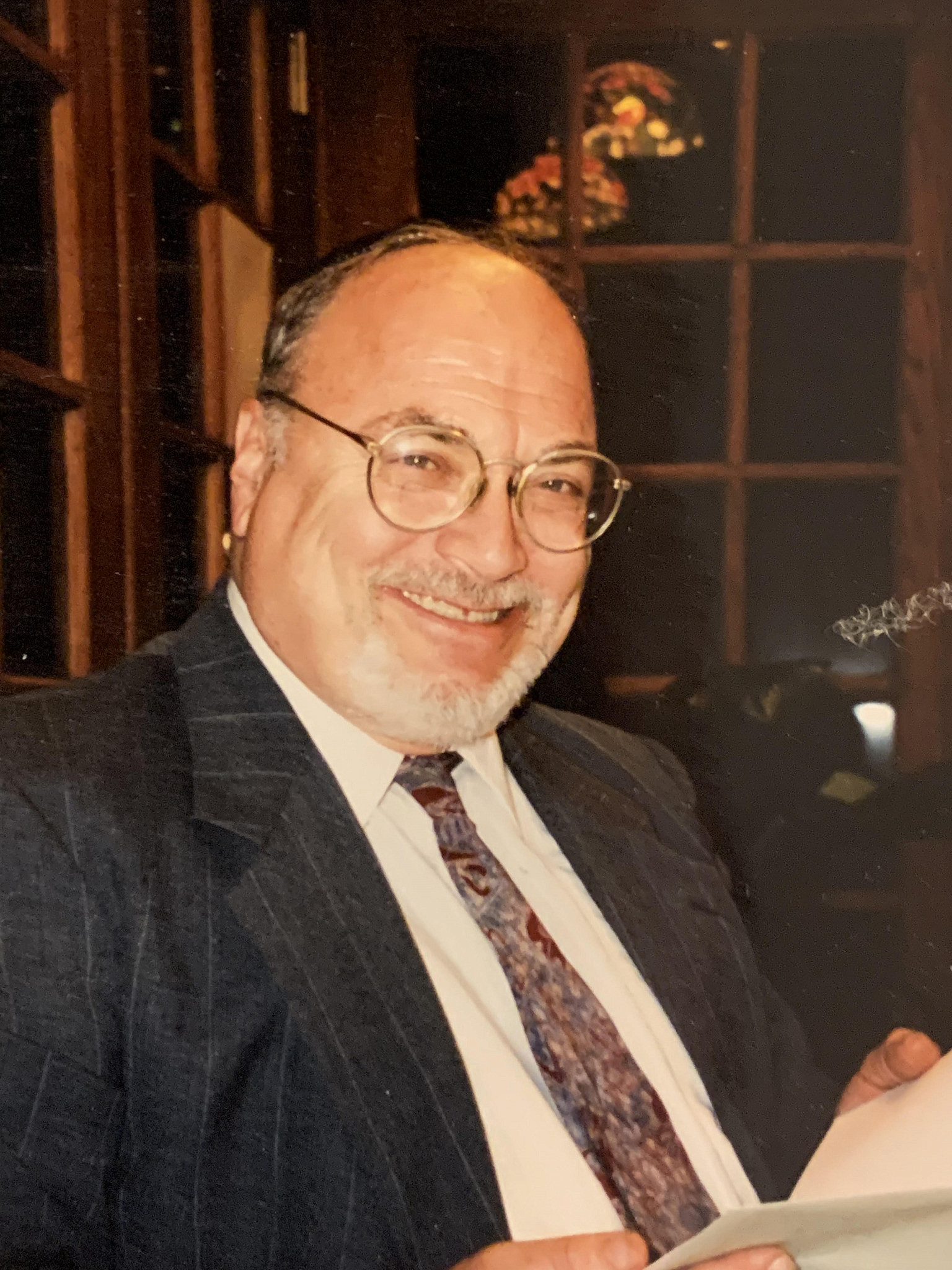
I had lost my dad.
But I had also lost the opportunity to mourn.
No in-person shivah.
No house filled with people.
I was disconnected and separated from my family.
And I fell into a deep despair.
For a while, I played one song, “A Forest” by The Cure, over and over again. Hundreds of times.
It was a kind of mantra that held my sadness and helped me cope.
And even now, when I know intellectually that my life is filled with blessings. I know how much I have to be grateful for.
But sometimes that knowledge doesn’t reach the place inside of me, that part of me that experiences deadness, disconnection, despair.
And then I can start wondering:
What is wrong with me?
Why can’t I just appreciate everything that is good?
I imagine some of you may know that feeling too.
So what do we do when joy does not come naturally?
*****
One of the great teachers of joy in the Jewish tradition was Rebbe Naḥman of Bratslav.
Naḥman lived in Ukraine a little more than two hundred years ago. He was the Baal Shem Tov’s great-grandson and became one of Ḥasidism’s most creative teachers.
But Naḥman was pretty complicated.
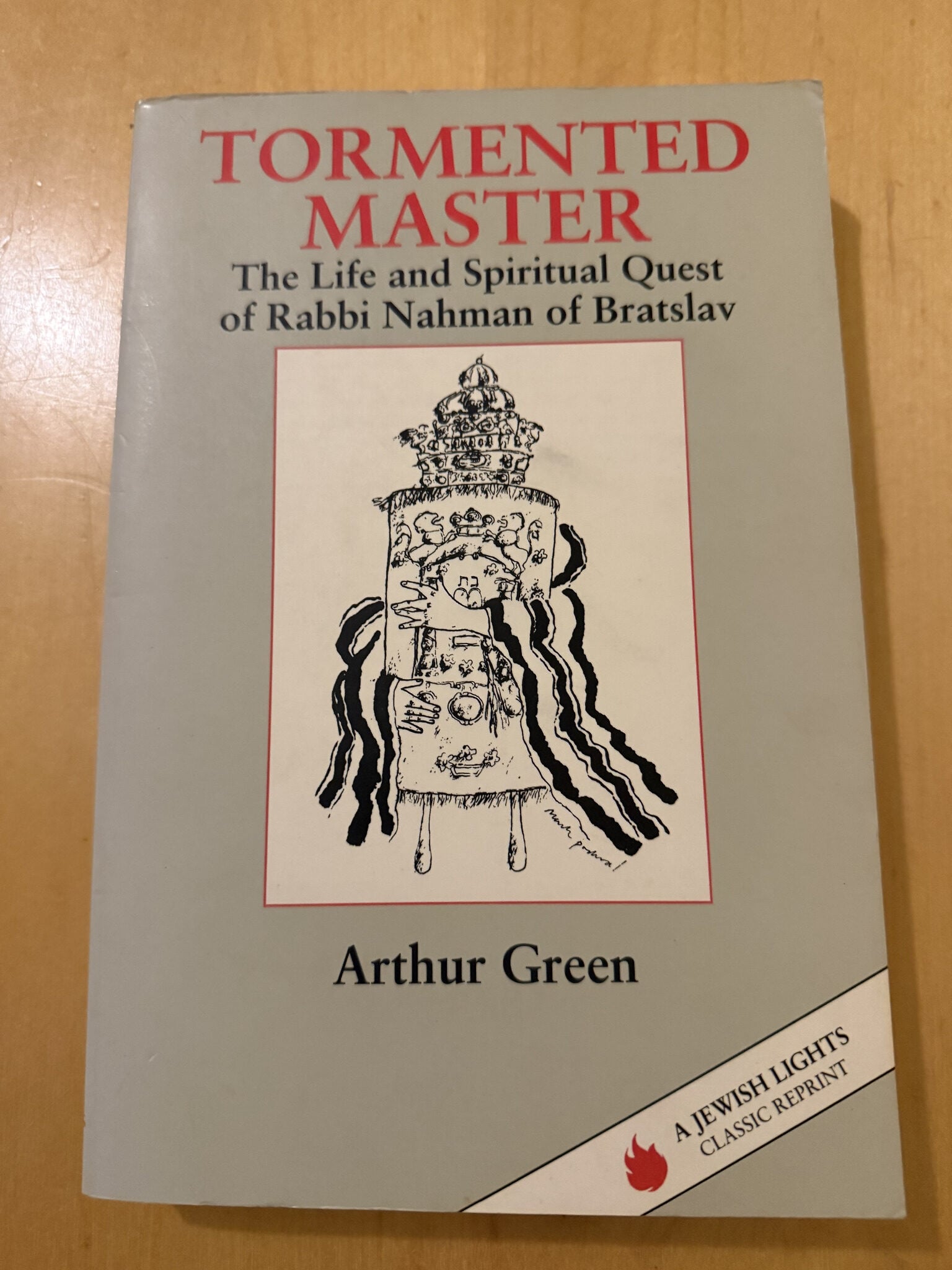
Rabbi Arthur Green gave his classic biography of Naḥman a striking title: Tormented Master.
Naḥman knew melancholy and spiritual anguish. He knew terrible loss. Several of his children died young. His wife died. He became seriously ill with tuberculosis and died while suffering when he was only thirty-eight.
And yet probably his most famous teaching is:
מִצְוָה גְּדוֹלָה לִהְיוֹת בְּשִׂמְחָה תָּמִיד
Mitzvah gedolah lihyot b’simḥah tamid.
“It is a great mitzvah to be joyful always.”
But that doesn’t do it or him justice.
Naḥman’s teaching continues and goes deeper: וּלְהִתְגַּבֵּר לְהַרְחִיק הָעַצְבוּת וְהַמָּרָה שְׁחֹרָה בְּכָל כֹּחוֹ
“A person has to struggle with all one’s strength against atzvut, sadness, and marah sheḥorah, melancholy,” literally, a dark bile.
Then he says we are naturally pulled toward sadness because of what happens to us in life, because “every person is filled with suffering.”
Maybe Naḥman did NOT teach joy because joy came easily to him.
Maybe he taught joy because it didn’t.
*****
There is a wonderful story about another Ḥasidic master, Reb Simḥah Bunim of Peshischa.
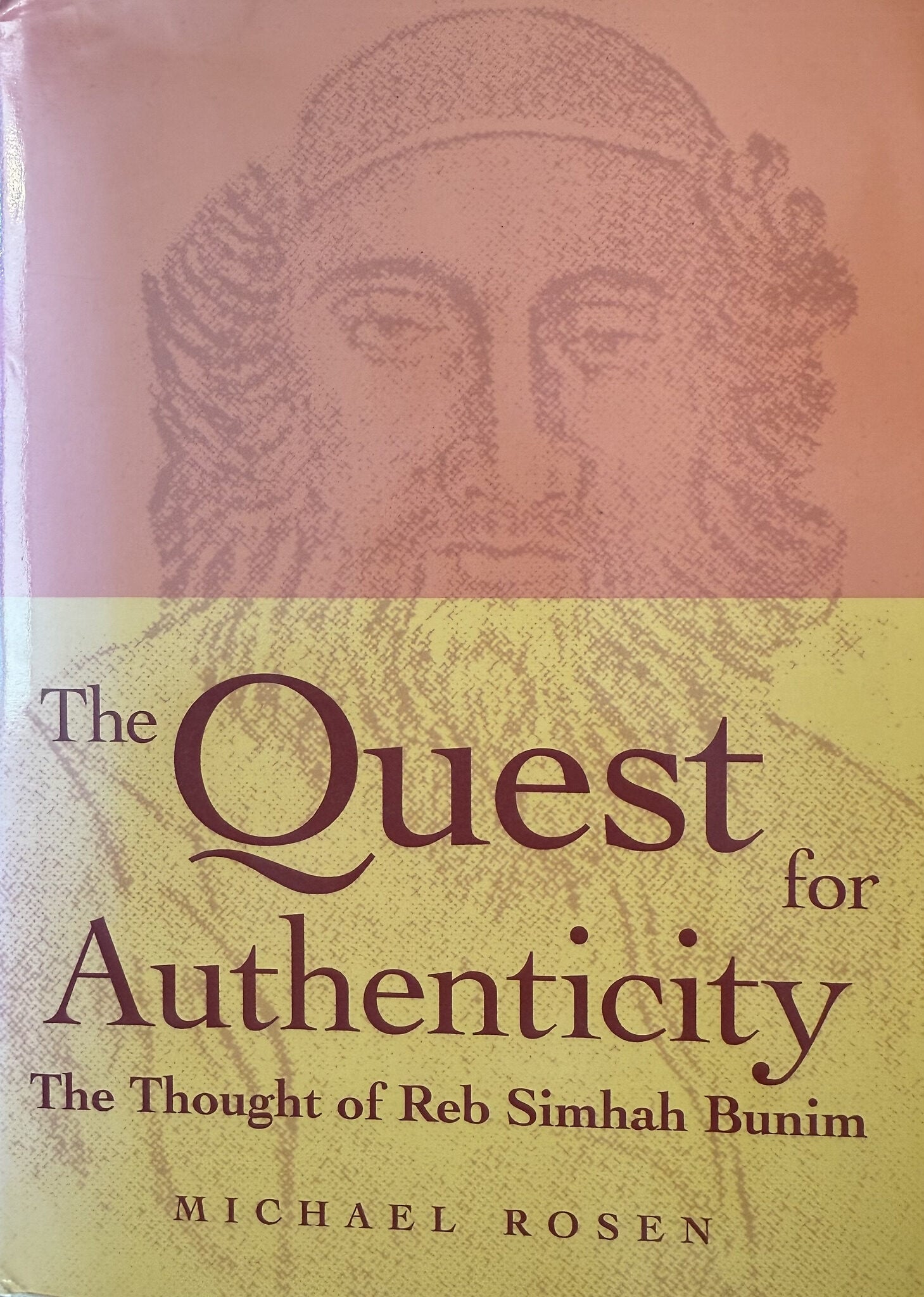
I recently went back to Michael Rosen’s book about him, The Quest for Authenticity. In Rosen’s section called “Joy,” he describes a Ḥasidic tradition that is very aware of atzvut, of heaviness, despondency, and depression. They were not using the word “depression” exactly the way we use it clinically today.
They make an important distinction.
A broken heart can still move.
It can still pray.
It can still act.
It can still love.
But despair can paralyze us.
Rosen tells this story.
Rabbi Simḥah Bunim was once in Danzig when he saw a man drowning.
The man was panicking, overwhelmed. He could not seem to save himself.
And Bunim called out to him in Yiddish:
“Give my regards to the Leviathan!”
Which, of course, is a completely ridiculous thing to yell to someone who is drowning.
The Leviathan is the great sea creature of Jewish legend.
But the man heard his comment.
And something shifted.
For a moment, a little joy broke through the terror.
Then he saw a plank that had been there all along.
He grabbed it.
And he survived.
Bunim later explained that while the man was completely overwhelmed by distress, he could not help himself. But once a little joy entered, even for a moment, the man could act again.
Now, obviously, this is not a recommended approach to lifeguarding.
Nor is it a treatment for depression.
And I don’t even have to consult with a therapist to say that if someone is clinically depressed, you do not tell them a joke and expect everything to disappear.
But the story understands something important.
Sometimes when we are overwhelmed, we cannot simply command ourselves to feel differently.
Sometimes something small breaks through. A joke. A song. A prayer. A hug. A friend.
The pain is still there.
But maybe, for a moment, it is not everything.
And that can be enough to reach for the plank.
****
Psalm 100 begins: עִבְדוּ אֶת ה׳ בְּשִׂמְחָה
“Serve God with joy.”
Notice what it doesn’t say.
It doesn’t say: Be happy.
It says: Serve. Ivdu.
Avodah means service. It also means work.
So maybe the Psalm is not commanding us to manufacture a feeling we don’t have.
Maybe it is telling us to try to make joy part of the work.
Part of the avodah.
And Judaism gives us things to do.
We make Shabbat. We sing.
We gather around a table.
We recite a Kiddush with wine or grape juice.
We celebrate weddings and holidays.
We dance.
We celebrate the sheva b’rakhot.
We spend time with other people.
We daven.
Sometimes those things lift us.
And sometimes they might not.
Sometimes you can light the candles, sit down to Shabbat dinner, and still feel sad.
But we keep making Shabbat.
We keep singing. We keep coming to shul.
We keep gathering.
We keep showing up to the places where joy might find us.
Maybe that is part of the avodah, part of the work.
We cannot force joy.
But we can make room for it.
******
I keep thinking back to that night at Fenway.
I’ve been calling it spontaneous joy.
And it was.
But maybe that’s not quite the whole story.
We had brought the grape juice and the babka. We found a stranger. We made the blessings.
And then, somehow, joy came. Even more than we expected.
For those few minutes, nothing difficult in our lives had disappeared. The world had not become less broken. Whatever worries or sadness each of us carried were still there.
But they were not everything.
There was also this.
Thirty people in the bleachers.
A stranger from Somerville.
A group from North Carolina.
Singing. Dancing. Laughing.
Maybe that is what we can do.
We cannot manufacture joy. We certainly cannot tell ourselves, or someone else, “Just be happy.”
But we can keep making places where joy might enter.
Earlier I said that sometimes the sadness gets in.
But sometimes joy gets in too.
And on this Yom Kippur, I don’t pray for a year without sadness. That’s not really realistic.
But I do pray that sadness never takes over.
That even when there is heaviness, there can still be an opening.
עִבְדוּ אֶת ה׳ בְּשִׂמְחָה
May joy be part of our avodah.
And may we help make room for it, for ourselves, and for each other.