

When love means speaking out
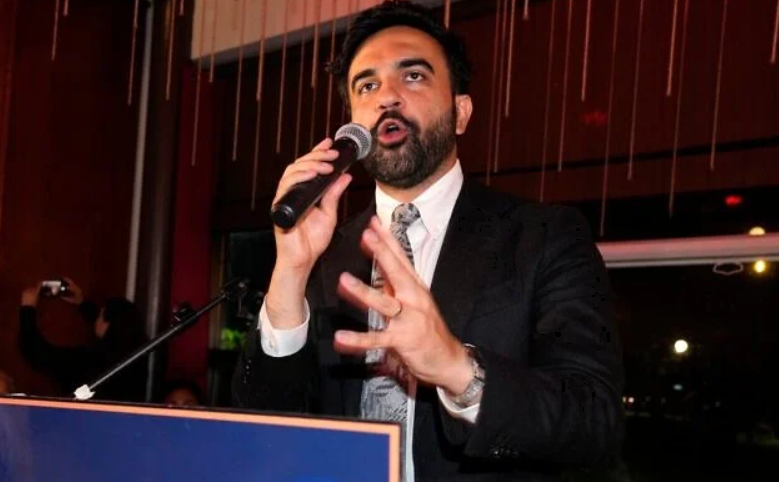
In the past, I have written op-eds for the Times of Israel and other publications accusing Mayor Zohran Mamdani of New York City of using language that endangers Jews. The pieces were tough. They were meant to be. Since they appeared, a number of people – some of them friends – have asked a fair question: How does a rabbi whose entire philosophy of the rabbinate rests on loving the other bring himself to write so unsparingly?
The honest answer is that it isn’t easy. It has never been easy.
I have long been a student of Martin Buber’s distinction between two ways of relating to another person. In the “I-It” relationship, the other is an object – a thing I engage with not out of concern for who they are, but out of concern for myself. In the “I-Thou” relationship, the other is a “Thou”: a subject, with feelings and a personality of their own, whom I engage with because of who they are, not because of what they can do for me.
My rabbinate has always tried to live in I-Thou. But when I put on my spiritual activist hat, I have sometimes had no choice but to reach for the I-It. That does not come naturally to me. It is not who I am. It is who I force myself to become when I feel the Jewish people is under threat.
Clergy debate, endlessly, whether politics belongs in the pulpit. For decades, my own rule has been that it does not. But when I encounter someone whose philosophy and policies threaten the Jewish community, I have not treated that as politics. I have treated it as antisemitism. I have stood against racism my whole life; I can do no less when it is my own people being targeted.
I believe Mr. Mamdani is a serious antisemite – in some ways the most troubling one I have encountered, because his antisemitism is subtle and cunning. I would rather face an antisemite who confronts me head-on, whom I can look in the eye, who knows what he is and lets me know it too. It is a different, more dangerous thing when the attack comes from the side – when a mayor declares, in one breath, that he will not tolerate hatred against Jews, and in the next accuses Israel and its supporters, among them my own grandchildren and the families of countless New Yorkers, of genocide. His good words lend legitimacy to his evil ones.
And words like that do not stay contained. When a mayor levels the charge of genocide at millions of Jews and the people who stand with them, when the mayor calls supporters of Israel “monsters,” he sends a signal to anyone inclined to hear it as license: that violence against those so accused is somehow justified. Antisemitism is the oldest hatred there is. What makes Mr. Mamdani’s rhetoric so dangerous is that it takes that ancient hatred and dresses it up as policy.
So yes, my rabbinate is a rabbinate of love. That has not changed. But love of my people requires me, on occasion, to do what I would rather not do, and to refuse to stay silent when words are being used in ways that can lead to real harm. A word is only a word – until it becomes the permission slip for something far worse.